Community
 Print
Print




A new study has found that simply living near a factory farm can “significantly” increase people’s risk of developing cancer.
Elevated cancer risk for those with factory farms in their neighborhood is the latest serious health issue linked to industrialized animal agriculture. But while factory farming is undeniably a public health crisis, demand for mass-produced meat and the number of concentrated animal feeding operations (CAFOs) is still going up.
Read more: Leading Heart Health Organization Says Eat More Plant Protein, Not Meat
Rising cancer rates and the new study

A group of researchers from Yale University analyzed cancer rates in California, Iowa, and Texas over two decades, from 2000 to 2021. They compared counties with the highest concentrations of factory farms to similar areas with fewer CAFOs.
“These facilities are known sources of environmental pollution, including air pollutants (e.g., ammonia, particulate matter, hydrogen sulfide) and water contaminants such as nitrates, which may have implications for human health,” Jiyoung Son, a researcher at Yale’s School of Environment and the study’s first author, told Yale Daily News.
Son’s team found “significantly elevated” all-cancer incidence rates in the states with high-exposure counties. They observed “positive associations” for most cancers, with stronger links for bladder cancer in California, lung and bronchus cancer in Texas, and colorectal cancer in Iowa, the top pork-producing state in the US.
Environmental Research published the new study in April. The researchers have called for further research into the correlation between CAFO proximity and cancer.
‘Deeply concerning’ but ‘unfortunately not surprising’
Cole Haynes, the co-president of Plant Forward Yalies, noted that the new study’s results are “deeply concerning,” but “unfortunately not surprising.” Haynes said, “The public health impacts of animal agriculture are widespread and well documented.”
In March, a public health report from the Iowa Environmental Council and the Harkin Institute linked the state’s elevated cancer rates to high levels of environmental contaminants, including pesticides, PFAS (forever chemicals), and nitrites.
Pig manure, which Iowa’s 5,400-plus pig farms produce 110 billion pounds of every year, is a common cause of nitrite pollution. And according to the public health report, the state’s cancer rates are the second-highest in the US and rising.
Speaking to Sentient Media, Dr Richard Deming, an Iowa-based oncologist and co-author of the report, said, “When you know the relationship between CAFOs and nitrates that get into the water, it doesn’t surprise me that it’s another study that supports the data.”
Factory farming, pollution, and ammonia
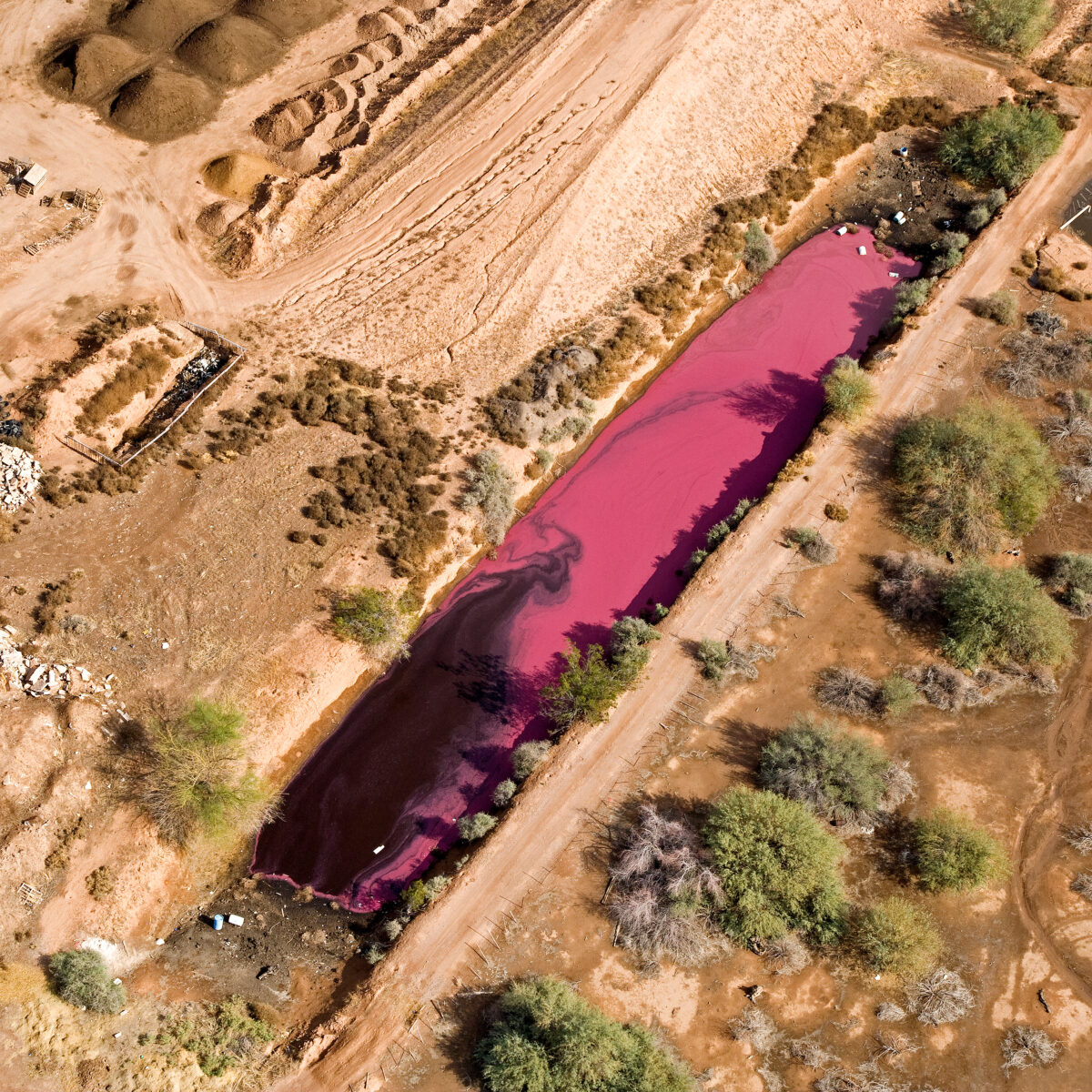
Ninety percent of all farmed animals worldwide are raised in CAFOs. That means that the industry kills more than 76 billion animals – roughly 10 factory-farmed animals for every one human person on the planet – every 12 months.
Factory farms are geographically concentrated but widespread, and hundreds of millions of people likely live near a “megafarm.” It’s also worth noting that in the US, in particular, factory farm pollution disproportionately impacts working-class communities and people of color, a disparity tackled in 2024’s They’re Trying to Kill Us.
Factory farming pollution is now so bad in some places that it can be seen from space. The pollutants immediately affect the hundreds of millions of people who live near CAFOs, but some can also travel thousands of miles, exposing countless others. If factory farm emissions are part of the industry’s link to cancer risk, then factory farms are a public health crisis affecting a significant portion of the population.
‘The toll that air pollution takes on people’s health’
In 2024, agriculture was responsible for 89 percent of total ammonia emissions. These emissions primarily came from farmed animals, livestock waste, and NH₃-based fertilizer. As soon as ammonia is released into the air, it becomes a respiratory irritant, but it can also react with other pollutants to form PM2.5.
Exposure to these tiny particles is “strongly associated” with negative health outcomes, including heart problems and premature death, and long-term exposure to PM2.5 has been linked to chronic bronchitis and lung cancer.
In March, a month before Son’s cancer study was published, Compassion in World Farming (CIWF) and Sustain launched a new interactive Ammonia Map of the UK.
According to CIWF, all of the locations with the highest ammonia pollution are known for their high volume of industrial chicken and pig farms. Some of the regions with the highest ammonia pollution include North Herefordshire (which produces 2992 tonnes per year), Gainsborough (2308 tonnes per year) and the adjoining areas (3,763 tonnes per year), and Norfolk (more than 11,700 tonnes per year).
Dr Amir Khan, a CIWF patron, said, “As a GP, I see firsthand the toll that air pollution takes on people’s health – and ammonia from intensive farming is a major, yet often overlooked, part of that problem.” CIWF noted that intensive indoor animal farming systems, such as those favored by factory farms, release the most ammonia.
Read more: UK’s Worst Ammonia Pollution Hotspots Correlate With Factory Farms
‘A green light to megafarm expansion’
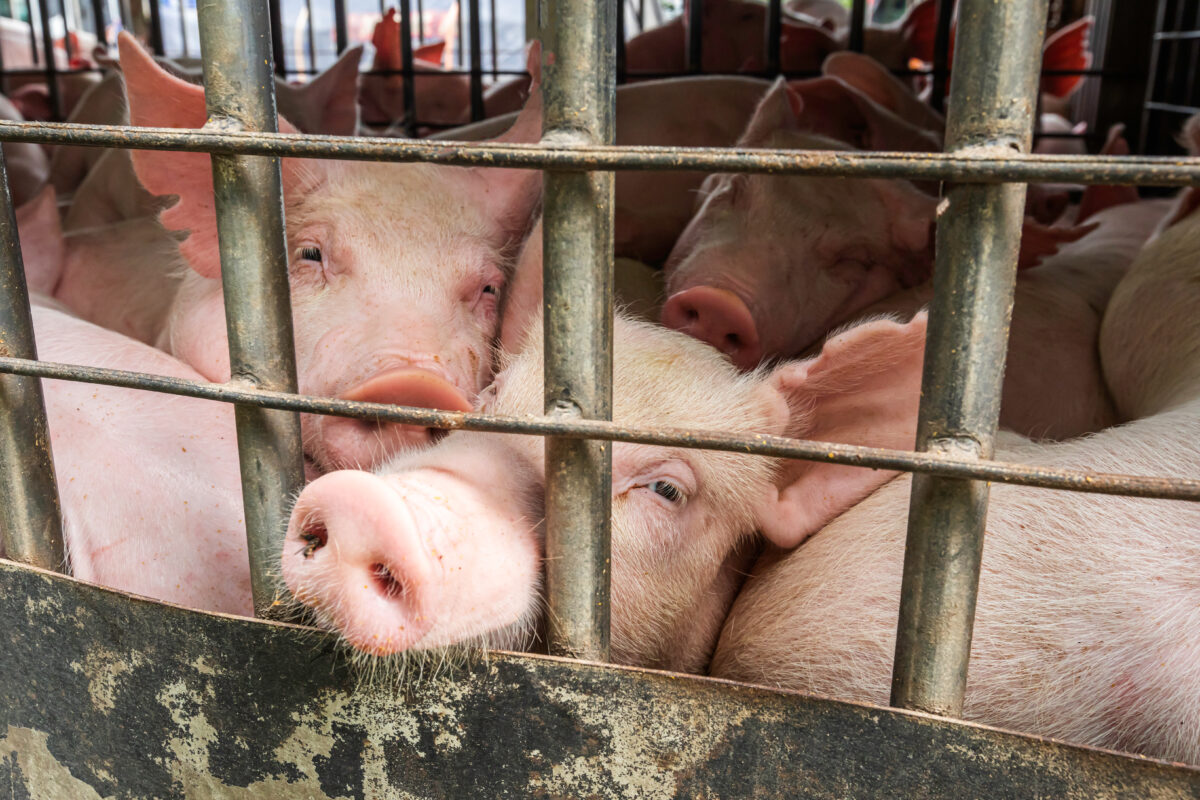
Despite the growing body of evidence showing that factory farming itself harms people’s health – and showing the negative impact on farmers, the environment, wildlife, and the global food system – CAFOs are increasingly common.
Global meat production is expected to increase by 19 million tonnes by 2030, and the number of factory farms is increasing to match. In the UK, 85 percent of farmed land animals are raised on CAFOs. In the US, that number rises to 99 percent.
Last month, the Guardian reported that UK ministers were actually working to relax planning rules, which would make it easier for meat producers to build factory farms. Producers have been lobbying to make expansion easier for at least two years.
Maya Pardo, the lead campaigner for Communities Against Factory Farming (CAFF), said, “By directing decision-makers to give ‘substantial weight’ to the economic benefits of livestock intensification, the proposal will effectively give a green light to megafarm expansion, despite well-documented damage to rivers, air quality, and rural communities.”
Most people in the UK describe common farming practices as ‘not acceptable’
In 2026, the news has been filled with stories of how plant-based foods can promote health and save money, or revolutionize farming and labor. Factory farming, on the other hand, has again been linked to cancer, wasted food, and animal cruelty.
Most people care about farmed animals’ welfare, and 74 to 96 percent of Brits say that common practices such as keeping pigs and chickens in tiny cages, debeaking chicks, cutting off tails, and using CO2 gas chambers are “not acceptable.”
Also in April, Project Slingshot (formerly GenV) launched a new campaign to warn people about CO2 gas chambers, which are classed as a “humane” slaughter method in the UK. Slingshot erected billboards in more than 200 train stations and 2,200 carriages calling attention to CO2 slaughter with quotes from supporters.
‘Industrial scale gaslighting’
Slingshot’s high-profile supporters include Dr Amir Khan, Sir Mark Rylance, Rutger Bregman, Peter Singer, Paul, Mary, and Stella McCartney, Jen Brister, Shabaz Ali, Mathew Pritchard, and Diane Morgan. “I looked up ‘humane’ in the dictionary and, I have to say, gassing didn’t come up,” Morgan said.
Writing on LinkedIn, Mathew Glover, the co-founder of Project Slingshot, said, “The government’s own advisors first recommended ending the practice in 2003 for reasons that become obvious the moment you see the undercover footage the industry has spent so much energy trying to bury. Twenty-three years later it is still the industry standard.” He added, “What we are calling out is industrial-scale gaslighting.”
Approximately 81 percent of people in the UK oppose CO2 “stunning.”
Please note: PBN runs a sponsored content model. To explore how you can get featured, please email [email protected] or visit everkinddigital.com