Community
 Print
Print




The leading US heart health organization has once again recommended that people eat more plant protein and less meat.
The American Heart Association (AHA) recently updated its guidelines for cardiovascular health. The AHA’s recommendations build on decades of research and notably contradict much of the new Dietary Guidelines for Americans.
Read more: ‘Horror Story’ Pig Farm Hogwood Expected To Close This Year
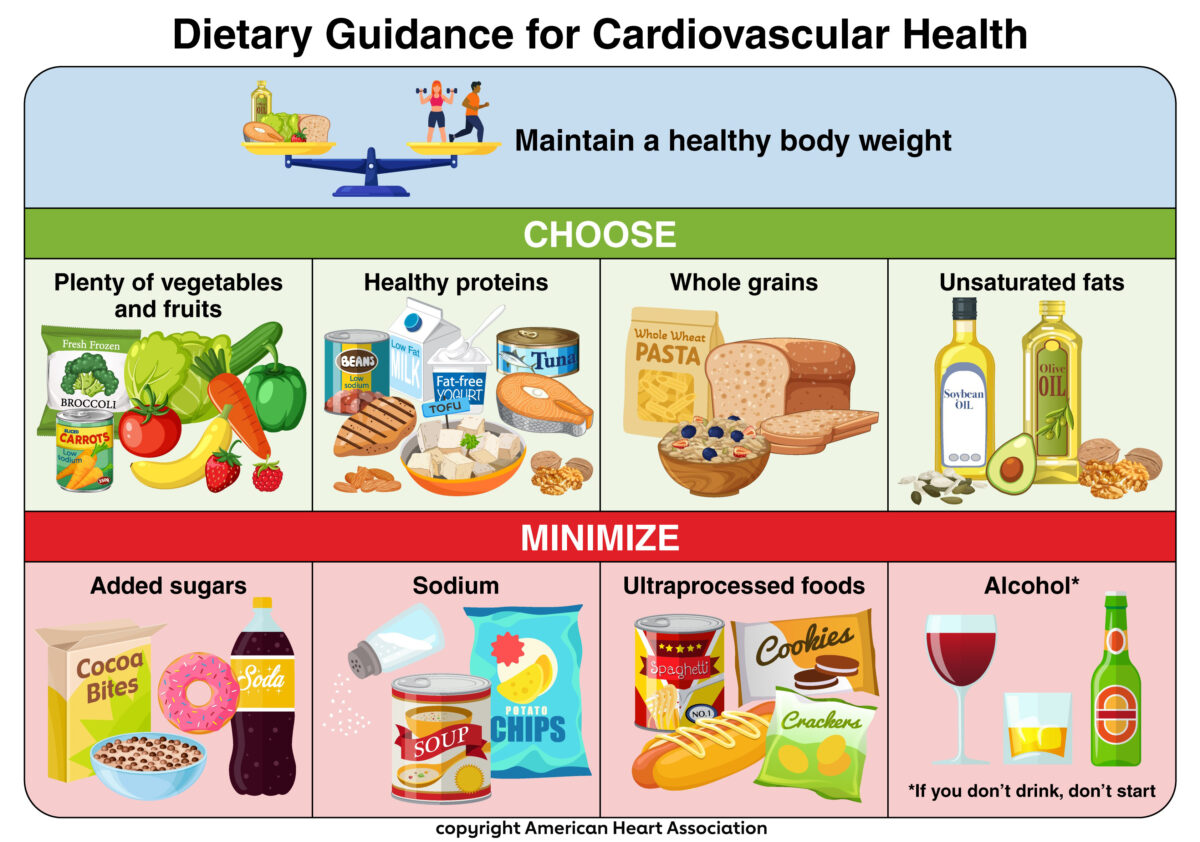
The new AHA guidelines outline nine ways to promote healthy eating and minimize the risk of heart disease, other NCDs, and chronic health problems. They include:
Balancing how much you eat with how active you are; eating a lot of vegetables and fruits, with emphasis on varied colors, textures, and types; eating more whole grains instead of refined grains; choosing unsaturated fats from nuts, seeds, avocados, and nontropical plant oils; minimizing sugar-intake, particularly in beverages and processed foods; eating minimally processed and unprocessed foods as much as possible overall; preparing and buying foods with minimal or no added salt; cutting out or reducing alcohol consumption; and shifting from meat and dairy to plant-based sources of protein such as legumes, nuts, seeds, and low or no-fat dairy alternatives. The AHA recommends eating red meat – even when lean and unprocessed – as little as possible, but suggests eating seafood and fish “regularly.”
‘The science supporting this guidance has strengthened’
The updated heart health guidelines were published in Circulation at the end of March. The advice is largely unchanged from the previous version, which was published in 2021 and also recommended eating more plant-based foods.
“We did find that the science supporting this guidance has strengthened. The stronger body of evidence is driving a few nuanced, yet important, updates that ensure the guidance remains aligned with the most current and strongest science on diet and cardiovascular health,” said Alice Lichtenstein, volunteer chair of the scientific statement writing committee and senior scientist leader of the Diet & Chronic Disease Prevention for Healthy Aging directive at the HNRCA.
Read more: Swap Processed Meat For Plant-Based Alternatives To Boost Fiber, Say Studies
New AHA guidelines reflect what experts have ‘been saying for decades’
Marion Nestle, a professor of food and nutrition studies at New York University, told Scientific American that the updated heart health guidelines are “what the AHA – and the dietary guidelines – have been saying for decades.”
“In contrast, the new RFK Jr dietary guidelines are a sharp departure from long-standing advice in that they recommend more protein, more meat, more full-fat dairy, and more of other sources of saturated fatty acids, such as butter and beef tallow.”
In January, US health US health secretary and “MAHA” architect Robert F Kennedy Junior (RFK Jr) published the 2025–2030 Dietary Guidelines for Americans (DGA). The now inverted food pyramid reprioritized red meat, poultry, beef tallow, dairy, and eggs, contradicting the almost unanimous messaging of experts, including the AHA.
The Dietary Guidelines Advisory Committee (DGAC) previously also concluded that swapping animal proteins and processed meat for plant foods would support positive health outcomes for Americans. But under RFK Jr’s HHS, the DGAC disregarded those findings and instead prioritized new, MAHA-aligned reviews.
In March, 210 health and science professionals wrote to RFK Jr to say they were “deeply concerned” and to call for a return to science-based recommendations in the DAG. They highlighted multiple internal inconsistencies within the guidelines and described them as “at best, confusing, and, at worst, harmful to public health.”
Read more: Over 200 Doctors And Nutrition Researchers Call For Return To Science-Based Dietary Guidelines