Community
 Print
Print




Sales of nitrite-cured bacon have dropped significantly as consumers look to avoid the controversial additive over potential cancer risks.
Nitrite-cured bacon sales fell by £18.7m in the 12 weeks leading up to the end of January 2026, compared to the same period in 2024-2025.
Read more: Frankenchickens: Major Fast-Food Brands Scrap Animal Welfare Pledge, Including Nando’s And KFC
Data collected by Worldpanel by Numerator and published by the Coalition Against Nitrites showed that nitrite-containing bacon sales dropped by 7.3 percent in value and 4.1 percent in volume. In contrast, nitrite-free bacon sales increased by 21.7 percent in value and 19.6 percent in volume, as reported by The Grocer.
Nitrites are frequently used as preservatives for processed meats like bacon, ham, hot dogs, and other pork products. In 2016, the World Health Organization (WHO) classified processed meat as a Group 1 carcinogen, which means that there is “sufficient evidence” that it causes cancer. The WHO also reclassified red meat as a Group 2A carcinogen, which means that it is “probably carcinogenic to humans.”
According to the Coalition Against Nitrites, a “growing consensus of scientific opinion” links nitrites in processed meat to carcinogenic nitrosamine production in the stomach, and to increased colorectal cancer risk. A coalition spokesperson said, “£18.7m has been wiped off nitrite-cured bacon sales in just three months. That’s not a fluctuation, it’s a consumer revolt. Shoppers do not want additives in their food.”
‘Every year of delay means more preventable cancers’
In October, several leading experts wrote an open letter to West Streeting, the UK’s Health Secretary, to mark the 10th anniversary of processed meat’s Group 1 carcinogen status. The letter highlighted the lack of action and progress by the government and the Food Standards Agency (FSA) on processed meat since then.
The scientists called for labels to display tobacco-style warnings about cancer risk and for food producers to phase out nitrites in the coming years. Up to 95 percent of all packaged bacon and ham sold in the UK contains carcinogenic nitrites.
Professor Chris Elliott, a former government adviser on food safety and one of the letter’s signatories, told the Guardian: “Every year of delay means more preventable cancers, more families affected and greater strain on the NHS.”
Consumer safety, processed meat, and planetary health
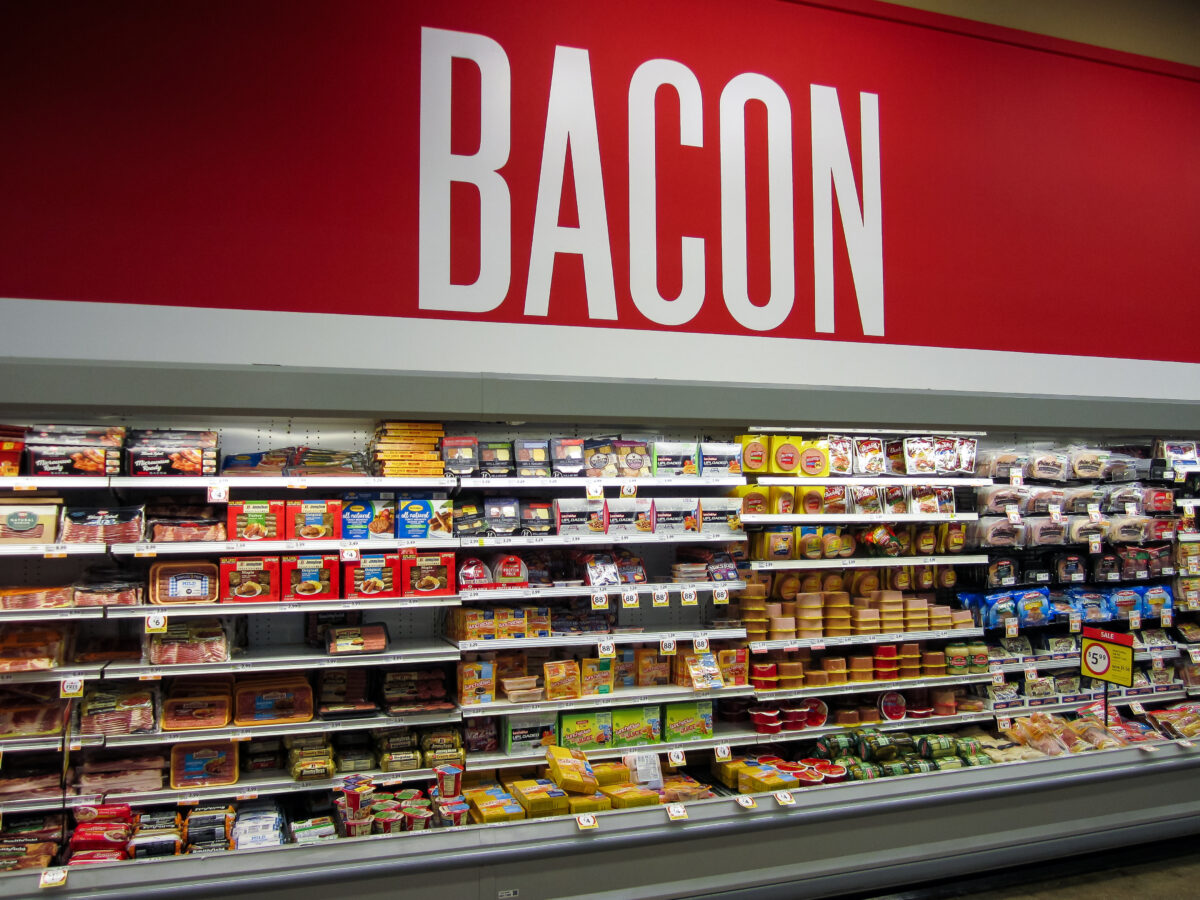
In 2023, research found that more than 60 NHS trust hospitals, including children’s hospitals such as Great Ormond Street and Alder Hey, served nitrite-cured meats. Studies show that even low-level consumption of processed meat is “not safe.”
In contrast, plant-based options and alternative proteins are not linked with adverse health conditions, even when processed. Alternatives are also better for animals and the planet, and meat-free diets may cut cancer risk by up to 25 percent.
Read more: Tesco Reports Plant-Based Growth Led By Health-Conscious ‘Scratch Cooking’