Community
 Print
Print



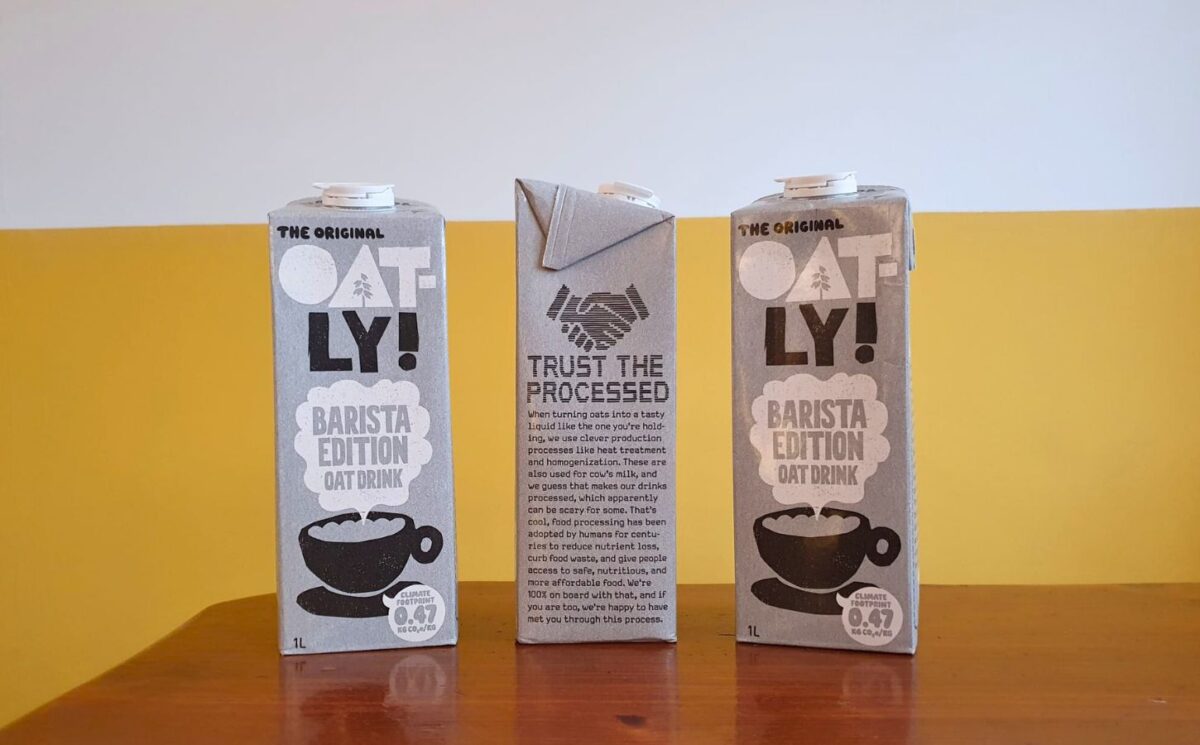
Oatly has added a new “trust the processed” label to its drink cartons.
The Swedish oat milk brand added the label to its packaging last year, prompting both praise and pushback for meeting the topic of food processing directly.
Read more: Oatly Banned From Marketing Plant-Based Products As Milk In The UK
Oatly’s new label acknowledges the ongoing debate around ultra-processed foods (UPFs), an increasingly polarised topic that many consumers remain confused about.
The updated packaging says: “Trust the processed. When turning oats into a tasty liquid like the one you’re holding, we use clever production processes like heat treatment and homogenisation. These are also used for cow’s milk, and we guess that makes our drinks processed, which apparently can be scary for some.”
“That’s cool, food processing has been adopted by humans for centuries to reduce nutrient loss, curb food waste, and give people access to safe, nutritious, and more affordable food. We’re 100 percent on board with that, and if you are too, we’re happy to have met you through this process.”

Writing on LinkedIn, Caroline Orfila Jenkins, the vice president of science and technology at Oatly and a professor of plant biochemistry and nutrition at the University of Leeds, described labels as one of Oatly’s “most powerful” comms tools.
“Current opinions around UPFs are polarising, offering simplistic yet confusing narratives about food processing which are – in my view – distracting us from tackling the integrated challenges of climate change and food injustice,” she added. “We choose to speak openly and transparently about this topic and continually partner with expert voices, such as nutritionists and dieticians, to get the facts out there.”
Read more: 5 Benefits To Food Processing
Not all ultra-processed foods are created equal
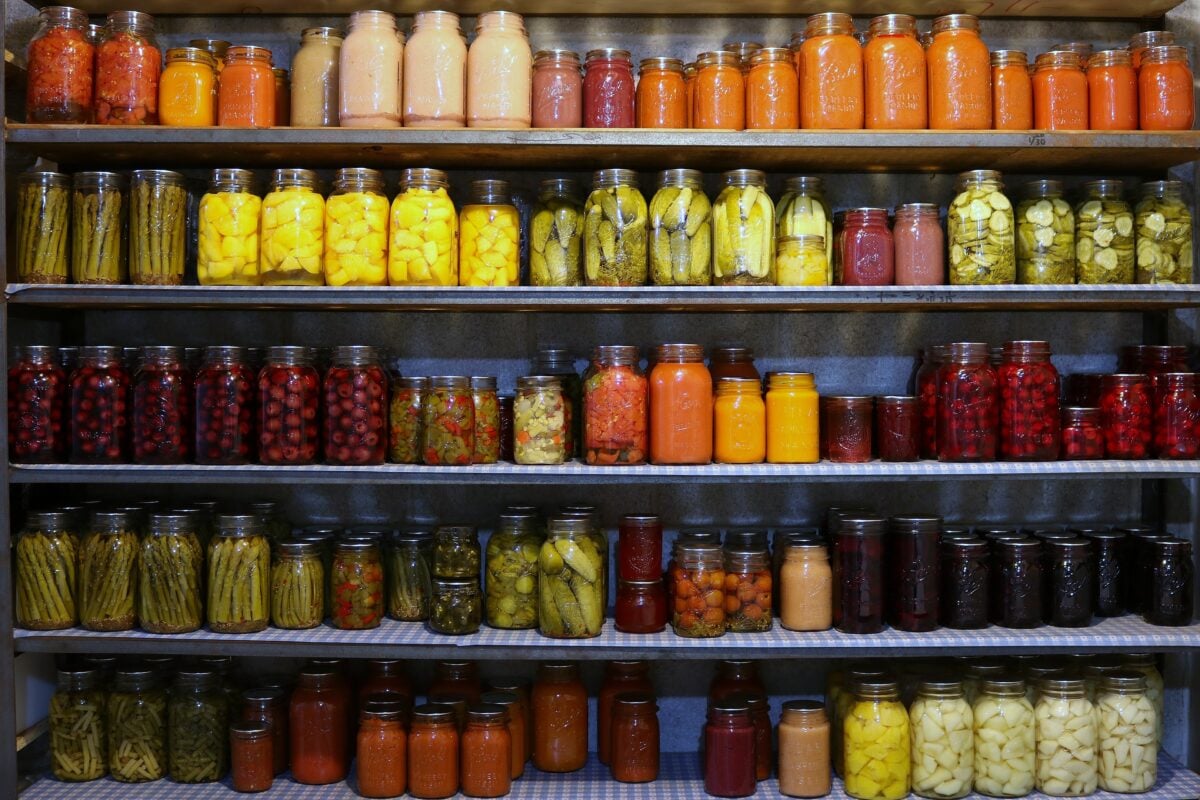
The world’s largest scientific review of the evidence on UPFs found that processed foods are rapidly displacing fresh food and drink on every continent, and are also linked to harm in every major organ system of the human body.
The review, made up of a three-paper series published by The Lancet, described the rise in UPF consumption as being “driven by powerful global corporations who employ sophisticated political tactics to protect and maximise profits.
However, a report by the Good Food Institute (GFI) and the Physicians Association for Nutrition (PAN International) from last year called for “nuance” in differentiating between food processing that adds nutritional value, such as fortification or pasteurization, and food processing that diminishes it, such as turning pork into bacon, ham, and hot dogs. A separate report found that more than a third of Americans are misinformed about processed foods. Sixty percent of people in the US either incorrectly believe that all processed foods are inherently unhealthy or say they are unsure about how food processing intersects with health.
Read more: Amsterdam Bans Ads For Meat And Fossil Fuels In Public Spaces