Community
 Print
Print



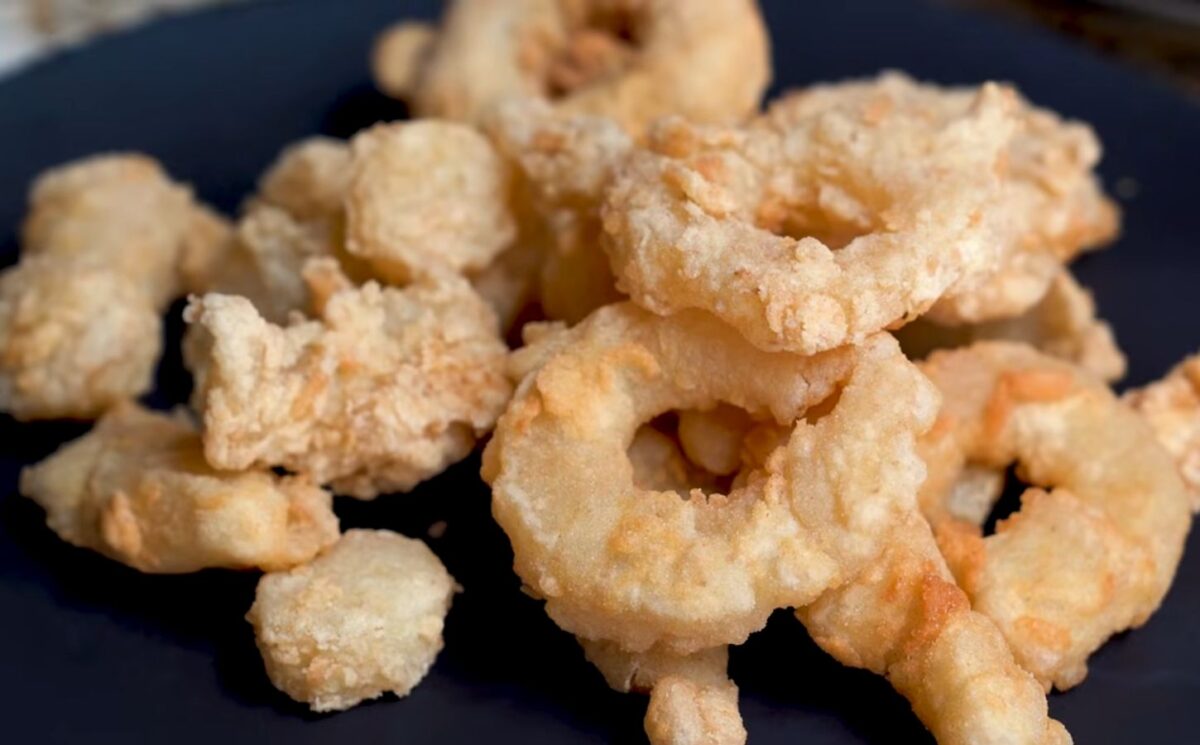
If you’ve ever missed crispy seafood textures, this vegan calamari recipe might be the closest thing yet. In a recent video, Miyoko Schinner shows how to recreate calamari using simple, plant-based ingredients that deliver the same bite, chew, and crisp finish.
Schinner, widely known as a vegan cheese pioneer and the founder of Miyoko’s Creamery, shares the method as part of her cookbook The Vegan Meat Cookbook. The result is a surprisingly convincing seafood alternative that even skeptics struggle to tell apart from the original.
Read more: Vegan Mushroom Calamari Spaghetti
A traditional ingredient with a modern twist
At the center of this vegan calamari recipe is konjac, a root vegetable used in Japan for centuries. Schinner explains that it’s “the ground-up powder of a strange-looking root of a plant, the konjac plant,” which transforms into a jelly-like texture when cooked.
One of its standout features is that “it has no calories,” she says, making it a unique base for recreating seafood textures. Once combined with water, seasoning, and heat, the mixture thickens into a glossy, sliceable block that mimics the elasticity of calamari.
To build flavor, Schinner adds vegan fish sauce, explaining that it helps “render it like something that’s out of the sea.” This step is key to achieving that subtle ocean-like taste without using any animal products.
Turning konjac into convincing calamari
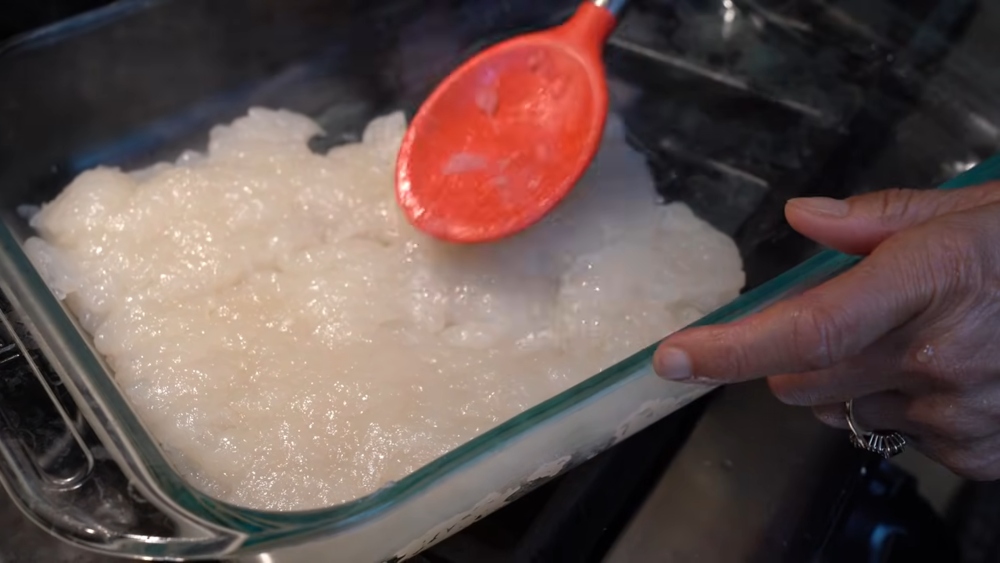
The process starts by whisking water with a small amount of pickling lime. Schinner notes you can substitute baking soda if needed. She then adds konjac powder, salt, and vegan fish sauce before heating the mixture.
As it cooks, it quickly thickens. “Already you’re beginning to see it thicken up,” she says, noting that it should cook for just a few minutes until glossy. Overcooking can cause it to separate, so timing matters.
Once ready, the mixture is poured into a container and chilled. After about 30 minutes, it firms up into a jelly-like slab that can be sliced into rings or irregular shapes. “You don’t have to do [rings],” Schinner adds, pointing out that it all tastes the same regardless of shape.
Getting the texture just right
Texture is where this vegan calamari recipe really stands out. Schinner describes the final result as “crispy on the outside, jiggly and tender on the inside with just that right amount of bite and chew.”
Before frying, she tweaks the traditional Italian method. While classic calamari is simply coated in semolina, she finds that plant-based versions can be dry. To fix this, she creates a flax egg and dips the pieces first.
“I find that this is a little bit drier than traditional calamari,” she says, which is why the flax mixture helps lock in moisture before coating with semolina. Regular flour can also be used if semolina isn’t available.
Frying and finishing touches
Once coated, the pieces are fried in hot oil until golden brown. Schinner recommends testing the oil by dropping in a small piece. “When you drop something in there … and it rises right away is when you know that the oil is hot enough.”
She also advises not to overcrowd the pan. This can lower the oil temperature and affect the crispness.
The finished calamari can be served simply or paired with a dipping sauce made from lemon juice, capers, and vegan mayonnaise. But according to Schinner, it’s just as good on its own.
Even non-vegans are convinced
The most telling moment comes when Schinner shares feedback from a friend. “I had an Italian, non-vegetarian, non-vegan, tell me that she was struggling to tell the difference between the real thing and this,” she says.
That realism comes down to the unique properties of konjac and the careful layering of flavor and texture. The end result is “wiggly … elastic,” she adds. It captures the exact qualities that people associate with traditional calamari.
For anyone curious about plant-based seafood, this vegan calamari recipe shows how far ingredients and technique have come.
For more of Schinner’s magical plant-based recipes visit her YouTube channel.
Read more: Pan-Fried Mushroom Calamari