Community
 Print
Print




Derrick Green is, without a doubt, a vegan metal icon.
He has spent nearly three decades fronting Sepultura, one of the most influential heavy bands in the world, and Green’s versatile vocals have, arguably, been the defining features of Sepultura’s ever-evolving sound in the modern era.
In 2023, Sepultura made the surprise announcement that the band would be breaking up, and Green and his fellow musicians are currently working their way through a lengthy “Celebrating Life Through Death” farewell world tour. The last Sepultura show ever will take place in São Paulo, Brazil, this coming November.
Green spoke to Plant Based News (PBN) earlier this week from Amsterdam, where the European leg of Sepultura’s final world tour is about to begin. Despite several technical issues, a sudden power cut here in the UK, and jet lag after a recent flight from North America, Green was warm, reflective, and generous with his time as he answered PBN’s questions about his career, lifestyle, and philosophy.
Green touched on his musical roots in 1980s hardcore and thrash, the importance of balance, his vegan diet, and why he stopped eating meat as a teenager. He also discussed his Highway to Health show and what might come next for Sepultura.
You can watch a version of this interview on YouTube here.
Read more: Factory Farming Is Already A Public Health Crisis
Sepultura’s farewell tour
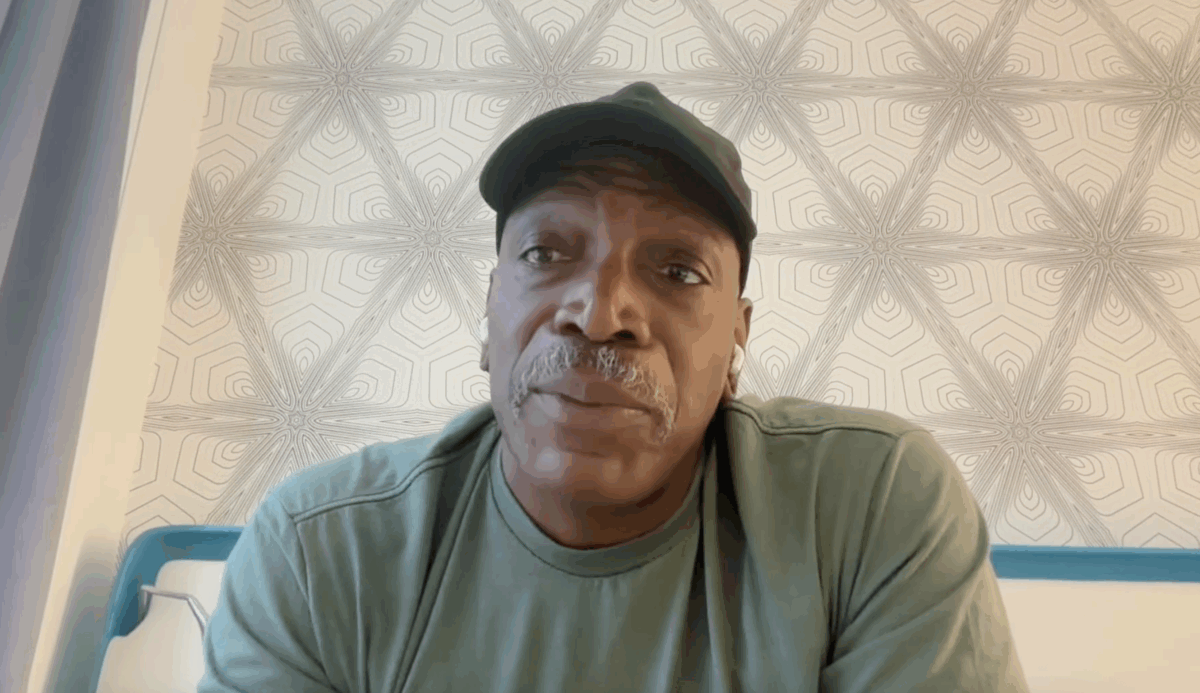
When asked how Sepultura’s tour is going, Green said, “We just finished the North American tour, which was incredible. We were touring with a band called Tribal Gaze, Exodus, and Biohazard, and that was incredible. We’ve been touring now for the past few years, doing a farewell tour of Sepultura. And it’s been going really well.”
He added that it has been “very special” to be able to tour locations that the band has never been to, and described the North American tour as a “wonderful” experience.
“There was a lot of emotion going on with the farewell, and people having a connection with the band for so many years. It’s kind of going back in a time machine a lot of times when they’re hearing the music being played, and especially live is where it’s all at,” Green said. “It’s great to be face to face with those old fans that have been supporting the band for so long – and a lot of new fans, actually. There were a lot of very young people on this tour that were checking out Sepultura for the first time. So this was really great to see, and it makes it a lot harder to leave the stage.”
Going vegan ‘made total sense’
Green is a longtime vegan and stopped eating meat around 1986. He told PBN that he began questioning “the idea of eating meat” at the age of 14 or 15, prompted by the prevalence of vegetarianism in the hardcore and punk scenes and the seminal 1906 novel, The Jungle, by Upton Sinclair, which Green was reading at school at the time.
“I think a lot of Americans had no idea what was going on with the industry and how they were treating people, and not only the animals, but just all-around cruelty,” Green said. “It really struck a nerve with me to think about a lot more where I was getting the food that I was consuming. At the same time, hardcore punk rock came into my world and there were a few bands that were talking about vegetarianism.
“One of the bands was Cro-Mags, and they introduced the idea of the Bhagavad Gita from India, which talked a lot about the idea of vegetarianism. So I really latched on to those two things at the same time.”
“It made me upset the more I learned about how the industry was not only treating animals, but also the planet and people.”
Green’s synchronous exposure to vegetarianism through the alternative bands in his community and to the realities of the meat industry through Sinclair’s writing made him want to see for himself if altering his diet could make a change.
“It made me upset the more I learned about how the industry was not only treating animals, but also the planet and people,” Green said. “The fact that there was a lot of contamination, a lot of things that were just not good for people in general, and the fact that their lack of empathy all around was disturbing. I didn’t want to contribute to any of that.”
Green told PBN that he “never really looked back” after he gave up meat, and said that the “whole world of veganism just opened up so much more.”
He added, “As I got older, I realized that it was important to really make that step into veganism, which happened. I don’t know why I didn’t do it sooner, but I did do it. It was an easy transition for me, especially as years went on. […] It just made total sense to me to set aside all of that and stop using animal products or anything like that; It just made total sense, and it still does to me today.”
The prevalence of meat-free diets in punk and metal

The punk, hardcore, and metal scenes that Green was a part of as a teenager helped to popularise vegetarianism, veganism, and sober living for decades afterwards.
When asked why the early hardcore community leaned into meat-free diets so readily, Green said, “I think a lot of people love animals.
“They start to question how you can love animals and, at the same time, be involved in killing them or having them killed. I think a lot of people just start to question everything that’s being put in front of them, which is the whole idea behind punk and hardcore, to really question those things and find out about them.”
He noted that there was an increasing amount of information available in that era related to the negative impact of animal products – and red meat, in particular – on the environment and on people’s health, which also led people to question things.
“There were a lot of things that were coming out that people started to discover about, especially with red meat and the cause of so many different ailments, diabetes, and heart disease. All these things started to really rise so much, especially in America,” Green explained. “The consumption of red meat was also being linked to different cancers, and leading back to meat and everything that they’re actually putting into it. So I think a lot of these things also added to the fact that people are becoming more aware.”
Read more: Scientists Just Reduced People’s Biological Age With A Four-Week Diet
‘I definitely felt better’
Green’s role fronting Sepultura is extremely physically demanding, and often involves performing night after night for weeks or months on end. When asked whether going vegan impacted how he felt day-to-day, Green said that things “definitely changed.”
“I felt that I had a greater amount of energy, and mentally I think I felt better in many ways,” he said. “I wasn’t ingesting this type of suffering that exists with eating meat; I think you can ingest those feelings of the animals, and things that you put inside your body have an impact on you mentally, and not only physically.
“So I definitely felt better in that sense. But I think just not eating meat, you still have to be very physical in staying healthy.”
Green noted that it is important to find a “balance that works well for you,” and to give your body time to adapt to a new way of eating and nourishing itself.
“The human body is incredible,” he added. “At the same time, you need to find that balance where you’re feeling energetic. That comes with trial and error a lot of times. At least it did when I was younger, figuring out what works best for me. So each person can be different. But I think with a good doctor and reaching out to people who’ve been vegan for a long time, or trainers, looking towards vegan trainers, even vegan doctors, that’s important.”
‘Walking is an incredible form of exercise. […] It’s the easiest thing you can possibly do for great exercise.’
When asked about his lifestyle overall, Green once again talked about the process of learning. He said, “Every day I’m learning and trying to get better at what I do. I don’t think anybody’s perfect, that’s one thing. I think a lot of people just need to find that balance.” Green added that walking three to four times per week to stay active is “really important” and is accessible to many people in one form or another.
“I don’t think you have to kill yourself by running or doing anything crazy, but just walking itself is an incredible form of exercise. You can do this until you’re 80 or 90 years old, if possible,” he said. “I think if you start at a young age, or at any age, it’s the easiest thing you can possibly do for great exercise. Walking at least an hour a day anywhere that you can.”
Green also said that he prefers to avoid eating too late at night, though it does still happen sometimes when he’s away from home and touring. He told PBN that he feels this helps “tremendously,” particularly avoiding food right before bed because “you’re not going to need any of that energy.” He also steers clear of sodas, high-sugar drinks, and ultra-processed sugar, which he said, “can be very damaging.”
‘It’s a great way of connecting people with food’
Green said that he loves to cook and recommends that people find out what they like to eat, then try to make it themselves at home. He told PBN that he has found “so many incredible recipes” online, and said that he has been “very successful” in replicating them at home, creating “all sorts of different meals that I never imagined myself making before, from appetizers to full main courses to desserts,” all while saving money on eating out and knowing “exactly” where his ingredients came from.
“You can also entertain people,” Green said. “Once you’re able to create something that’s really palatable, then you can try that out on friends, which I’ve done many times with people in my band. It’s a great way of connecting people with food and being able to eat at home and create food for people. It’s coming from the heart. And you feel that when you have somebody that’s caring, that’s putting that extra care into your food.”
On the topic of meat alternatives, Green noted that while some people prefer to avoid them, they remain a useful ingredient for others. “Again, finding that balance is very important and not to overconsume any type of thing that you’re trying out,” he said.
Read more: The Legume Renaissance: One Bean Per Day Could Save Europeans €42 Million
‘Derrick & Tanya’s Highway to Health’
In 2020, Green launched a show with Tanya O’Callaghan, a fellow vegan and touring musician known for her work with Whitesnake and Bruce Dickinson.
Derrick & Tanya’s Highway to Health saw the pair explore food, health, and sustainability while on the road, and included guest appearances from Moby, Kat Von D, Steven Adler, Devin Townsend, William DuVall, Kevin Smith, and Ami James, alongside doctors, chefs, and athletes. Green said that he and O’Callaghan came up with the show inspired by their travels on tour, and watching “the entire scene evolve,” particularly the realm of plant-based catering and backstage food. He noted that “a lot” of catering now has vegan meals, and that they are often gone first “because they’re so tasty,” and because people often say they feel better after those meals. “They have more energy, and they’re not feeling so heavy and weighed down.”
Green said, “The idea of the show was really to showcase a lot of places that we’ve been to and experienced, and different people that we met in that plant-based world.”
‘Brazil is definitely one of my favorite places to experiment with plant-based food.’
When it comes to showcasing vegan food, Green said that Brazil – the home of Sepultura, where Green himself lived for approximately two decades – remains one of his favorite places to eat, and has changed a lot in recent years.
“We [Sepultura] spent a lot of time in Brazil, and I thought it was very interesting because I lived there for about 20 years,” he explained. “I noticed that from when I started living there, there wasn’t really a big plant-based environment going on. But as time went on, it was a place that surprised me, especially since it’s a big meat-eating country. It really came out with a lot of new places and creative menus.
“You have a lot of fruits and vegetables that are always in season there. So taste-wise, it was really unbelievable. The creative ideas they’ve been coming up with have been mind-blowing. So I think Brazil is definitely one of my favorite places to experiment with plant-based food.”
Reflecting on Highway to Health, Green said that if they ever created more episodes, he would like to change the format in order to target more people who aren’t vegan.
“I think it’s important to speak with people who aren’t vegans, to get inside their mindset and make them think about certain things,” he said. “To appeal only to vegans is like preaching to the choir. It’s a small amount of people that are vegan, so I think the emphasis of the show should be on non-vegans; to have guests who are reluctant to move into that lifestyle, or have preconceptions about veganism, or have questions, and to showcase those doubts and myths and break those on the programme. That’s where I would like to see the show go.”
‘I think attacking people who eat meat doesn’t work. Being aggressive in that manner, talking down to people, doesn’t work.’
Green’s ideas for Highway to Health are based on his belief that being open about veganism is much more likely to spark someone’s interest.
“[Highway to Health] could go in that direction where you have a non-vegan who’s opened up to the world of plant-based food and you see them gradually change, or at least think about dropping meat for a day or two days a week.
“I think taking those small steps [into something bigger] is very important because the reality is that a lot of people are going to continue eating meat. It’s just the majority of the world when you look at the numbers. But I think if you do it in a way where you’re bringing down the consumption and it gradually has that change, then a lot of things can work in a better way when you have that gradual shift.”
Green told PBN that he believes “attacking people who eat meat doesn’t work.” He said, “Being aggressive in that manner, talking down to people, doesn’t work. I think when you just open up and show your own lifestyle, the way that you live, the way that you are very naturally, that helps tremendously.”
Green also revealed that there are unreleased episodes of Highway to Health that he and O’Callaghan recorded previously, and that he hopes will come out in the future.
The end of Sepultura and future projects
Sepultura first announced that the band would be ending back in 2024, and the “emotional” final show in Brazil is coming up fast. Green told PBN that they decided to stop now while they were “on top,” and still enjoying writing, recording, and gigging.
“We’ve had so many years of playing together, and now it just felt like a really good time to call it,” Green said. “We also didn’t want to burn ourselves out. The whole point of us getting into music is the fact that we enjoyed what we were doing and were having fun with it. So why drive it to where we’re not having fun or enjoying it at all?”
He also said that he and the rest of Sepultura want to put on a “spectacular” final show in November, with special guests from the band’s history, past members, and a live broadcast that people around the world can watch from home.
“The band has had such an incredible history representing Brazil in many ways, and metal music and music in general. We’re very proud of that,” Green said. “That’s why we call it a celebration. It doesn’t have to be death. We all want to continue doing other things. I’ll continue doing more music, possibly working with a different band. That’s something I look forward to, and I think all of us look forward to trying different things.”
‘November is very emotional to think about’
Sepultura’s final show is scheduled for November 7 at the Mercado Livre Arena Pacaembu. The support acts include Sacred Reich and Krisiun, as well as the supergroup Metal Allegiance, featuring members of Dream Theater, Mastodon, and Testament. While founding Sepultura members Max and Igor Cavalera will reportedly not be attending, former drummer Jean Dolabella and guitarists Jairo Guedz and Andreas Kisser are expected to make an appearance with the band.
“November is very emotional to think about before it’s even happening because it’s meant so much to so many people. It’s gone through so many different transformations and battles and times where people thought it was done, and then we kept going,” Green said. “We truly believe in it, and we’re very proud of what’s become of the band. We will always celebrate the past and the present.”
You can find out more about Sepultura’s final shows here. You can follow Derrick Green on Instagram here to stay updated on his future bands and other projects.
Please note: PBN runs a sponsored content model. To explore how you can get featured, please email [email protected] or visit everkinddigital.com