Community
 Print
Print



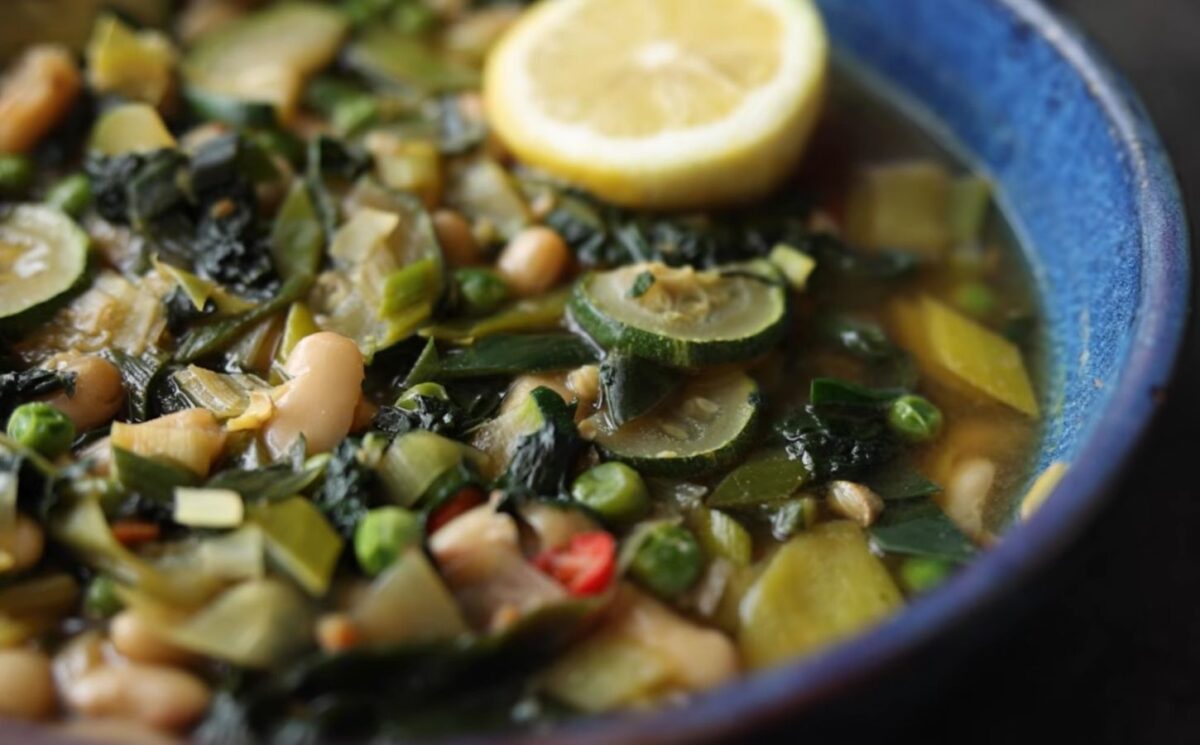
What if eating like the world’s longest-living people was as easy as a 15-minute stew? In a recent video, The Happy Pear shares a vegan longevity stew designed around the eating habits of the world’s longest-living populations. It’s quick, accessible, and built on ingredients that show up again and again in so-called Blue Zones diets.
Run by David Flynn and Stephen Flynn, The Happy Pear has grown from a small veg shop in Ireland into a global plant-based brand with a clear mission: help people eat more vegetables and feel better doing it. Their content focuses on simple, whole-food cooking that fits into real life, and this stew is a clear example of that approach.
Read more: These 4 Korean-Inspired Longevity Recipes Might Help You Live To 100
Built on the foods linked to longevity
Find more plant-based recipes on The Happy Pear YouTube channel.
The foundation of this dish reflects a consistent pattern seen in long-living communities: beans and greens. As Flynn explains, “the type of food that some of the longest living populations on the planet eat is based around beans and greens and it’s naturally really high in fiber.”
Cannellini beans form the backbone of the stew, bringing plant protein and complex carbohydrates. The brothers note that beans are “approximately 50 percent carbo complex carbohydrate,” making them both filling and steady in energy release.
Leafy greens are just as central. They use cavolo nero, also known as dinosaur kale, but emphasize flexibility. “Use whatever kale you have or whatever type of green whether it’s a collard green or a chard or a spinach,” Flynn says. Greens, they add, are a “huge component” of longevity-focused diets.
The result is a fiber-rich base that supports gut health and satiety without relying on processed ingredients.
The “chop and dump” approach
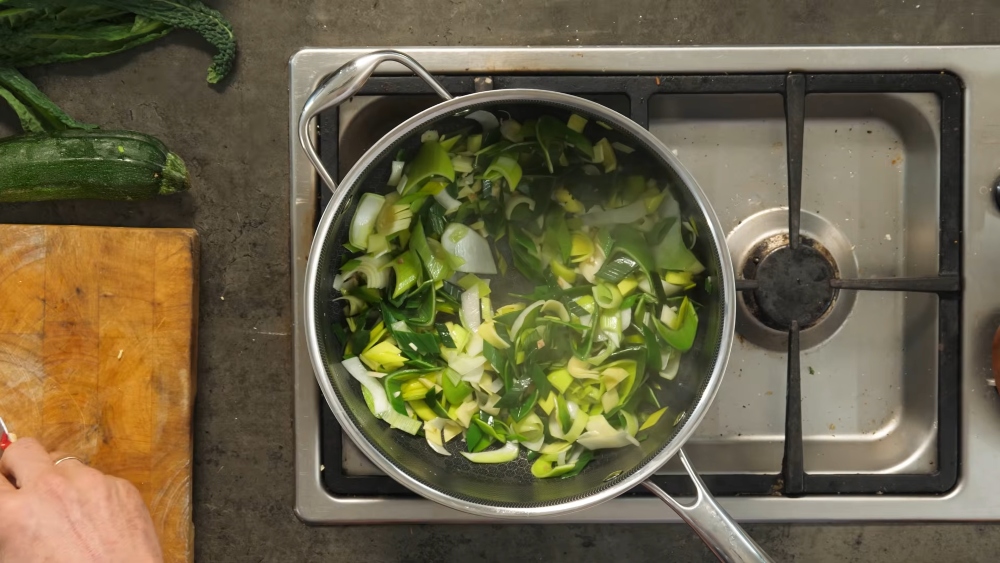
What sets this vegan longevity stew apart is speed. Traditional stews can take hours, but this one is ready in around 15 minutes. The method is intentionally straightforward. As Flynn puts it, “it really is chop and dump. Keep it moving.”
The process starts with leeks, garlic, ginger, and chili to build a quick flavor base. The leeks are chopped finely to speed up cooking, then lightly steamed rather than slowly sautéed. “Heat conducts 20 times quicker in water than it does in air,” Flynn explains, highlighting why they shift from frying to steaming early on.
Vegetables like courgette and peas are added as they’re chopped, keeping everything moving and minimizing prep time. It’s a practical approach that prioritizes efficiency without sacrificing depth.
Read more: Jamie Oliver Highlights ‘Important Connection’ Between Tofu And Longevity
Flavor layering without long cooking
Despite the short cook time, the stew still develops complexity through what the brothers call “time-rich ingredients.” These are foods that have already undergone long processes, like fermentation.
Tamari is one example. “Tamari takes anywhere from six months to two years to make,” Flynn says. “By adding it in, it’s like a hack.” Miso plays a similar role, delivering umami depth quickly.
They also focus on balancing the five base flavors: “Salt, sweet, bitter, acidic, umami.” Greens contribute bitterness, beans bring subtle sweetness, and lemon zest and juice add brightness. Flynn describes the citrus as “a bright bit of acidity that’ll cut through the beans … like a touch of sunshine.”
This layered approach means the stew tastes developed, even on a tight timeline.
Simple, flexible, and designed for everyday eating
The final dish is intentionally versatile. It can be served on its own or paired with bread for extra substance. “I always love to serve this with some toast or some toasted sourdough,” Flynn says.
The brothers also highlight how adaptable the recipe is. Ingredients can be swapped based on what’s available, and seasoning can be adjusted to taste. The focus stays on whole, plant-based foods rather than strict rules.
They even suggest it works beyond dinner. “Even for breakfast, it feels real like a kind of like a hug from the fields,” Flynn says, emphasizing its comfort and simplicity.
A practical take on longevity eating
At its core, this vegan longevity stew is less about a specific recipe and more about a pattern of eating. It leans on beans, greens, and minimally processed ingredients, all brought together in a way that fits into a busy day.
“Very simple, packed with nutrition,” Flynn says. And that’s the point. Instead of complicated protocols or hard-to-find ingredients, the focus is on making plant-based eating easy enough to repeat.
It’s a small shift, but one that mirrors how the longest-living populations eat every day.
Please note: PBN runs a sponsored content model. To explore how you can get featured, please email [email protected] or visit everkinddigital.com