Community
 Print
Print


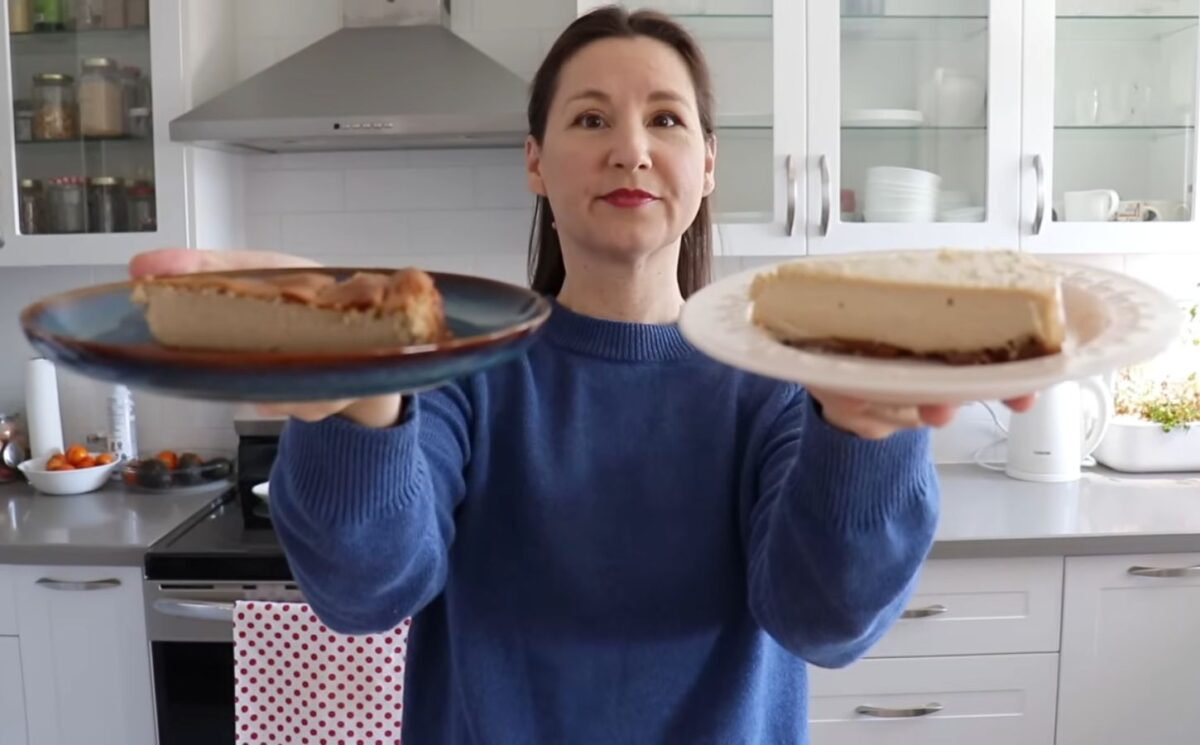
The viral chickpea cheesecake trend has taken over social media feeds, but can a dessert made from beans taste like traditional cheesecake?
Maddie, known for her YouTube channel Let’s Eat Plants, puts it to the test by making two popular versions and judging them side by side. She sums it up from the start: “If it tastes like beans, none of the other stuff really matters.” The viral chickpea cheesecake experiment quickly becomes less about novelty and more about whether these recipes can genuinely compete with a classic cheesecake.
Read more: 10 Dairy-Free Cheesecake Recipes
Two viral recipes, two very different approaches
Maddie starts with a recipe from Epic Mint Leaves, which leans into simplicity and whole-food ingredients. It skips a traditional crust and resembles a Basque-style cheesecake with a slightly darker exterior. She prepares the base using cooked chickpeas, softened cashews, dates, tofu, vanilla extract, and plant-based milk, blending everything until smooth.
She explains why texture matters early on. “I cook my own because you can actually make them softer this way,” she says, noting that softer chickpeas help create a creamier consistency. The mixture comes together thick and dense, already resembling a cheesecake filling before baking.
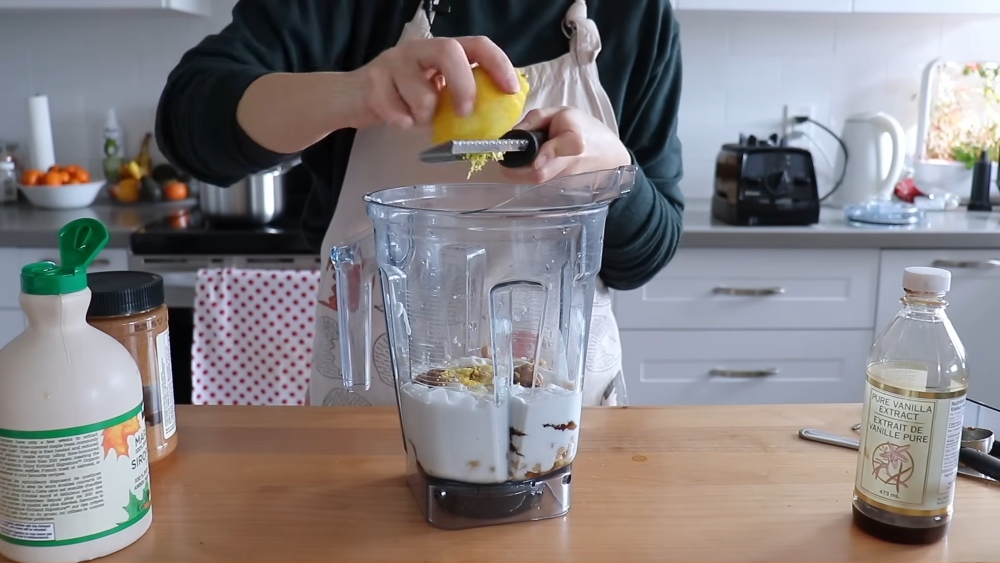
The second recipe, from Sauce Stache, takes a more classic route. It includes a crust made from crushed cookies and vegan butter, pressed firmly into a springform pan and chilled. The filling builds on a similar chickpea and cashew base but adds coconut milk, maple syrup, almond butter, and lemon juice and zest for tang.
Maddie adjusts the recipe as she goes, reflecting the creator’s flexible style. “I’m just going to start with one [lemon], and we’ll see after I blend that up if it needs a little bit more tang or sourness,” she says. After tasting, she adds more lemon to bring it closer to a traditional cheesecake flavor.
Blending, baking, and setting the cheesecakes
Both cheesecakes rely on blending to achieve a smooth texture, but the ingredients shape the final result. The first mixture is thick and structured, while the second is creamier and richer thanks to added fats and acidity.
Maddie bakes both and refrigerates them overnight to fully set. By the next day, the visual differences are clear. One looks more like a classic cheesecake, while the other stands out as a healthier, minimalist version.
Still, appearances only go so far. “One definitely looks a little bit more like a traditional cheesecake than the other,” she says, before moving into the most important part: the taste test.
Does it taste like chickpeas?
The defining question of the viral chickpea cheesecake trend comes down to flavor. Maddie approaches the first slice cautiously. “I am about to eat cheesecake made from chickpeas,” she says.
Surprisingly, the first version does not taste strongly of beans. “It doesn’t really taste like chickpeas,” she notes, though she adds that it leans more toward tofu flavor and lacks depth. Without acidity or enough vanilla, it misses the tang expected from cheesecake.
Texture-wise, she gives it a decent score, describing it as structured but not rich. “There isn’t really any richness or creaminess to it,” she explains. The absence of fat limits how close it feels to a traditional dessert.
The second cheesecake performs better in both flavor and texture. Thanks to the lemon juice and zest, it delivers a more recognizable cheesecake profile. “You really cannot taste the chickpeas in here,” she says, calling that a major win.
Its creaminess stands out as well. “You get a lot of really good creaminess and richness and like cheesecake mouth feel,” she explains, noting how it mimics the way traditional cheesecake sits on the palate.
Judging the results
Maddie evaluates both cheesecakes using four criteria: texture, cheesecake likeness, whether she would make them again, and bean flavor.
The first recipe scores lower overall due to its lack of tang and richness, though she still sees potential. “I actually might make this again,” she says, suggesting it could improve with a few tweaks.
The second recipe ranks higher across the board. It achieves better balance, stronger flavor, and a more convincing texture. While not identical to traditional cheesecake, it comes close enough to be enjoyable. “I actually love the flavor,” she says.
A healthier take on dessert
One of the biggest takeaways from Maddie’s viral chickpea cheesecake test is how nutritionally different these desserts are from traditional versions. Both recipes are high in fiber and contain significant protein, thanks to ingredients like chickpeas, cashews, and tofu.
She highlights how unusual that is for dessert. “What cheesecake actually has fiber in it?” she asks. The first version, in particular, is low in fat and sugar compared to typical cheesecakes, making it closer to a whole-food option.
Even the richer second version still offers more nutritional value than a standard cheesecake. Maddie notes that both could appeal to people looking for healthier dessert alternatives, as long as expectations are realistic.
Maddie’s experiment shows that viral chickpea cheesecake is more than just a gimmick, but it is not a perfect replacement either. With the right balance of ingredients, especially acidity and fat, it can come surprisingly close to the real thing.
Her advice is simple: enjoy it for what it is. These cheesecakes offer a creative, nutrient-dense twist on dessert, even if they do not fully replicate the classic.
For more vegan recipes, meal prep, and lifestyle content, check out Maddie’s YouTube channel.
Read more: High-Protein Mango And Cashew Cheesecake