Community
 Print
Print



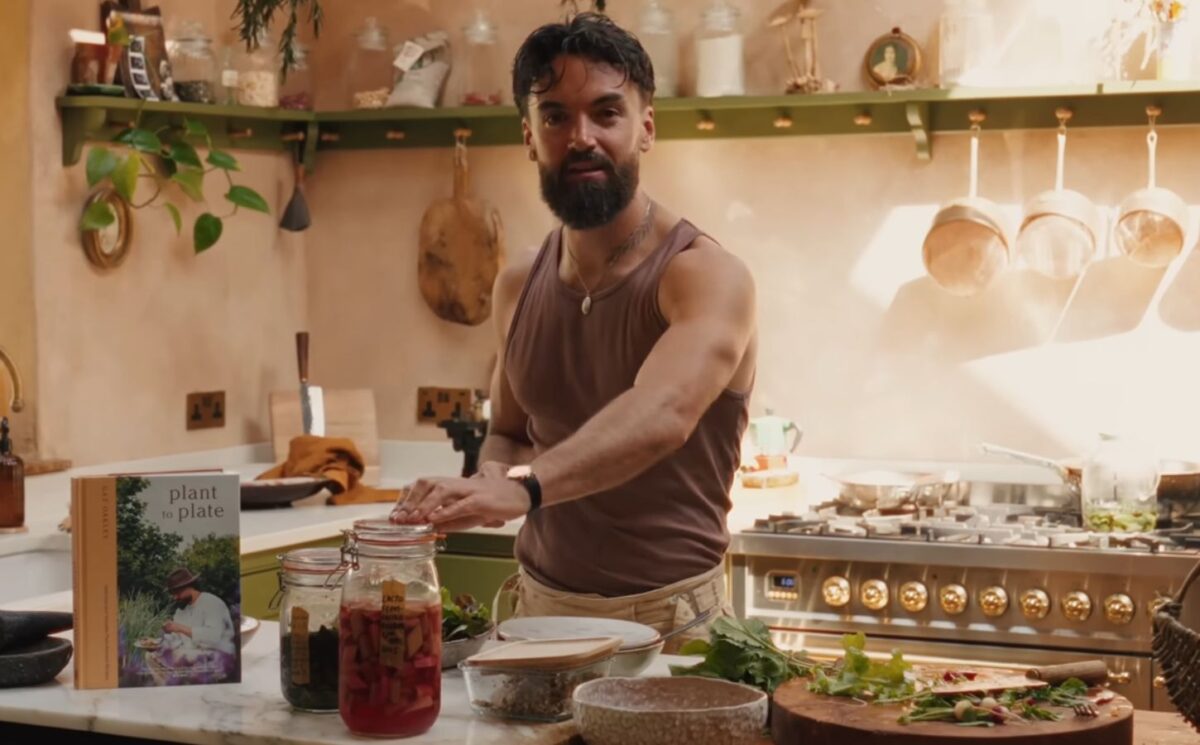
Modern food culture is built on speed, convenience, and constant choice. Eating well often means buying more, planning more, and relying heavily on processed products, even within plant-based diets. But a growing number of people are questioning whether that model makes sense. In a recent “what I eat in a day” video by Gaz Oakley, the idea of learning to eat like a peasant is reimagined through a fully plant-based lens, rooted in seasonal produce, simple staples, and food that comes directly from the land.
The day unfolds around what is available rather than what is trending. Breakfast is slow and simple. Lunch is assembled from garden greens and batch-cooked staples. Dinner comes from a foraged mushroom cooked over fire by the river. This version of peasant eating is entirely plant-based and shaped by growing, gathering, and preserving food. It is not about restriction or nostalgia, but about reconnecting with food, nature, and everyday rhythms.
Read more: Herbal Teas To Boost Energy, Immunity, Sleep, And Love
Former chef Gaz Oakley, who now lives largely off the land in rural Wales, frames this approach as practical rather than idealistic. You do not need acres of land or a dramatic lifestyle shift to eat like a peasant, he suggests. You need attention, patience, and a willingness to treat plants as the foundation of everyday nourishment.
Morning in the greenhouse
Oakley starts his day in the greenhouse, surrounded by blossoming plants. Tomatoes are already flowering. Passion flowers are thriving. He explains that mornings in this space are grounding, saying there is “no better feeling to wake you up.”
Rather than rushing into the day, he outlines what lies ahead: filming, laptop work, garden tasks, and a foraged dinner cooked outdoors. The rhythm is intentional. Food fits around the day, not the other way around.
Breakfast: Rhubarb porridge and nettle tea
Breakfast is simple and familiar. Oakley cooks organic rolled oats until creamy, then tops them with stewed rhubarb picked from a neighbor’s garden. He adds ginger and a little date sugar, letting the rhubarb cook down until “almost jammy.”
“I mean, porridge isn’t my favorite breakfast of all time, but it is my go-to,” Oakley says. “When you jazz it up with things like locally picked rhubarb from my neighbor’s garden, then it tastes absolutely amazing.”
He tops his porridge with coconut, seeds, and nuts and eats outside, barefoot, with nettle tea made from his garden. He intentionally eats with his “feet planted on the earth,” he says, calling those moments “super healing.”
As he eats, Oakley reflects on how different this pace feels from his former life. “Most of my life I spent force-feeding myself my breakfast to get out the house and get to work by a certain time,” he says. Now, he is able to take mornings slowly, something he describes as a major shift in lifestyle rather than a small luxury.
Banana bread, garden work, and balance
After tending to the garden and cutting grass for mulch, Oakley breaks for a snack. His partner, Tegan, has baked banana bread made without refined sugar or gluten. “This is the best banana bread ever,” Oakley says, calling it “delicate and light.”
He explains they use overripe bananas that supermarkets would otherwise throw away. It is a small example of a broader theme running through the video: valuing resources, avoiding waste, and finding richness in what already exists.
Between slices of banana bread and cups of water, Oakley returns to his laptop. He plans future videos, answers emails, and organizes tours and events. While he would rather be outside, he sees his online work as essential. “The best thing for me to do is to continue using this platform to encourage as many people as I can to get into growing, to get into cooking,” he says, adding that the goal is to help people “feel more human through these modern tools.”
Lunch: A plate built from the garden
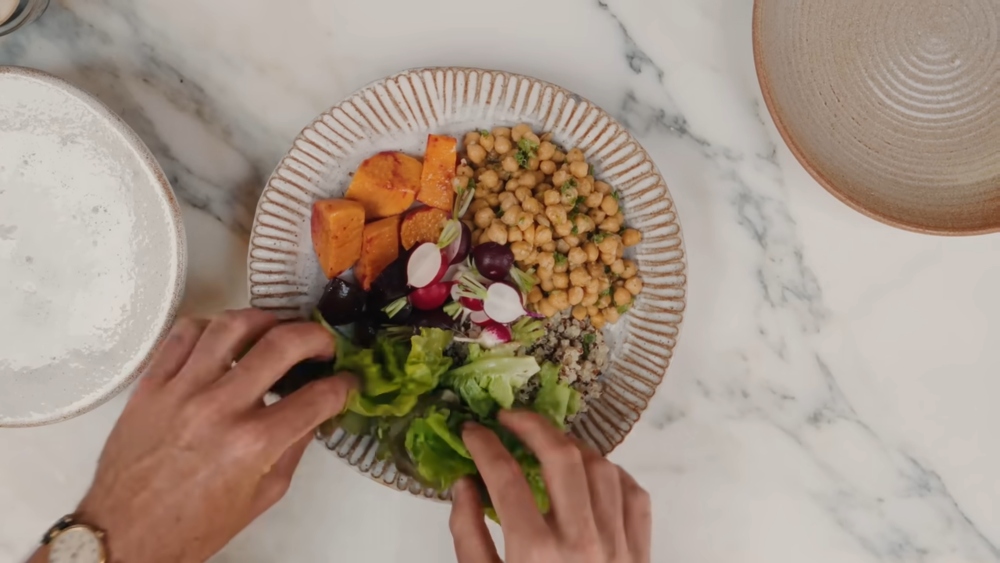
Lunch starts with harvesting. Oakley picks lettuce, rocket, radishes, and herbs, clearly delighted by the return of fresh food after winter. “It’s so nice being able to harvest fresh food again,” he says. “It is just a great feeling.”
Rather than cooking from scratch, he assembles a plate using batch-cooked quinoa and chickpeas, plus fermented foods he keeps on hand. “I can’t cook every meal from scratch. It’s impossible,” he explains. His solution is preparation and flexibility.
Looking at the finished plate, he counts “roughly 10 or so different homegrown or foraged ingredients.” The meal takes five minutes to assemble. His advice is practical and repeatable: batch cook staples, eat them cold when it suits, and focus on variety and color.
Planting sweet potatoes and rethinking self-sufficiency
Later in the afternoon, Oakley films garden content, including planting sweet potatoes. He admits this life was not always his plan. “I am not a country boy whatsoever,” he says. He grew up in cities and had never grown food before recent years.
The turning point came during lockdown. “I felt so reliant on all the systems around me,” he says. Learning to grow food became a way to regain confidence, security, and connection. “I do actually think it’s innate within us all to know how to nourish our bodies and to know how to connect with nature.”
Dinner by the river: Foraging chicken of the woods
Dinner is the most dramatic meal of the day. Oakley meets friends by a river to forage chicken of the woods mushrooms, a bright orange fungus prized for its texture and flavor. He describes it as “a gift to the local community,” referencing folklore that frames the mushroom as food provided in times of scarcity.
“They say that this chicken of the woods in ancient folklore was a gift to the local community,” he says, calling it “a nutritious powerhouse of a mushroom.”
He marinates the mushrooms with garden-grown ingredients, grills them over an open fire, and serves them with rice, kidney beans, and salad. Cooking outdoors, by water and fire, is central to the experience. “Cooking over fire, being by an element of water, results in the most amazing dining experience,” Oakley says.
A day that reflects a philosophy
As the day winds down, Oakley is clear that this lifestyle is not a prescription. “I know the life I’m living isn’t for everyone,” he says. For him, it is about intention, care, and mental well-being.
“If you can just take a grain of inspiration from it and apply it to your life,” he says, “then I hope it improves it.”
The food matters, but the message runs deeper. Eat simply. Grow something. Pay attention. In Oakley’s version of a “peasant” day, abundance comes not from buying more, but from noticing what is already there.
Find more videos about living off-grid, herbalism, and recipes on Oakley’s YouTube channel.
Read more: Take a peek at how Alana Blanchard powers pro waves and motherhood with plants