Community
 Print
Print




Many people still assume getting enough vegan protein means living on tofu, expensive powders, or carefully planned meals. But according to plant-based content creator Dénes Marton, it can be as simple as buying a baguette, opening a can of beans, or pouring a glass of soy milk. In a recent YouTube video, Marton breaks down seven “unsexy” habits that make vegan protein much easier to reach without obsessing over macros or eating highly restrictive meals. Alongside practical food ideas, he also explores why plant protein may support long-term health better than animal-based alternatives.
Marton, who runs the popular Daynesh YouTube channel, is known for making plant-based eating feel realistic and approachable. Rather than focusing on complicated recipes or expensive specialty foods, he focuses on simple staples that many people already eat every day. Throughout the video, he repeatedly shows how combining several modest vegan protein sources can quickly create meals with surprisingly high totals.
Read more: Leading Heart Health Organization Says Eat More Plant Protein, Not Meat
Bread is an underrated vegan protein source
Find more vegan recipes, lifestyle, and travel content on Marton’s YouTube channel.
Marton begins with one of the least glamorous foods imaginable: bread.
“Most people don’t realize that something as mundane as bread, something many people, vegan or not, eat every day, is actually a decent source of protein,” he says.
Using a baguette as an example, he explains that one loaf can contain around 21 grams of protein. While bread is usually categorized as a carbohydrate, Marton argues that many people overlook how much protein wheat-based foods contribute across the day.
He recommends choosing whole wheat bread whenever possible because it also increases fiber intake. This becomes a recurring theme throughout the video. For Marton, the goal is not simply maximizing vegan protein, but choosing foods that support overall health at the same time.
He also emphasizes that vegan diets often work differently from diets centered around a single large protein source. Instead of one steak-sized serving of protein, smaller amounts accumulate naturally from different foods throughout the day.
“As you start combining these different habits, your protein numbers start to skyrocket,” he says.
Whole grains quietly add more protein than people think
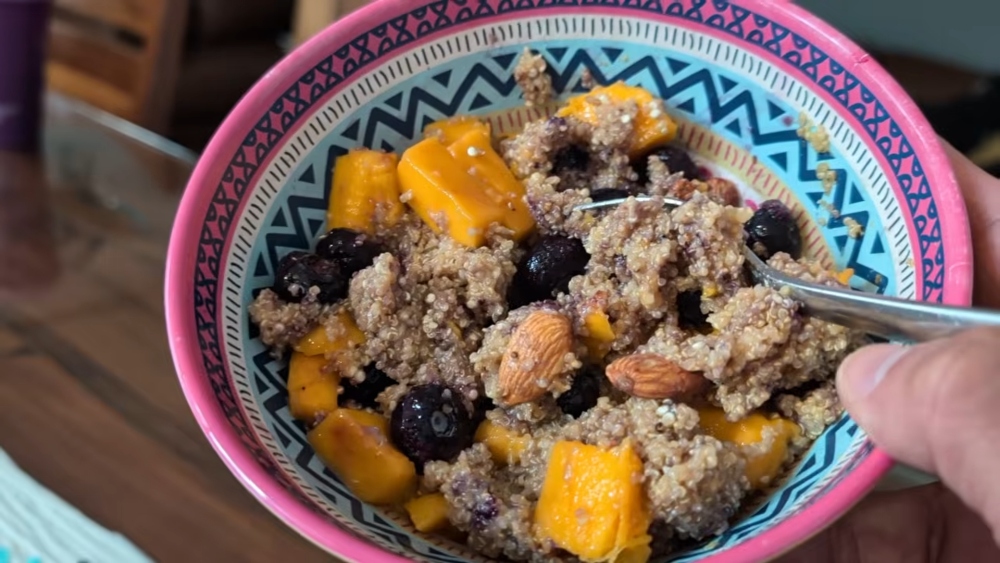
Next, Marton moves on to oats and other whole grains, describing them as another overlooked contributor to vegan protein intake.
“Name a more boring food than oats. I’ll wait,” he jokes while walking through a supermarket aisle.
He explains that one cup of oats contains around 11 grams of protein, while grains like buckwheat and amaranth offer similar nutritional profiles. Marton says people can use whatever whole grain is accessible to them, whether that means oatmeal, amaranth porridge, or buckwheat bowls topped with fruit.
Again, his focus is on stacking modest protein sources together instead of relying on one “perfect” food.
“It’s less that you have one big protein source on your plate,” he explains. “Instead, you get a little from here, a little from there.”
Marton also highlights research linking whole grain consumption to lower mortality risk. He references a meta-analysis involving more than 786,000 participants from the US, UK, and Scandinavian countries. According to the research, people consuming around 70 grams of whole grains daily had lower risks of cardiovascular disease, cancer mortality, and overall mortality compared to people eating little or none.
Read more: 10 High-Protein Pasta Dishes
Soy milk stands out from other plant milks
While oat milk may dominate coffee shops, Marton argues that soy milk remains the strongest option for vegan protein.
“One glass of soy milk has around seven to eight grams of protein, which puts it basically on par with cow’s milk,” he says.
He contrasts this with oat milk and almond milk, which he says contain significantly less protein. According to Marton, oat milk generally has about 60 percent less protein than soy milk, while almond milk contains roughly 90 percent less.
The point is not that other plant milks are bad, but that soy milk can dramatically increase vegan protein intake with almost no extra effort. Adding it to cereal, coffee, smoothies, overnight oats, or porridge creates an easy nutritional boost.
Marton also pushes back against negative attitudes surrounding soy.
“We’ve got to end oat milk’s uncontested reign of terror,” he jokes.
Protein powder becomes more useful when combined with other foods
Marton then turns to protein powder, though he frames it less as a magic solution and more as part of a larger system.
He describes making a high-protein breakfast by combining oats, soy milk, and protein powder into one meal that delivers 54 grams of protein total.
The broader lesson, he says, is that combining several moderate protein sources creates meals that feel substantial without needing meat or massive portions.
Overnight oats become one practical example. By pairing oats with soy milk and protein powder, the meal becomes significantly more protein-dense while still remaining affordable and convenient. Marton’s approach centers on repetition and simplicity rather than constantly searching for trendy recipes.
Beans remain one of the strongest plant-based foods
Marton calls beans one of the most unfairly dismissed foods in nutrition despite their strong vegan protein content.
“Your average can of beans has around 15 to 20 grams of protein,” he says.
He also points out their fiber content and affordability, arguing that beans are often underestimated because many people only encounter them as side dishes instead of central meal components.
Throughout the video, he references dishes he has created using chickpeas, lentils, and other legumes. One example is a chickpea omelette, which uses chickpeas as a protein-rich base instead of eggs. He also references hummus repeatedly, reminding viewers that it counts toward protein intake too.
“Hummus counts,” he says.
Marton argues that plant proteins offer advantages beyond protein numbers alone. He cites evidence linking higher animal protein intake with a greater risk of death, while plant protein is associated with a lower risk.
“Plant proteins don’t come with cholesterol,” he explains. “They’re much lower in saturated fat and they’ve got fiber.”
He also references recommendations from the American Institute for Cancer Research, which encourages eating whole grains and legumes regularly for cancer prevention.
“One of the summary cancer prevention recommendations that came out of it was to eat a whole grain and or a legume … at every single meal,” he says.
Pasta can contribute serious vegan protein
Pasta is another everyday food Marton believes people underestimate. “One serving of pasta has around 14 grams of protein,” he says.
Like bread, pasta is often viewed purely as a carbohydrate. But because it is typically made from wheat, it contributes a meaningful amount of vegan protein as well.
Marton strongly prefers whole wheat pasta because it retains the fiber benefits associated with whole grains. He says he recently combined whole wheat pasta with beans and hummus for a meal totaling 39 grams of protein.
Again, the emphasis is on stacking multiple moderate sources together.
“These habits really go crazy when you stack them,” he says.
Vegan alternatives can also help boost protein
For the final habit, Marton showcases vegan cheeses and meat alternatives during a vegan gathering with friends in Paris.
He points out that many vegan replacement products are made primarily from soy or wheat, meaning they often contain protein levels similar to the foods they replace.
“Most cases, they’re made from either soy or wheat to match the protein profile of the foods they’re meant to replace,” he says.
Marton highlights a vegan Parmesan made from chickpeas and notes how quickly plant-based innovation is evolving.
At the same time, he acknowledges that specialty vegan products can cost more. But he says his overall grocery spending has dropped since switching toward inexpensive staples like beans, oats, and grains.
The video ends with Marton reminding viewers that while vegan protein dominates online conversations, it is not necessarily the biggest nutritional concern for vegans overall. Still, his seven habits present a much simpler approach than many people expect.
For Marton, getting enough vegan protein is less about perfection and more about consistency. A bowl of oats here, a can of beans there, and a few everyday staples can add up quickly.
PBN runs a sponsored content model. To explore how you can get featured, please email [email protected] or visit everkinddigital.com