Community
 Print
Print



If you care about aging and wellness, there’s a new data point worth paying attention to: NAD+ levels in vegans. A recent analysis highlighted by Mic the Vegan suggests that people following a vegan diet may have a significantly stronger NAD-to-NADH ratio, a key biomarker tied to cellular aging.
Mic the Vegan, known for breaking down nutrition research for his large YouTube audience, dives into a December study published in Nutrition Research. With a background in nutrition science and a knack for translating complex biology into plain English, he walks viewers through findings comparing vegans, vegetarians, omnivores, and low-carb high-fat eaters. The results, he explains, put vegans clearly at the top.
Read more: Consuming Certain Plant-Based Foods Could Slow Down Biological Aging, Says Study
“We’re covering a very recent study … looking at a very important NAD biomarker in vegans compared to a few other diet groups,” he says.
What is NAD and why does it matter?
NAD stands for nicotinamide adenine dinucleotide. As Mic explains, it is “a super essential co-enzyme that is in our cells” and “plays a role in over 500 enzymatic reactions.” Those reactions include energy production, DNA repair, and regulating critical cellular responses.
It’s also considered an aging biomarker. “NAD itself can be viewed as an aging biomarker and of course it declines as we age,” he says. In one referenced study, people over 60 had about 30 percent less NAD than those under 45.
In simple terms, higher levels are generally better.
The new study focused not just on total NAD, but on the NAD-to-NADH ratio. Think of total NAD as fuel in the tank, Mic suggests, and the ratio as how efficiently that fuel is being used. “Higher is better,” he emphasizes.
The results: Vegans come out on top
The NAD-to-NADH ratios were striking across dietary groups. Omnivores had a ratio of 1.15, vegans stood out at 1.65, vegetarians measured 0.93, and those following a low-carb, high-fat diet came in at 0.96.
“[The vegans are] obviously the highest. You would want to be the vegans here in terms of this metric,” he says.
What makes the data especially surprising is the huge disparity between vegans and vegetarians. Despite eating similar amounts of vegetables, vegetarians had the lowest statistically significant ratio. “It’s also a good reminder that vegans and vegetarians are quite different, which I thought was fascinating,” Mic says.
The difference between vegans and other groups roughly mirrored the gap seen between younger and older adults in aging studies. “That makes me think, okay, so the vegans are what, like 30 years younger on average in terms of this one marker,” he says.
Why the ratio matters for aging
A higher NAD-to-NADH ratio is associated with more efficient mitochondrial function, better ATP production, and less oxidative stress.
Lower ratios are commonly seen in metabolic disorders. As Mic explains, low ratios are “commonly seen with fatty liver disease, heart disease, and insulin resistance, just general metabolic issues.”
When NADH builds up, it can leak electrons in the electron transport chain, leading to more reactive oxygen species. That increases oxidative stress, which contributes to aging and DNA damage.
In that context, the strong NAD+ levels in vegans become particularly noteworthy.
The fiber and antioxidant advantage
The researchers also examined dietary patterns. Fruits and whole grains were positively associated with a better NAD ratio. Meanwhile, total fat, saturated fat, and even monounsaturated fat showed negative associations.
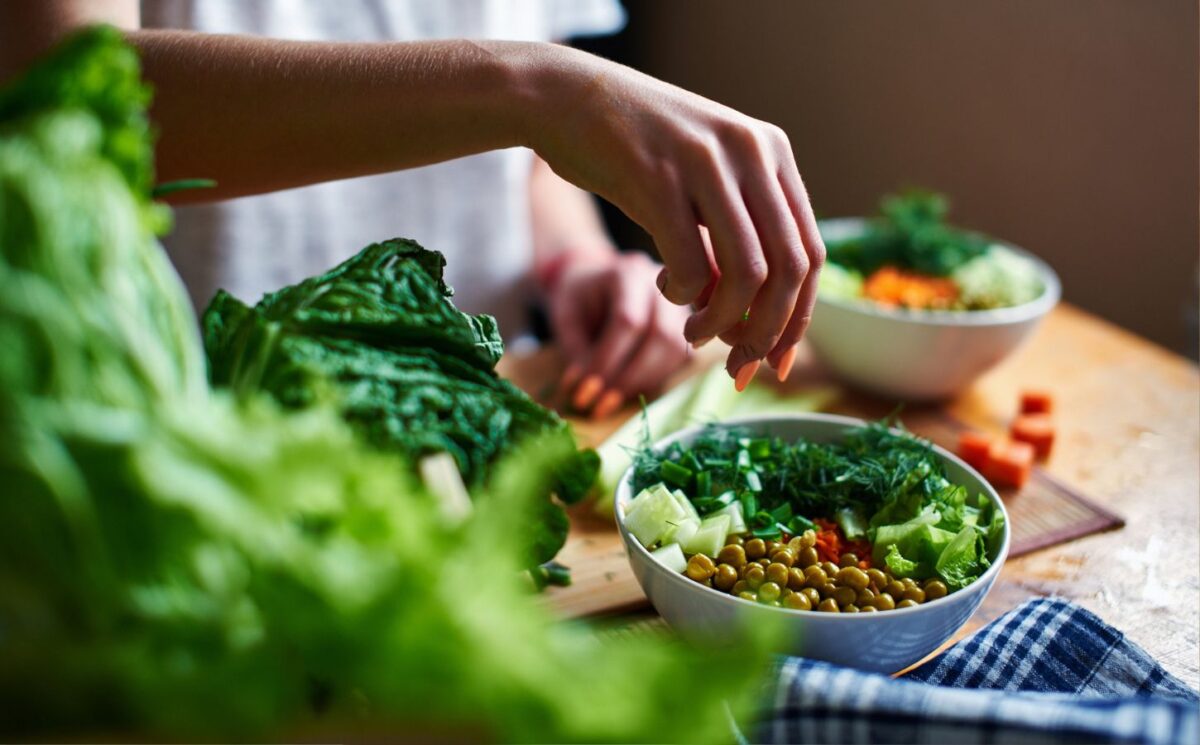
Vegans in the study consumed more than 50 grams of fiber per day, far more than other groups. The study authors state: “The significantly higher intake of dietary fiber observed in the vegan group may be particularly important.”
They continue: “Dietary fiber is known to attenuate postprandial glucose spikes. Consequently, a reduced glycolysis rate would consume less NAD.”
Vegans also consumed four times more vitamin C than meat-eaters and had more than double the antioxidant intake by ORAC score. Their overall antioxidant capacity was significantly higher than that of vegetarians.
In other words, the superior NAD+ levels in vegans may reflect a broader pattern of high fiber, high fruit, high whole-grain intake, and lower saturated fat consumption.
What about NAD supplements?
Given the buzz around NAD injections and precursors like nicotinamide riboside, Mic also addresses supplementation.
He shares a clip from Dr. Michael Greger summarizing the research: “Randomized double blind placebo control trials of NR in middle-aged or older adults failed to find any significant benefit over placebo” across a long list of outcomes, including artery function, blood pressure, insulin sensitivity, metabolic health, and physical performance.
In short, boosting NAD through diet may be more promising than expensive IV drips.
The study was conducted in Slovenia, and even the omnivore group consumed less animal protein than the average American. That makes the strong performance of vegans even more notable.
While more research is needed, the findings suggest that diet patterns rich in whole plant foods may support healthier cellular aging. As Mic concludes, “It appears that in this population of vegans in this study, they had higher levels of an NAD ratio that is healthy.”
For those tracking longevity science, the emerging data on NAD+ levels in vegans adds another intriguing piece to the puzzle.
For more videos about vegan health, science, and nutrition check out Mic the Vegan’s YouTube channel.
Read more: Want To Live To 100? Here’s What The Blue Zones Are Doing Right