Community
 Print
Print




The latest Balenciaga collection includes outfits made with bioengineered silk.
The luxury fashion house has announced its spring collection, which includes the first commercially available garments made with AMSilk GmbH’s silk protein yarn.
Read more: This Biotech Company Says It Could Produce Mycoprotein For Less Than A Dollar Per Kilogram
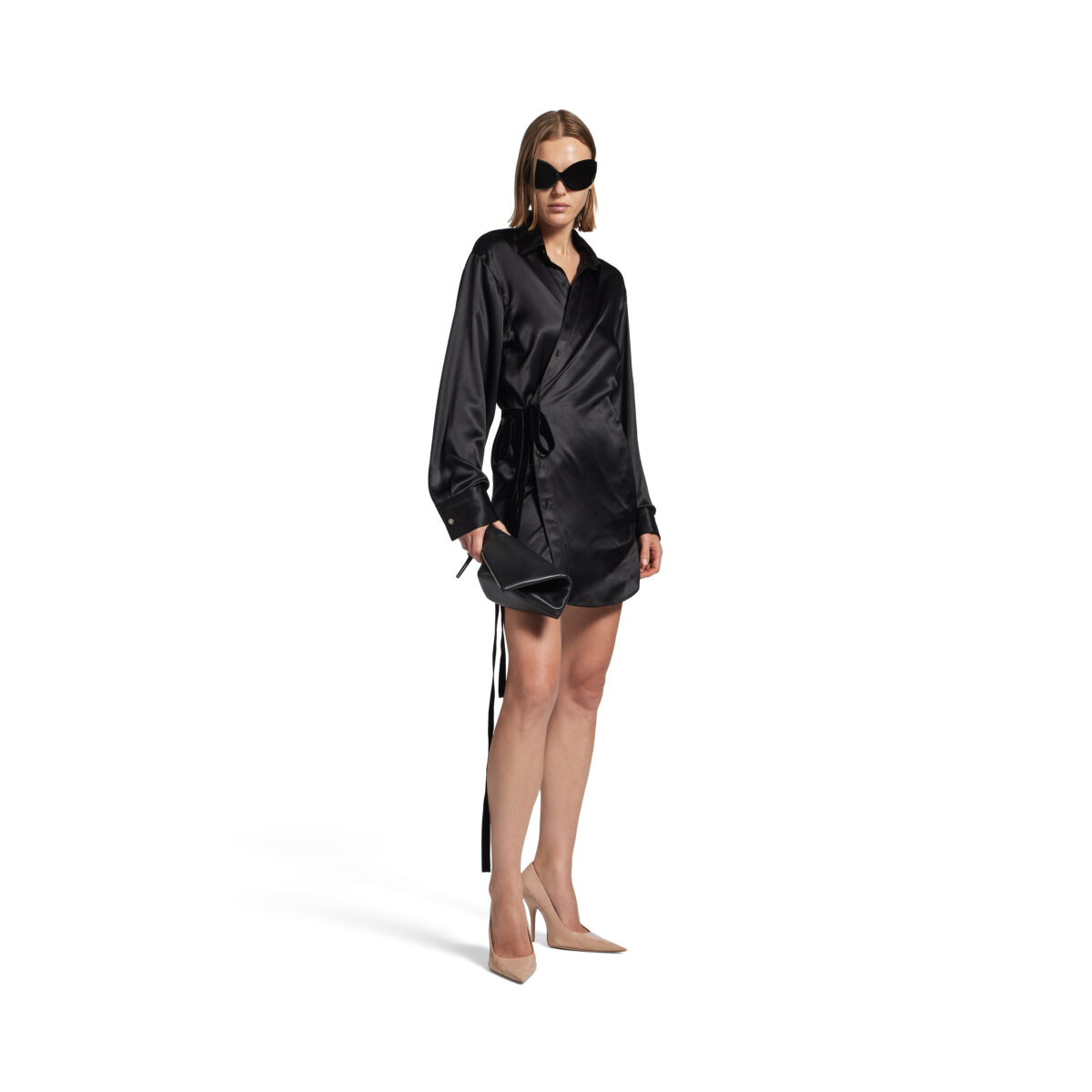
Balenciaga’s new collection includes a white, sharp-collared button-down shirt and a black shirtdress. Both items fasten to the side with a ribbon tie and feature an embroidered “tone-on-tone” Balenciaga logo on a single cuff.
As AMSilk’s commercial debut, the launch represents a significant milestone for the German biotech company and the fashion industry in general. According to Balenciaga and AMSilk, the fabric demonstrates a sustainable, animal-free alternative to traditional silk, designed for scalability and transparent, resilient supply chains.
AMSilk’s organic biopolymers are free from animal ingredients and certified with the Vegan Trademark. The yarns feature biodegradable, microplastic-free biomaterials, “derived from nature” and created using DNA editing and protein engineering.
“Seeing our material reach consumers through a global luxury brand is a defining moment for AMSilk,” said Ulrich Scherbel, the CEO of AMSilk.
“This application shows that bioengineered materials are no longer experimental,” Scherbel continued. “They are ready for demanding industrial environments and real market adoption. It reflects years of technological progress and demonstrates how innovation at [a] material level can enable both performance and more resilient production systems.”
Read more: Luxury Fashion Brand Rick Owens Becomes Latest To Ban Fur
What’s the deal with ‘real’ silk?
“Silkworms” are the larvae of domestic silk moths. They spin silk to build cocoons, in which the larvae transform into their adult forms. They weave their cocoons from a single thread that can be up to 900 meters (nearly 30 feet) long.
The silk industry breeds silk moth larvae on farms, but once the insects retreat to their cocoons, workers place them in hot water to unravel the silk, boiling the moths alive. Other farms might opt to freeze, bake, or gas the moths to extract their silk.
According to PETA, a pound of silk requires the deaths of around 3,000 silkworms. The industry likely kills trillions every single year, and the market is expected to grow from USD $21.4 billion in 2025 to $23.05 billion in 2026, then $33.43 billion in 2031.