Community
 Print
Print



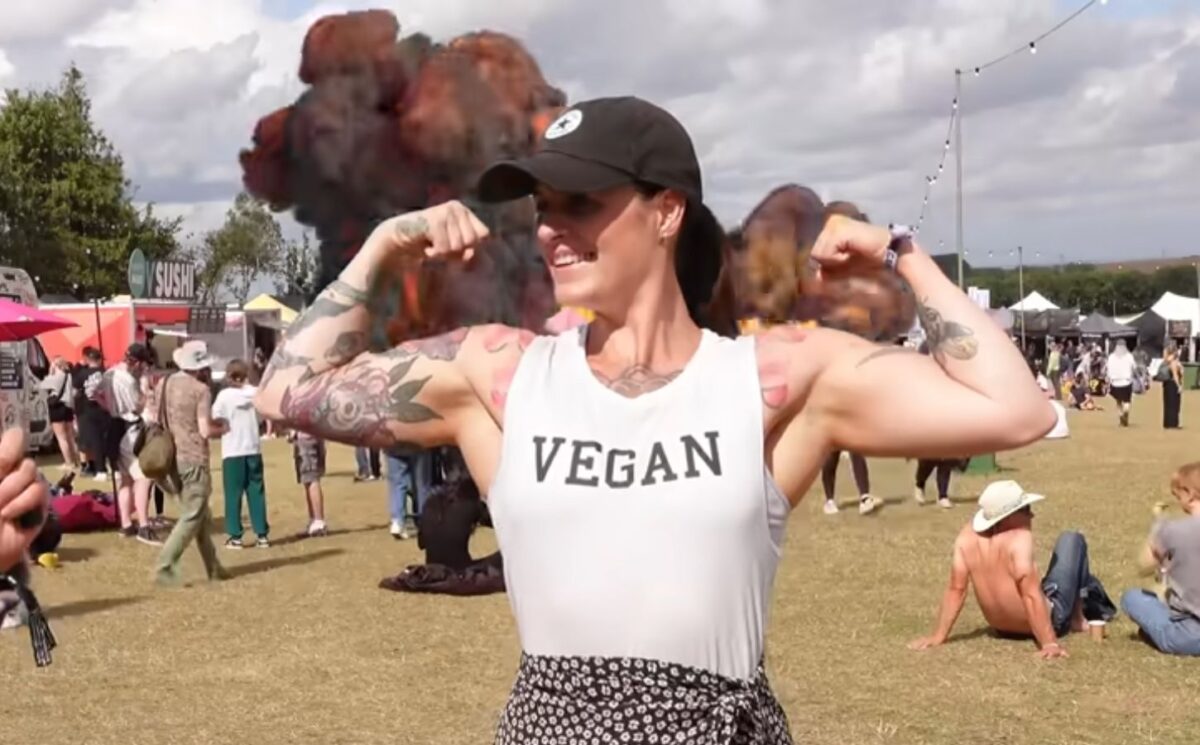
Think plant-based athletes struggle to get enough protein? Think again.
At one of the world’s largest vegan festivals, lifters, nutrition experts, and long-term vegans came together to share how they meet their protein needs and maintain impressive physiques on entirely plant-based diets.
In a video created by Dénes Marton, known as Daynesh on YouTube, the content creator explores common questions and misconceptions about plant-based living, including protein sources, diet variety, soy safety, and affordability.
Read more: 5 Elite Vegan Athletes Weigh In On The Best Foods For Protein
At the festival, Marton interviews athletes who have followed vegan diets for years, some for over three decades, offering firsthand insight into how a plant-based lifestyle supports strength, endurance, and overall health.
Addressing persistent myths and practical concerns, the video highlights a range of high-protein vegan foods and shows that meeting nutritional needs on a vegan diet is both achievable and sustainable for athletes and everyday people alike.
How long-term vegans think about food, cravings, and protein
The first thing Marton establishes is just how long many of these athletes have been vegan. Interviewees share timelines ranging from eight to more than 30 years. One attendee says, “10 years as of June,” while another notes, “I’ve been vegan for 16 years.” One of them, who was a vegetarian before going vegan, has gone “31 years without meat.”
When asked whether vegans “only eat vegetables,” the crowd laughs the myth away. One athlete jokes, “Not quite. Just grass. Not even vegetables. Just hay.” Another pushes back by listing an entire spectrum of foods: “Tofu, tempeh, seitan, lentils, beans, legumes, vegetables, fruits, grains, nuts, seeds, whole grains.”
Several note that going vegan actually expanded their diet. One athlete says, “I used to just eat to eat, and now I get like really excited about certain new dishes or trying new plant-based restaurants while I’m here in London and so on.”
Do you have to eat soy, and is it healthy? Doctors weigh in

Marton interviews two medical professionals on the soy question. A naturopathic doctor explains, “You can definitely be vegan and not eat soy. I know a lot of vegans who don’t eat any soy products. Definitely possible.”
Another doctor, board-certified in family medicine, directly addresses the safety debate: “Isn’t soy bad for you? If you want to look at actual, high-quality research, like a meta-analysis of randomized control trials? No.”
He adds nutritional context: “Soy is high in those [isoflavones], but they’re actually good for you.”
Both professionals stress that soy is optional, and that fears about phytoestrogens persist despite robust evidence showing soy is safe and beneficial.
Do vegans miss meat? For these athletes, the answer is clear
When Marton asks whether they miss meat, the answers are emphatic.
One participant says, “In the last 16 years, I have never once missed eating meat.” Another adds, “I eat vegan meat, so it’s like it’s the same thing.”
For some, the aversion has grown stronger over time. One athlete says, “None because I’m so disgusted by dairy now. I’m good. I’m good.” Another explains, “It’s not food anymore to me. It’s the flesh of an animal, [a] sentient being. So I don’t miss eating meat.”
The biggest misconceptions about veganism
Across interviews, the same myths surface again and again.
One athlete is blunt: “I think the biggest misconception people still have to this day is that you won’t get enough protein on a vegan diet.”
Others mention the idea that vegan diets are limited. One participant says, “I have not eaten such a broad diet in my entire life.”
Another highlights cultural assumptions: “A lot of people in India believe that it’s either too expensive or that it’s a Western concept. And that’s so untrue because religions like Jainism and Buddhism that originated in India have their roots in veganism.”
Another adds, “That it’s really, really difficult. It isn’t that difficult. Literally within a month of being vegan, you will be a master of it. It isn’t like some PhD you need to aspire to.”
Is veganism expensive? Athletes say the opposite
The affordability question comes up repeatedly. One long-term vegan says, “I have actually been a low-income vegan, and your staple foods are not expensive.”
Another corrects the misconception more sharply: “It is incredibly cheap to be vegan.”
One interviewee summarizes what many echoed: “You can eat so much great food that doesn’t require a significant investment of money.”
Marton also encounters someone who jokes about “hitting the lottery.” Still, the message across the board is consistent: whole foods like rice, beans, lentils, and vegetables remain some of the most cost-effective foods available.
So, where do they actually get their protein?
The athletes offer long lists of high-protein vegan staples. One explains, “It’s tofu, tempeh, seitan, beans… soy is a complete protein… You do get complete plant proteins as well.”
Another says, “I eat the high protein vegan foods like beans, legumes, tofu, tempeh, seitan, TVP… I do have a protein shake once a day as well.”
One athlete, who consumes 160 to 180 grams a day, says, “Vegetables, rice, legumes, like this stuff has protein in it.”
The message: protein isn’t hard to find on a plant-based diet, and plenty of athletes hit their targets without issue.
Staying vegan for life? These athletes are not going back
When Marton asks whether they’ll stay vegan long term, the responses are unwavering.
One participant says, “I will be vegan until the day I die.”
Another points to their tattoo: “I got it tattooed on my arm, so I’m kind of screwed if I don’t.”
One adds, “The only regret that I have as a vegan is that I didn’t go vegan sooner.”
Others echo the same sentiment almost word for word:
“Not doing it sooner.”
Marton’s video captures something rarely shown in mainstream discussions about veganism: plant-based athletes who thrive not despite veganism, but because of it. Their diets are diverse, their protein intake is adequate, and their commitment is long-term.
Instead of struggling, many describe a lifestyle that is easier, cheaper, healthier, and more fulfilling than what they left behind.
And for those still worried about protein? As one athlete puts it, “I’m telling you, when you go vegan, you become so mindful of what you’re eating. You almost become like a health coach, but for yourself.”
Find more vegan lifestyle and travel content on Marton’s YouTube channel.
Read more: ‘What I Eat In A Day As A Vegan Athlete’