Community
 Print
Print



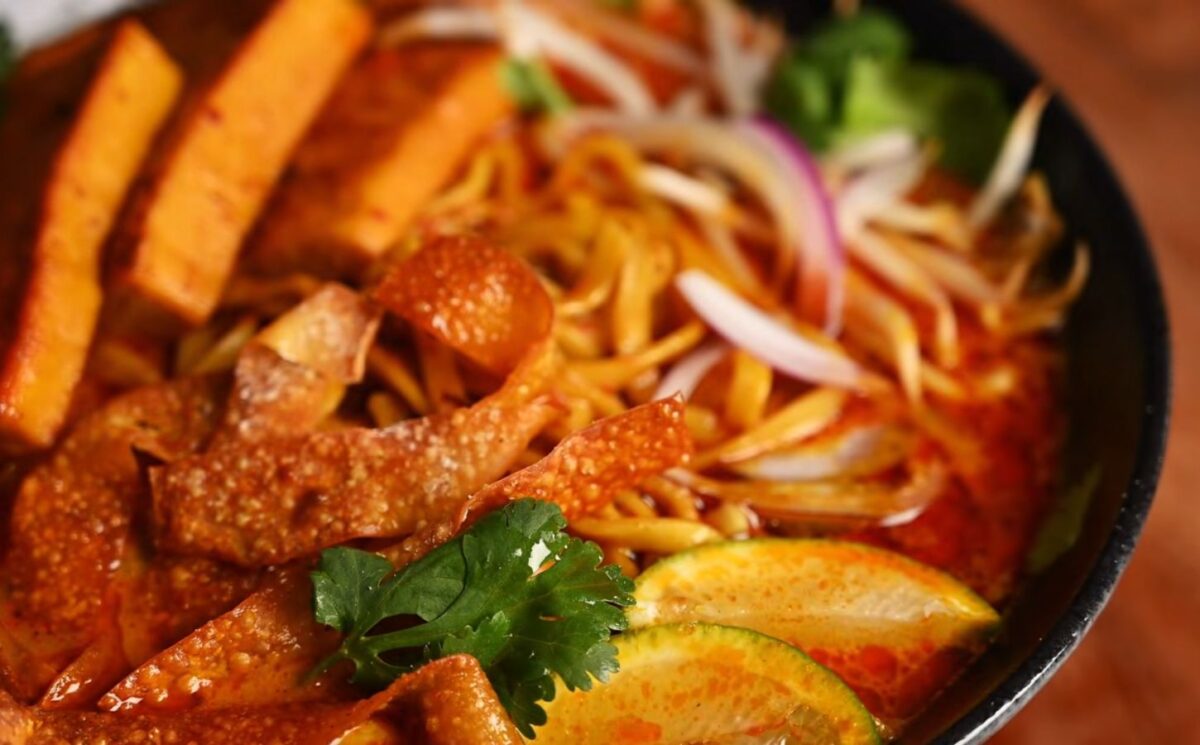
There’s something irresistible about a rich, slurpable noodle bowl, and this vegan khao soi delivers it in spades. Creamy, spicy, and layered with texture, it’s the kind of dish that feels restaurant-level yet comes together effortlessly at home. In a recent video, Wil Yeung, the cookbook author and creator behind Yeung Man Cooking, walks viewers through his take on this Northern Thai-inspired classic, drawing from his cookbook and his wide-ranging culinary influences.
Yeung is known for his calm, detail-driven cooking style, and here he focuses on building flavor step by step. The result is a vegan khao soi recipe that balances comfort with precision, using clever shortcuts and thoughtful techniques.
Read more: Peanut Butter Noodles: A Weeknight Favorite
A crispy topping without frying
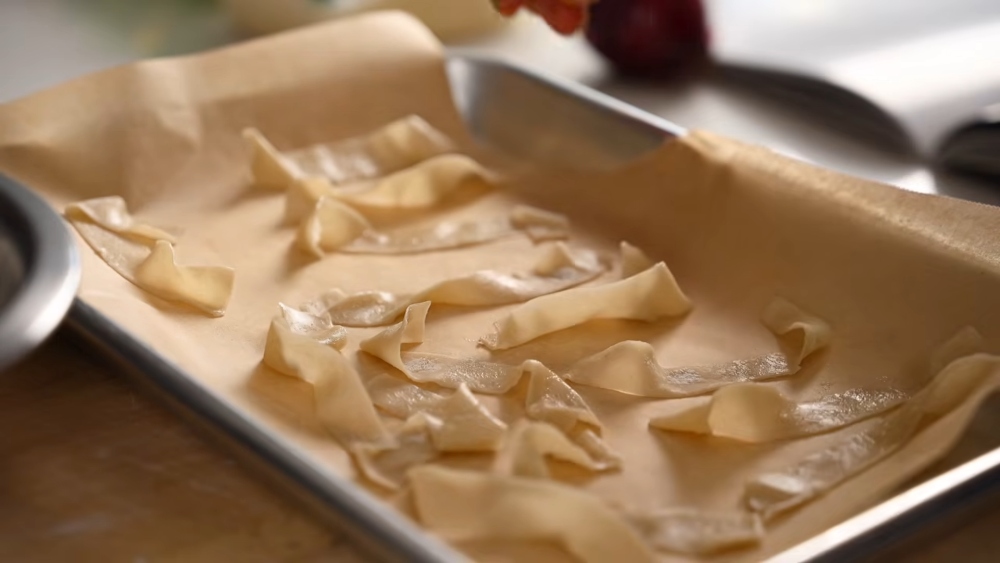
Khao soi is traditionally finished with crispy noodles, but Yeung takes a different route. Instead of frying, he slices dumpling wrappers into thin strips and bakes them.
He explains that “traditionally, some of the noodles are fried to create that crispy topping, but we’re going to use these dumpling wrappers instead. No frying required.”
After tossing the strips in avocado oil, he spreads them out carefully so they don’t overlap. This step matters. Even spacing ensures they crisp evenly in the oven. A short bake transforms them into golden, crunchy strips that can be made ahead and stored for days, adding convenience to the process.
Before moving to the broth, Yeung preps fresh toppings that bring balance to the dish. Thinly sliced red onion adds sweetness and color, while lime wedges bring acidity. Bean sprouts offer crunch, and cilantro adds brightness.
He notes that while red onions are ideal, substitutions work: “You can use shallots or white onions if that’s what you have on hand.” That flexibility runs throughout the recipe.
Searing tofu and building a rich broth
Protein comes in the form of tofu, and Yeung emphasizes one key detail: firmness. “It’s important to get a tofu that’s truly extra firm so that it doesn’t fall apart when you go to sear it.”
He slices the tofu into thick slabs and sears them in a non-stick pan until lightly golden. There’s no seasoning at this stage. Instead, the tofu is designed to absorb the broth later, acting as a sponge for flavor.
This step is simple but essential. The sear adds structure and prevents the tofu from breaking apart once it’s simmered.
The heart of this vegan khao soi recipe is the broth. Yeung starts with the cream from a can of coconut milk, letting it heat in the pan before adding red curry paste.
He explains that cooking the paste in the coconut oil “will start to sauté the paste, bringing out some amazing flavor and aroma.” From there, turmeric and curry powder deepen the base.
The tofu goes back into the pan, followed by the remaining coconut milk and vegetable stock. Soy sauce, dark soy sauce, and maple syrup round things out, creating a balance of salty, sweet, and umami notes.
Letting the broth simmer is key. Yeung points out that these extra steps “will really build a more robust base for the broth, allowing the flavors to really sing.”
Noodles that hold the broth
For the noodles, Yeung opts for thick, flat wheat noodles, though he notes there are many variations. “This is not the only way of making this recipe, it’s really up to you and it’s your choice.”
Once cooked, he rinses them in hot water to remove excess starch. This prevents the broth from becoming overly thick or “goopy,” keeping the final dish clean and balanced.
Everything comes together in layers. The noodles go into the bowl first, followed by the creamy broth and tofu. Then come the toppings: onions, bean sprouts, cilantro, lime, and the crispy dumpling strips.
A drizzle of chili oil is optional but recommended for added depth and heat.
The final result is as visually striking as it is flavorful. Yeung describes it as “one of the most beautiful bowls of noodles ever,” pointing to the contrast between the crimson broth and bright green herbs.
A balance of flavor and texture
Each element plays a role. The broth is “rich, it’s bold,” with “this fruitiness from the coconut milk.” The lime adds brightness, while the noodles soak up the flavor. The tofu carries the broth’s depth, and the dumpling strips bring crunch.
He sums it up simply: “chewy, slurpable noodles in a creamy, spicy, sweet, savory broth.”
It’s a dish built on contrast, but also on thoughtful technique. And while it may look complex, Yeung reminds viewers that it’s “easy enough to make in the comfort of your own home.”
For more irresistible plant-based recipes from around the world, visit Wil Yeung’s YouTube channel.
Read more: 10 Vegan Noodle Recipes