Community
 Print
Print



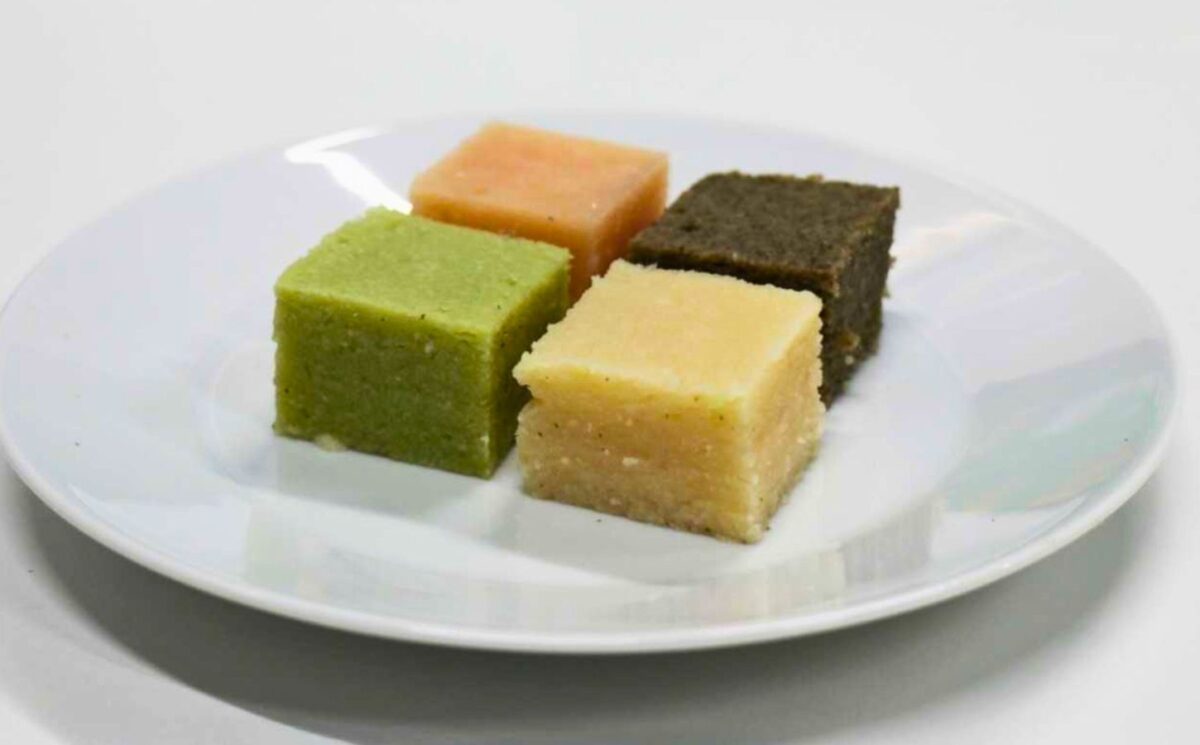
You can turn lentils into a texturized protein similar to fake meat with a simple method that has been around for hundreds of years: directional freezing.
According to a new study, scientists have transformed various legumes into fibrous gels with a similar texture to meat by freezing them. The scientists’ research “unlocks” a new route to making affordable, nutrient-dense, texturized alternative proteins, both at home and at an industrial level, out of lentils and other whole foods.
Read more: Dutch Shoppers Could Save Up To 30% By Buying Plant-Based
Using directional freezing, or “freeze structuring,” the scientists were able to turn lentils, peas, and beans into a fibrous, versatile, meat-like alternative protein.
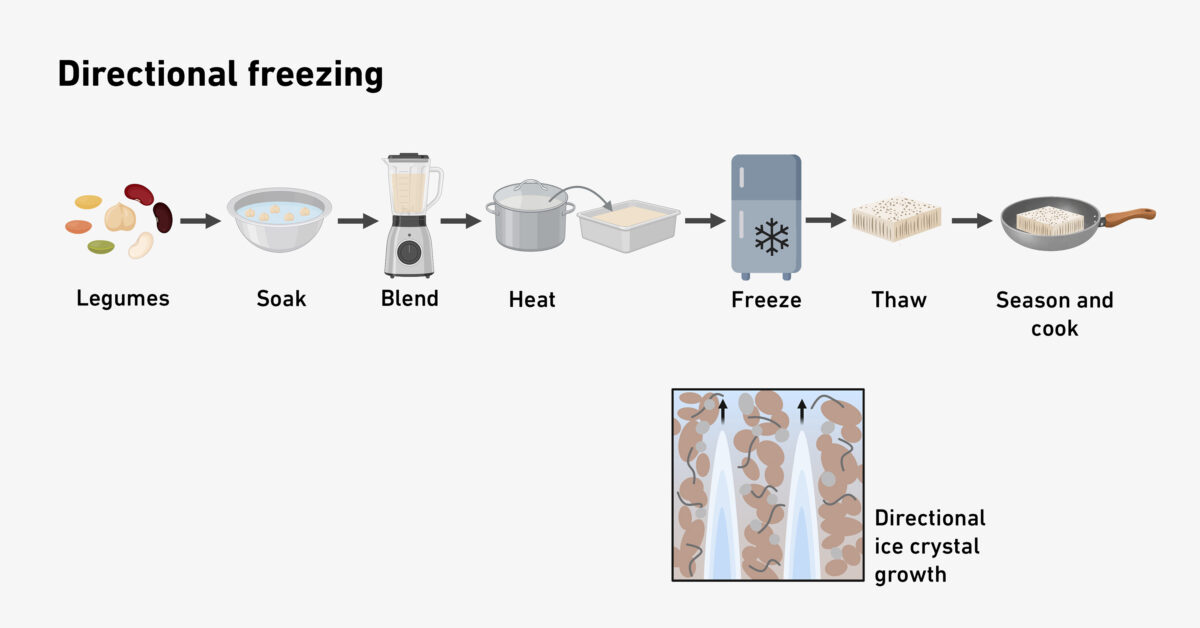
The method they used involves soaking legumes and blending them to create a fine, uniform purée, then heating this at 90°C to create a gel. That gel is then frozen from one side using a mould that is insulated on all sides except one, which causes parallel ice crystals to form in the same direction. When thawed, the ice melts, but the directional, fibrous structure formed by the crystals remains.
Scientists from the Institute of Food, Nutrition, and Health at ETH Zürich, Switzerland, carried out the research, which was published in npj Science of Food. Patrick Rühs, professor of food structure engineering at ETH, led the research.
Rühs said, “During chewing, a directional, fibrous structure provides a distinctive bite that is familiar to – and enjoyed by – many people from meat or fish. In meat and fish, this structure is formed by the directional arrangement of muscle fibres.”
‘This method is so simple that it can be performed easily by anyone in a household kitchen’
Using the same freezing method with different legumes facilitates unique textures, and these can be combined to cultivate a desirable mouthfeel. For example, the researchers found that red lentils, black lentils, and mung beans created particularly strong and stable fibers, while soybeans and black beans resulted in softer fibers.
Andrea Bach, a PhD student in Food Structure Engineering who also worked on the research, said, “Our method works with legume species that together account for 96 percent of legume production worldwide.” She added, “The new method is so simple that it can be performed easily by anyone in a household kitchen.”
Water and a freezer are the only tools required for the process.
Read more: Scientist Names Tofu The Single Best Protein For Nutrition, Sustainability, And Affordability
Kōri tofu, Quorn, and the power of legumes
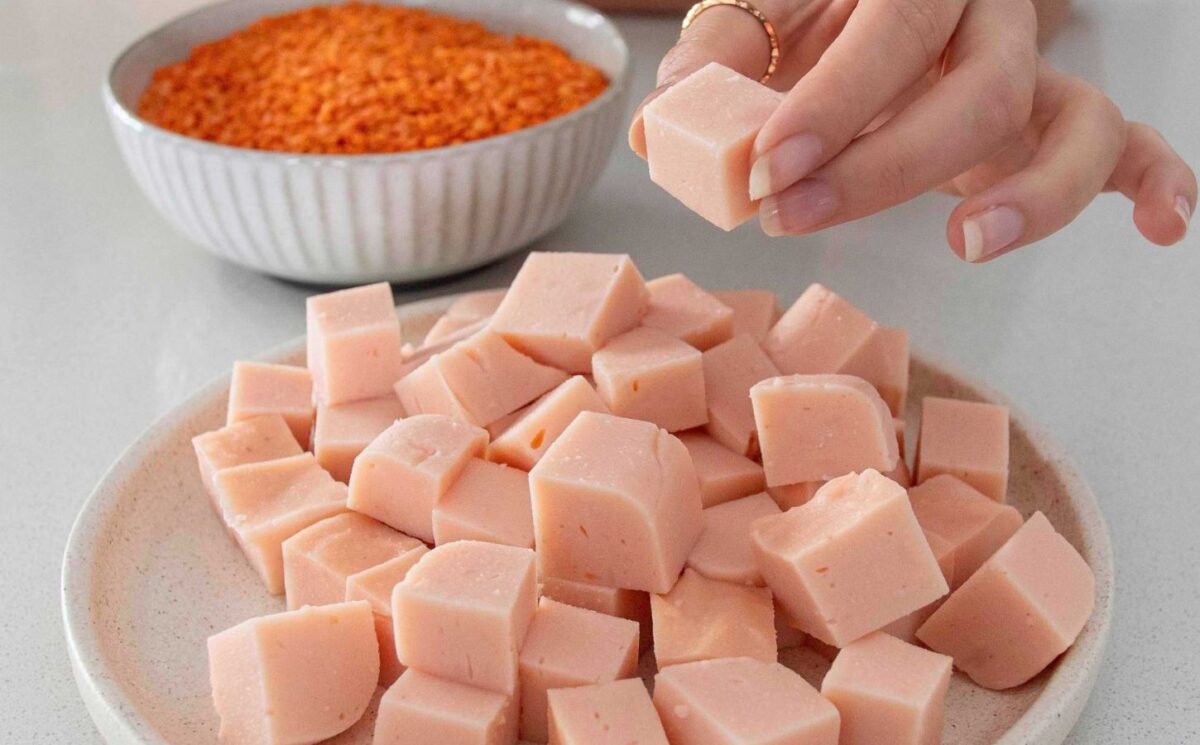
While using Rühs’s freeze structuring on legumes to create a desirable texture is still emerging, companies like Quorn have used similar techniques to create fibrous meat alternatives. The process has roots in Japan’s kōri tofu, a freeze-dried ingredient first mentioned in the mid-1500s as a shelf-stable, light, and nutritious protein, and there are also countless different recipes for “lentil tofu,” most of which involve boiling, then chilling, the soaked, blended lentils instead of freezing them for a uniform texture.
In the UK, a group of researchers is currently investigating whether beans, peas, and lentils, all of which are cheap, nutritious, and sustainable, could help to preserve British farming amid environmental issues, the climate crisis, and global instability.
PBN runs a sponsored content model. To explore how you can get featured, please email [email protected] or visit everkinddigital.com