Community
 Print
Print



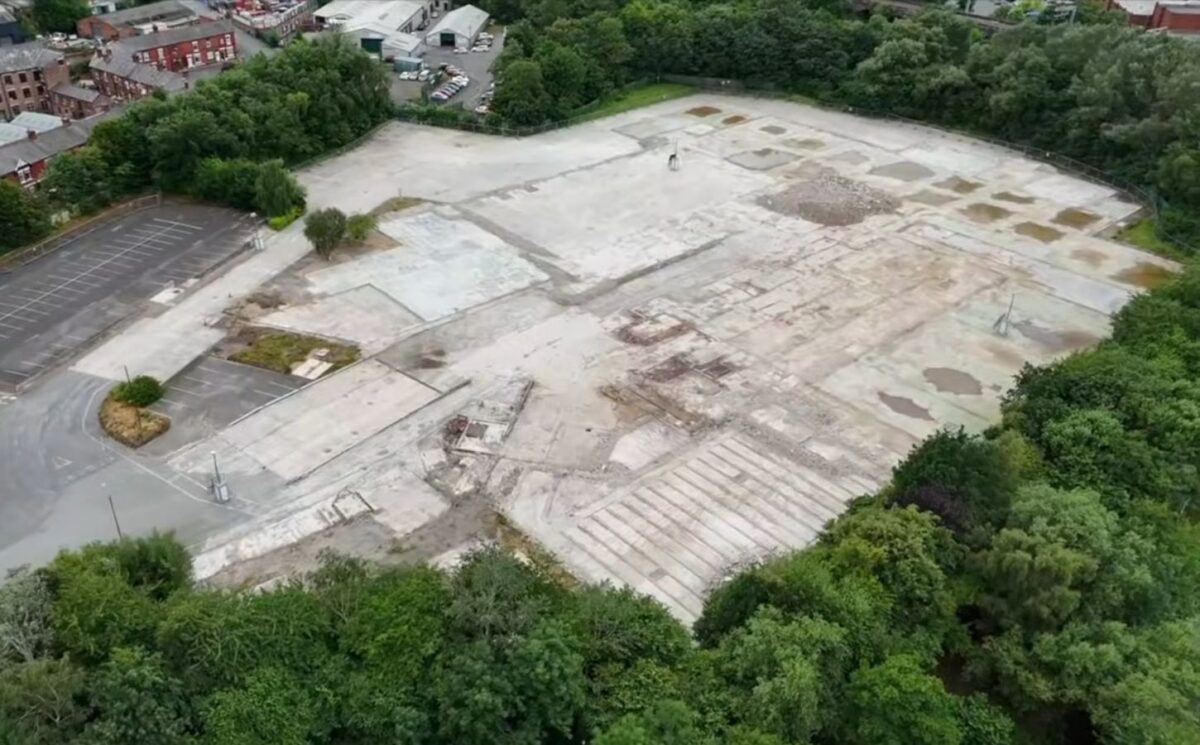
A large pig gas chamber in the UK has been demolished after decades of operation, becoming a powerful symbol of what animal activists can achieve by exposing practices the meat industry largely keeps out of public view.
Pigs in Britain are routinely slaughtered using carbon dioxide gas. At Pilgrim’s Ashton-under-Lyne facility near Manchester, hundreds of thousands of animals were reportedly killed each year using highly concentrated CO2.
Read more: Zack Polanski Backs Project Slingshot Action Highlighting CO2 Pig Slaughter
Now, the slaughterhouse, including the gas chamber investigated by Australian animal rights activist Joey Carbstrong and his team, has been reduced to rubble. In a recent YouTube video, Carbstrong shared footage of demolition crews dismantling the facility, followed by drone images showing the site completely flattened. The activist said that the slaughterhouse had killed approximately 750,000 pigs annually before closing in 2023.
Carbstrong, an Australian former gang member who has spoken publicly about turning his life around, is now a vegan animal rights campaigner based in the UK. His feature-length documentary, Pignorant, examines the treatment of pigs within the UK pork industry and follows the investigation that obtained footage from inside the Ashton gas chamber.
Inside a slaughter method few consumers ever see
Find more videos on animal rights advocacy on Joey Carbstrong’s YouTube channel
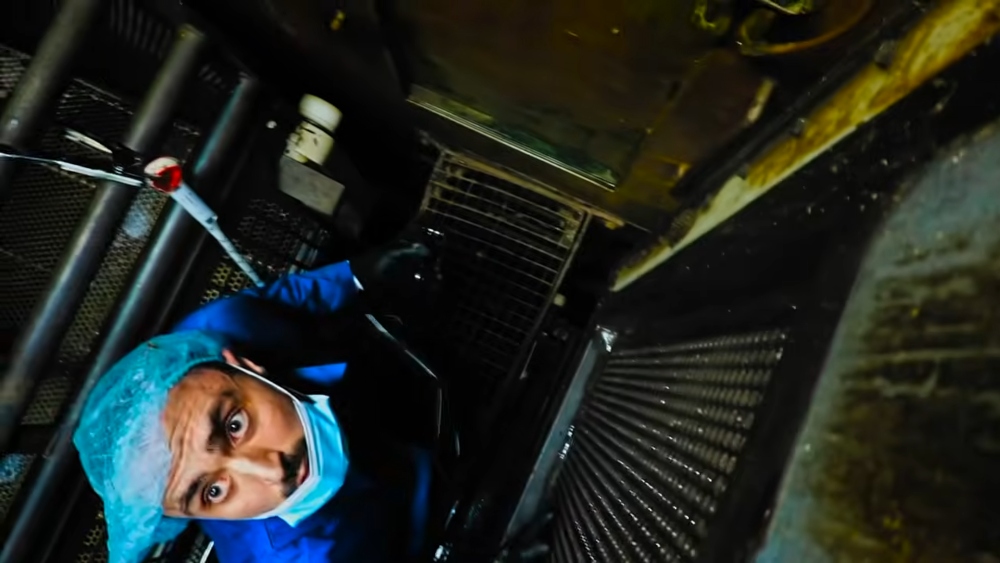
Carbstrong said that his team investigated the Ashton slaughterhouse in February 2021. They captured what he describes as the first footage from inside a working pig CO2 gas chamber in the UK. The images challenged the industry’s reassurances about gas killing. It appeared to show pigs panicking, vocalizing, and struggling inside the chamber. In high-concentration CO2 systems, pigs are placed into metal gondolas or cages and lowered into an atmosphere containing the gas.
Carbstrong began visiting the Ashton site around 2017, when activists regularly gathered outside as part of the Animal Save Movement. The location had reportedly become home to one of the earliest Save groups, whose members witnessed animals arriving at slaughterhouses and documented their final moments.
Carbstrong has said that activists could hear pigs screaming behind the fence from a public walkway near the facility. Workers allegedly dismissed their concerns, at times suggesting the animals were play-fighting or mating rather than reacting to the gas. Carbstrong says that the investigation ultimately left no room for those explanations.
A rapid timeline from exposé to closure
Carbstrong draws attention to the timing of several events surrounding the investigation’s publication and Pilgrim’s subsequent announcement that the Ashton site would close.
The footage was released through an exclusive investigation by The Guardian on May 2, 2023. Carbstrong says Pilgrim’s was contacted several days before the investigation was published and offered a right to reply. According to Carbstrong, a crisis management specialist was given access to the company’s correspondence as it prepared its response.
Pilgrim’s disputed that the footage showed its gas chamber, Carbstrong says. The investigation nevertheless spread rapidly online, with related videos receiving around 2 million social media views. Two days after publication, he says, a pig supply chain director and an agricultural director abruptly left the company. On May 16, exactly two weeks after the investigation appeared, Pilgrim’s announced plans to close the Ashton slaughterhouse. The decision put 542 jobs at risk.
The facility conducted its final slaughter on July 7, 2023, according to Carbstrong. It remained abandoned afterward and has now been demolished, ending roughly 70 years of slaughterhouse operations at the location. Carbstrong says he believes warehouses may eventually be built on the land.
Pilgrim’s attributed the closure to unfavorable market conditions and a lack of viable opportunities to modernize or expand the aging site. Operations would be transferred to facilities in Spalding and Westerleigh, the company said, with 90 new roles expected to be created. Carbstrong argues that those explanations do not tell the full story.
Carbstrong alleges ‘damage control’
In the video, Carbstrong repeatedly emphasized that Pilgrim’s has not publicly credited animal rights campaigning or the gas chamber investigation for its decision. He says the company offered multiple economic and logistical reasons because admitting that activists contributed to the closure would demonstrate the effectiveness of grassroots action.
“This all screams of damage control,” Carbstrong says.
Carbstrong also disputes the suggestion that the Ashton facility’s annual capacity could simply be absorbed elsewhere. He says the Spalding and Westerleigh sites were already operating near capacity and would have been unable to take all of the approximately 750,000 pigs previously slaughtered at Ashton.
He also claims that an insider at the Westerleigh site told him managers discussed Carbstrong frequently, increased security, and privately indicated that the Ashton investigation had contributed to the closure.
Carbstrong acknowledged that economic difficulties facing the pork sector may have played a role. However, he says that he believes the investigation and resulting publicity were “the final thing that tipped them over the edge.” Carbstrong says, “The industry would never credit something like this to activists or to grassroots campaigners, because otherwise that empowers us.”
UK pig slaughter fell after the facility closed
The closure coincided with a significant decline in the number of pigs slaughtered across the country. Carbstrong says 1.1 million fewer pigs were killed in the UK during 2023, representing a drop of approximately 10 percent and the lowest annual total since 2013.
According to Carbstrong, Ashton alone had accounted for close to seven percent of the country’s pig slaughter. Removing a facility capable of killing roughly 750,000 pigs annually therefore represented a substantial loss of capacity. Carbstrong argues that the closure must have contributed to the nationwide decline, though industry explanations focus on fewer pigs being bred on farms.
When a major slaughterhouse disappears, he says, farmers cannot necessarily send the same number of animals to another facility hundreds of miles away. Remaining high-capacity gas chambers may already be full, while additional transportation can create practical and financial barriers. As a result, producers may ultimately breed fewer pigs.
Carbstrong has estimated that around nine major CO2 gas chamber facilities slaughter approximately 90 percent of the pigs killed in the UK, and that roughly 100 smaller slaughterhouses account for the remainder. That concentration, Carbstrong says, makes each large gas chamber exceptionally important to the industry and particularly vulnerable to sustained public pressure.
“When one gets shut down, that’s a huge hit to the industry,” he explains.
The release of Pignorant in early 2024 brought further attention to the investigation and the use of CO2 gas. Carbstrong says that he believes the sector had still not fully recovered its slaughter numbers by that point.
Read more: UK Meat Industry Told To Phase Out CO2 ‘Stunning’ For Pigs Within Five Years
A site marked by years of resistance
For local activists, Ashton was more than a slaughterhouse. It was a place where campaigners had gathered for years to bear witness to pigs arriving in transport trucks, offer them water and record their condition before they entered the facility.
Carbstrong says that he recalls standing outside the site and wondering whether the screams activists heard were connected to the same CO2 slaughter process he had seen documented in Australia. Years later, his team managed to place cameras inside the facility and obtain the evidence. Carbstrong says the investigation involved serious personal risks and that he feared the operation could go wrong, but that those risks ultimately produced an extraordinary result: a gas chamber that once killed hundreds of thousands of pigs each year no longer exists.
Carbstrong says he would like to visit the flattened site and walk across the ground where the chamber once stood, but that he is currently banned from the Greater Manchester area in connection with a more recent investigation. In the video, he encourages those who can visit the site to leave flowers in memory of the animals killed there.
Although pigs continue to be slaughtered in vast numbers throughout the UK and around the world, Carbstrong says the demolition should still be recognized as a meaningful victory. “It is a win,” he says. “It’s just beautiful. It’s a beautiful sight.”
‘We have a lot of power’
The central message of Carbstrong’s video extends beyond one slaughterhouse. He describes the pork industry as a “house of cards,” dependent on a relatively small number of high-capacity facilities, narrow profit margins and continued consumer spending. Exposing what happens inside those facilities can cause consequences far beyond a single viral video.
Carbstrong says industries rarely acknowledge that protests, investigations, boycotts or changing consumer behavior have affected their decisions. Publicly admitting that activists helped close a facility could inspire others to take similar action.
“Really, we do have a lot of power,” he says. “We have to realize that it’s our money that makes these industries lucrative and grow,” Carbstrong says. “And it’s the removal of our money, alongside taking action, fearless action, that causes these industries to fall.”
He urges supporters not to wait for corporations or governments to voluntarily dismantle systems that remain profitable. Instead, he believes ordinary people can force change. They can do this through investigations, public pressure, local planning objections and decisions about where to spend their money.
Read more: Joey Carbstrong Releases First Ever UK Footage Of ‘Horrific’ CO2 Pig Gassing
Hope for the future
Carbstrong points to Pilgrim’s proposed expansion of its Westerleigh slaughterhouse near Bristol as the next area of concern. He says a planning application submitted in 2025 attracted around 2,000 objections. Carbstrong encourages people living within the relevant council area to formally oppose the plans if the process remains open.
For activists who feel overwhelmed by the scale and power of the meat industry, the UK pig gas chamber demolished at Ashton offers tangible evidence that even entrenched institutions can be disrupted. “Let this empower you to fight,” Carbstrong says.
The Ashton facility stood for approximately seven decades. Today, the slaughter lines have stopped. The gas chamber is gone, and drone footage shows an expanse of flattened ground where pigs were once killed by the hundreds of thousands. Carbstrong hopes the demolition will be remembered not simply as the end of one slaughterhouse, but as a sign of what could come next.
“Let the demolition of Pilgrim’s Ashton be symbolic of the downfall of the entire industry of animal abuse,” he says.
Earlier this year, the owner of the controversial Hogwood pig farm in Warwickshire applied to turn the site into homes. The farm was the focus of four undercover investigations by Viva! between 2017 and 2019, as well as the documentary film Hogwood: A Modern Horror Story, which came out in 2020.
The planning statement reportedly confirms that Hogwood Farm will permanently close next month, regardless of whether the owner’s planning application is successful. It notably also references the impact of Viva!’s investigations as a contributing factor in the decision to close the farm for good.
Please note: PBN runs a sponsored content model. To explore how you can get featured, please email [email protected] or visit everkinddigital.com.