Community
 Print
Print




Every few years, nutrition science reminds us how much we still don’t know. A compound appears in the research. Early studies hint at big implications. And suddenly, a new nutrient enters the conversation. That is exactly what is happening with vitamin A5, a recently discovered dietary factor that researchers are still trying to fully understand.
Mic the Vegan, a YouTube creator known for breaking down nutrition research through a plant-based lens, dives into this emerging topic in a recent video. With a background in biomedical science, he walks viewers through what vitamin A5 is, where it comes from, and why scientists are increasingly interested in its potential role in mental health, neurological disease, and overall metabolic function.
Read more: Scientists Just Developed A Golden Lettuce With 30 Times More Vitamin A
The catch is that vitamin A5 was only identified in 2018. That means it remains something of a mystery. It is not yet officially recognized as a vitamin by mainstream institutions, but early research suggests it fits many of the criteria. In the video, Mic explores which foods contain it, which diets may be lacking it, and whether a deficiency could have real-world consequences. He also asks a bigger question: what if leafy greens are delivering benefits we’re only just beginning to measure?
What scientists mean when they say ‘vitamin A5’
Mic begins by explaining that vitamin A5 is not a single compound, but an umbrella term.
“We’re talking about something that was discovered in 2018 and really is an umbrella term for the precursors of a really complicated word,” he says, referring to 9-cis-13,14-dihydroretinoic acid.
Those precursors come from food. According to Mic, researchers argue that vitamin A5 fits the scientific definition of a vitamin, even though it has not yet been formally accepted as one.
“It has not been fully accepted by the mainstream as a vitamin, but researchers say, ‘Hey, it fits the definition of a vitamin that you guys have given,’” he says.
That puts vitamin A5 in familiar territory. As Mic points out, not all recognized vitamins are strictly essential in the traditional sense. Vitamin D can be synthesized from sunlight. Vitamins like K and B7 can be partially produced by gut bacteria.
“So that doesn’t rule it out,” he adds.
Where vitamin A5 comes from in the diet
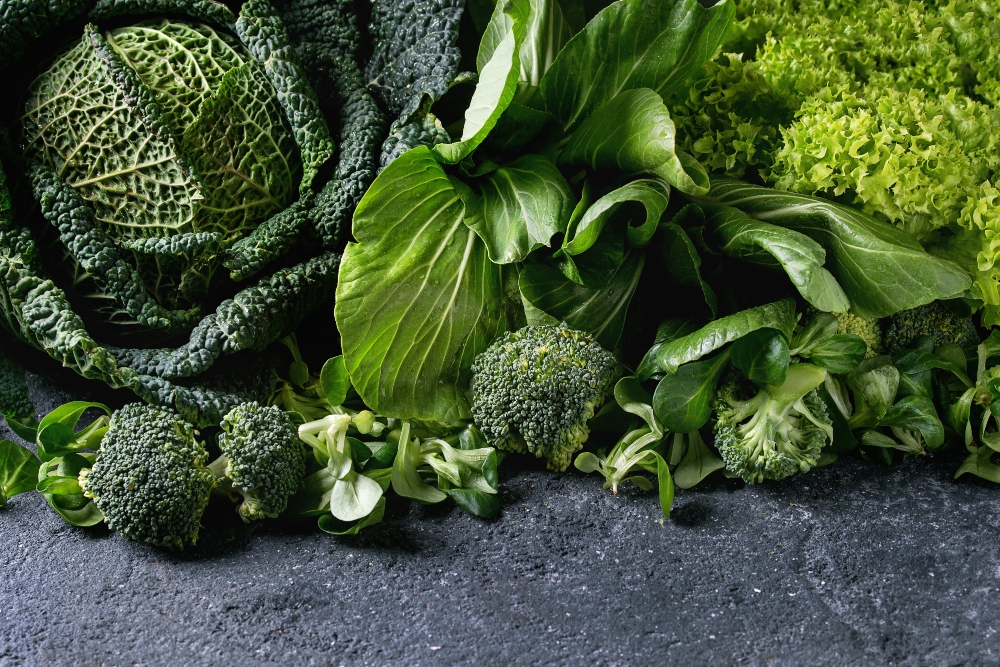
One of the most striking takeaways from the video is how unevenly vitamin A5 appears across different diets.
The main dietary precursors are found in plant foods, especially leafy greens. One precursor includes beta-carotene in its name, while another form appears in animal products but only in small amounts.
“The winner here really is green leafy vegetables,” Mic says, adding that animal sources contain “very small amounts.”
He cites research stating that “a special nutritional focus seems to be placed on leafy and root vegetables which are rich in this compound.”
Specific foods high in vitamin A5 precursors include spinach, kale, parsley, green tea, kiwis, green peppers, and carrots. According to one study Mic references, spinach contains particularly high concentrations. Fruits generally contain lower levels.
That distribution has implications for dietary patterns. Mic suggests that people avoiding plant foods altogether may be at the highest risk of low intake.
“If anybody’s going to be getting a deficiency in this stuff, it’s probably going to be carnivore dieters,” he says.
Researchers estimate that roughly two-thirds of Western populations may already be consuming too little vitamin A5, with typical European intakes falling below suggested levels.
How vitamin A5 works in the body
Vitamin A5 becomes biologically relevant because of how it interacts with a receptor known as RXR, or retinoid X receptor.
“It works by being an RXR agonist,” Mic explains.
RXR plays a role in a wide range of bodily processes. According to Mic, these include lipid metabolism, energy regulation, immune signaling, inflammation, and cell growth and death. RXR is also involved in myelin repair, the process that maintains the protective coating around nerve cells.
“That’s where I see it potentially playing a role in some of these neurodegenerative diseases,” he says, including multiple sclerosis.
RXR has already attracted interest in pharmaceutical research. Mic notes that RXR agonists are being studied in cancer treatment, including lymphoma, and are under investigation for conditions like lung and breast cancer.
Mental health, brain aging, and disease links
Some of the most attention-grabbing claims around vitamin A5 relate to brain health. Mic references a 2024 study suggesting a strong connection between vitamin A5 signaling and mental well-being.
Through RXR pathways, researchers write that vitamin A5 signaling may influence dopamine regulation, amyloid beta clearance, neuroprotection, and inflammation in the brain.
“The A5 RXR vitamin A signaling might be one of or even the critical factor necessary for good mental health, healthy brain aging as well as for preventing drug addiction and preventing a large array of nervous system diseases,” the paper states.
Mic is careful not to overstate the case. He notes that green leafy vegetables are already strongly associated with better cognitive outcomes. This is regardless of whether vitamin A5 turns out to be the key driver.
“Green leafy vegetables and brain function are highly connected from a ton of different studies,” he says.
Can you be deficient in vitamin A5?
Because vitamin A5 was discovered so recently, researchers do not yet have clear diagnostic criteria or deficiency symptoms. Still, Mic says the possibility is taken seriously.
“Because this was discovered like seven years ago and probably not super-funded with research, we don’t have an answer on that,” he says.
Researchers speculate that low intake could affect areas where vitamin A5 is thought to play a role, including mental health and neurological function. Proposed deficiency symptoms include stress, anxiety, reduced cognitive ability, depression, and, in more severe cases, neurodevelopmental and psychiatric conditions.
“As important specific functions have been outlined, it is logical that these are areas of potential deficiency symptoms due to low intake of vitamin A5,” one paper suggests.
For now, Mic says the takeaway is straightforward.
“I’m happy to sort of introduce vitamin A5 to you guys,” he says. “And yeah, eat your leafy greens.”
As research continues, vitamin A5 may or may not earn official vitamin status. But its discovery adds another layer to the growing body of evidence linking plant-rich diets to long-term health. It also reinforces a familiar message that science keeps circling back to: vegetables still have more to teach us.
Find more videos about vegan health, science, and nutrition on Mic the Vegan’s YouTube channel.
Read more: 14 Vegan Mushroom Recipes For A Vitamin D Boost