Community
 Print
Print



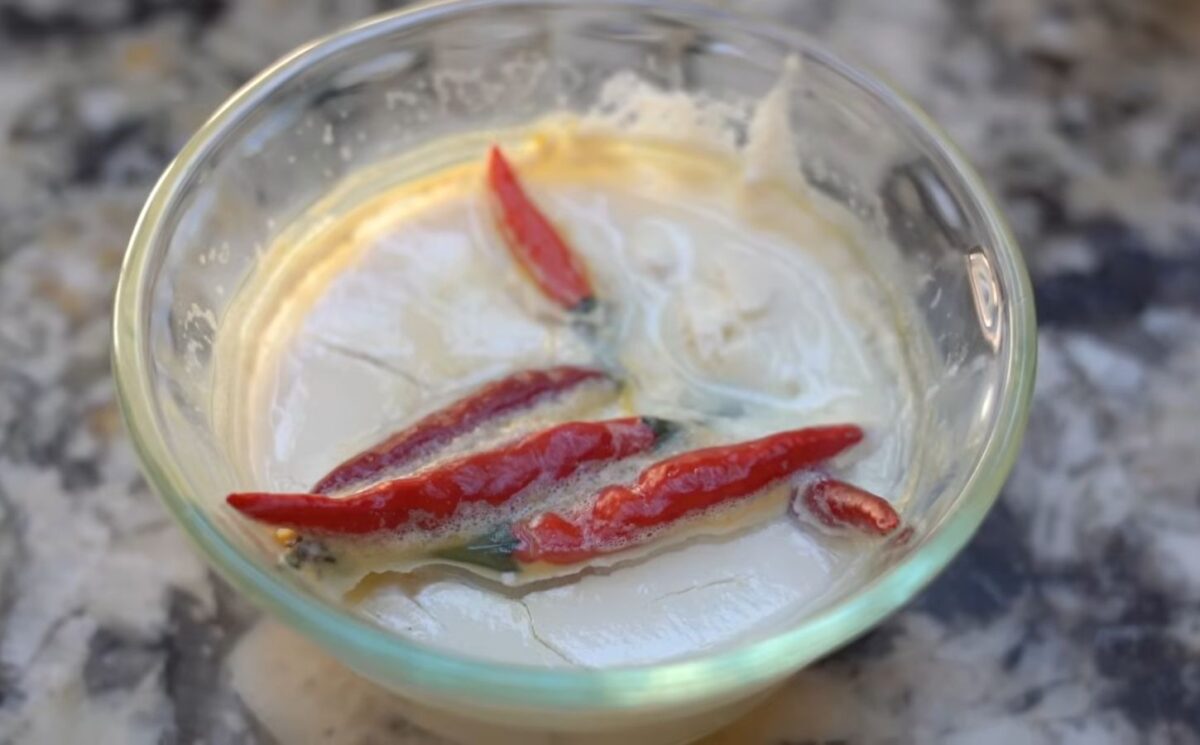
Making vegan yogurt from chilis may sound like a kitchen experiment that should come with a warning label. But according to Miyoko Schinner, the chilis are not there to add heat. They are there to help start the fermentation process when store-bought yogurt starter is not available.
Schinner, the vegan cheese pioneer behind the YouTube channel The Vegan Good Life with Miyoko, recently shared a video showing viewers how to make a creamy vegan yogurt using chilis as the starter. Schinner has authored several cookbooks and built much of her career around plant-based dairy, from cheese to butter to other cultured foods. But even for her, this method marks new territory.
Read more: How To Make Vegan Yogurt At Home
In the video, she explains that she has wanted to try this for a long time. She usually relies on a commercial starter, but this time she tests an Indian method that uses whole chilis to create a culture. The technique has practical roots. Schinner says she started thinking about it while assisting a Bhutanese monastery that wants to develop vegan cheeses but cannot easily access cultures.
“They’re trying to make Bhutan go vegan and they can’t get cultures, but they said they can get chilies and make yogurt that way,” Schinner says.
The result is a tangy, thick vegan yogurt from chilis that Schinner says does not taste like chili at all. It also offers a useful workaround for anyone who wants to make yogurt but cannot find vegan yogurt or starter nearby.
Making a starter from chilis
For more of Miyoko Schinner’s plant-based dairy recipes, check out her YouTube channel.
Schinner starts by explaining that this recipe can help people in parts of the world where yogurt starter is hard to find. She uses small Thai chilis from her garden, but says dried chilis can also work. The main thing is to use whole chilis, preferably with the stems still attached.
“You can make your own starter culture from little chilies,” Schinner says.
She rinses the chilis first, then heats a small amount of plant milk. The milk needs to be scalded, which means it should begin to bubble and simmer around the edges. Once the milk reaches that point, she turns off the heat and pours it into a small container.
Schinner then lets the milk cool before adding the chilis. She checks the temperature and finds that it has cooled to 104 degrees, but she stresses that home cooks do not need to measure it with a thermometer. The milk should feel warm, but not hot enough to burn.
She adds three or four chilis to the warm milk. Then the mixture needs to stay warm for 16 to 24 hours. Schinner says people can use an oven with the light on, a yogurt maker, or a proofing box. She uses a bread proofer, which she also uses for fermenting and culturing nut cheeses.
After the culture has time to sit, it should thicken and set like yogurt. Schinner shows a batch she made the previous night. It looks solid and thick, although she notes that this first starter batch may taste a little spicy. That starter then goes into the main yogurt base.
Building a creamy base with soy milk and cashews
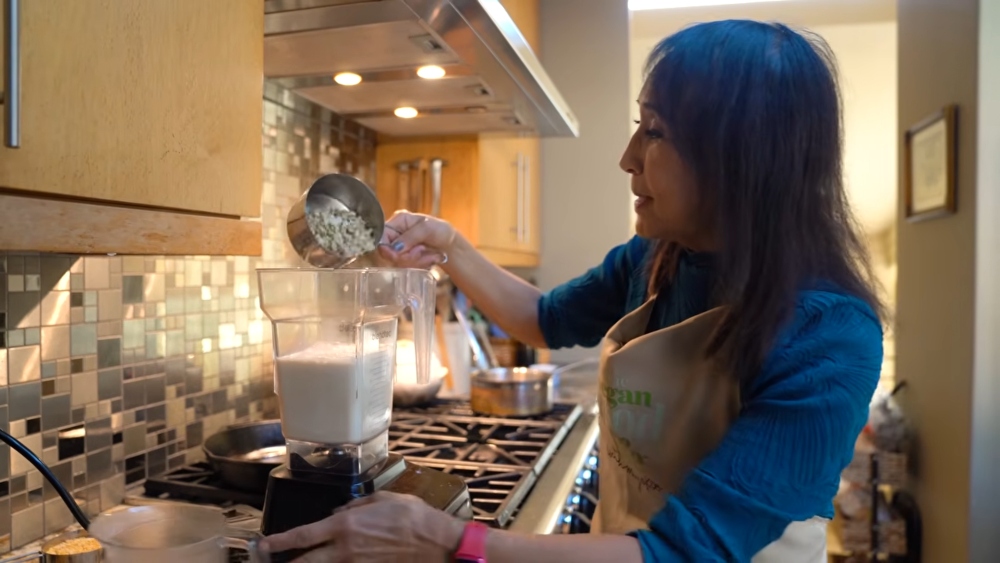
For the yogurt itself, Schinner uses soy milk. She says soy milk will curdle on its own and turn into yogurt, but she wants a creamier result with less liquid separation. To get that texture, she adds raw cashews.
The cashews play an important role here. They add fat and body, helping the yogurt set into a thicker, creamier consistency. Schinner uses slightly less than a quart of soy milk and slightly less than a cup of cashews, although she says a full cup can be used.
She blends the soy milk and cashews together until smooth. Then she pours the mixture into a pan and cooks it until it becomes thick and creamy. As the mixture heats, the bubbles release their air, and the base turns into a smooth cream.
Schinner does not simply blend and culture the mixture right away. She cooks it first to create a rich base that can support the final yogurt texture. Once it thickens, she turns off the heat and transfers it to a jar.
Before adding the chili starter, the mixture needs to cool again. Schinner waits until it reaches about 110 degrees. That warm temperature helps the culture work without killing it.
Culturing the yogurt overnight
Once the soy and cashew mixture has cooled, Schinner adds the homemade chili starter. She initially says she will use about two tablespoons, but then decides to use the whole amount because she has it and wants to see how it turns out.
“So I’m really curious to see how this comes together because as I mentioned, I’ve never done this before,” Schinner says. “I’ve always used a store-bought starter.”
That moment gives the video much of its charm. Schinner has spent years helping people make plant-based dairy, but she presents this as a real test rather than a polished trick she has made dozens of times. She has seen recipes for this method before, and now she wants to know whether it can help people make yogurt and possibly vegan cheese without access to commercial cultures.
She places the jar in her proofing box and lets it culture for eight to 12 hours. She says people can judge when it is ready by the texture and taste. A pH meter can also help, but it is not required.
By the end, the yogurt has thickened well. Schinner lets her batch culture extra long, so it becomes especially tangy. Despite the chili starter, she says the finished yogurt does not taste like chili.
“You might think that it would have a chili flavor, but it doesn’t,” Schinner says.
Read more: All-Purpose Plant-Based Yogurt Tofu
Save some yogurt for the next batch
One of the biggest advantages of this method is that the first successful batch can create future batches. Once the vegan yogurt from chilis has cultured properly, home cooks do not need to repeat the chili starter step every time.
Schinner says people can leave a little yogurt behind and use it to culture the next batch. She recommends reserving two or three tablespoons for the next quart of yogurt.
That makes the method especially useful for people who cannot buy a commercial starter. The chilis help create the first culture, then the finished yogurt becomes the starter going forward.
For Schinner, this matters beyond one breakfast recipe. She hopes the formula can help the Bhutanese monastery make vegan cheese with limited resources. If the method works reliably, it could give people in many places a way to make cultured plant-based foods from accessible ingredients.
The finished yogurt is thick, tangy, and creamy. Schinner serves it as a breakfast-friendly food and encourages viewers to try it wherever they are. For anyone used to buying starter or ready-made vegan yogurt, the method may feel surprising. But it also shows how flexible plant-based fermentation can be when you understand the basics.
“Wherever you are in the world, give this yogurt a try,” Schinner says.
Please note: PBN runs a sponsored content model. To explore how you can get featured, please email [email protected] or visit everkinddigital.com.