Community
 Print
Print



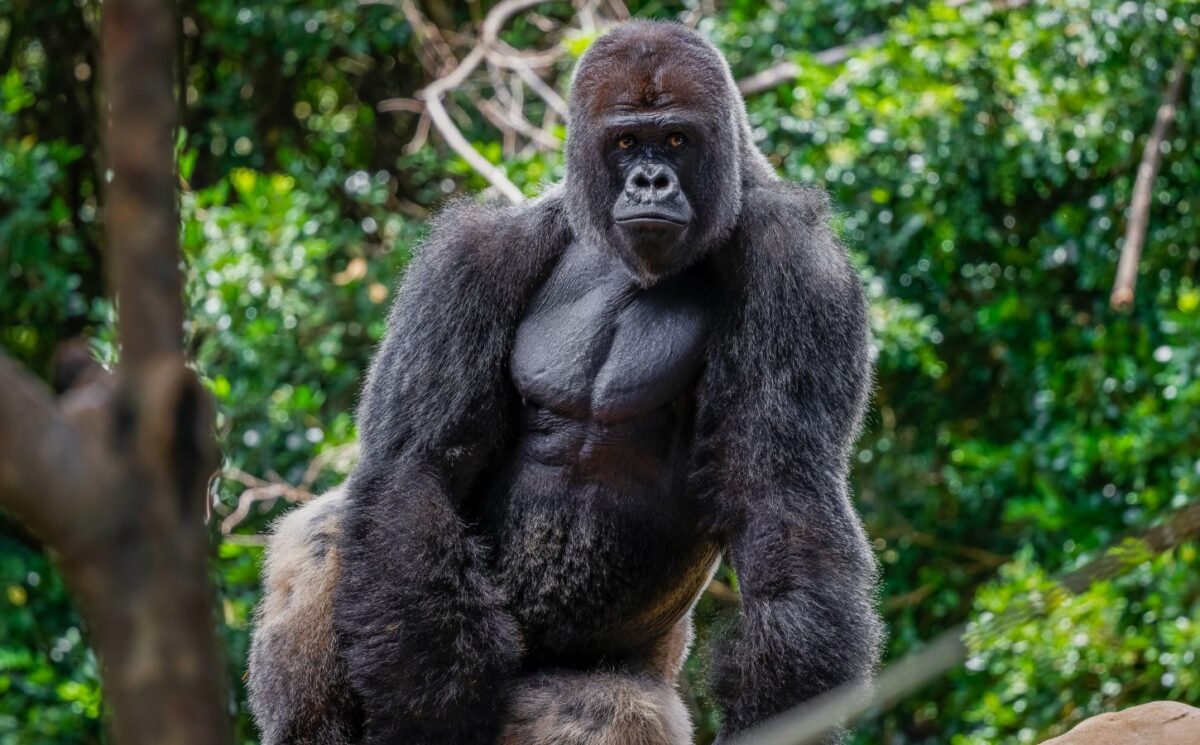
The Bristol Zoo gorillas have officially been moved into their new home.
The group of captive western lowland gorillas arrived at the “African Forest” habitat at the Bristol Zoo Project, located a few miles north of the city, in February.
Read more: Ricky Gervais Receives Jane Goodall Award for Unwavering Advocacy for Animals
The gorillas’ new woodland habitat is roughly 450 percent larger than their previous enclosure at the now-closed Bristol Zoo, a Victorian-era complex within the city.
The African Forest habitat is the first of several new developments at the Bristol Zoo Project’s site in North Bristol, UK. Formerly known as the Wild Place Project, the conservation park is owned and operated by the Bristol Zoological Society (BZS).
Darrell Sawczuk, the social media manager at Plant Based News (PBN) and a former gorilla keeper, said that the enclosure “looks amazing from the photos.”
“You don’t often see gorilla enclosures with actual trees in them. It looks really good, as good as a zoo can give. The outdoor enclosure isn’t as big as I’d hoped, but it’s still far better than most. They can climb, they can find food for themselves, it’s lovely,” he added. “I would just shut the door to the public so they can live their lives.”
The African Forest habitat opened to the public last week.
‘Nothing can replicate the wild’
The Born Free Foundation has called for a definitive end to keeping great apes captive at UK zoos, “where their needs simply cannot be met.” Western lowland gorillas, in particular, have the biggest range of all gorilla subspecies, and their total range in the wild is almost 700,000km². Individuals can travel up to 14 km² (5.41 mi²).
According to Born Free, gorillas are peaceful, social animals. They live in highly structured family groups, and in the wild, build nests every night. They experience emotions and communicate using hundreds of different gestures and signs.
Sawczuk said, “No matter how good the enclosure, nothing can replicate the wild, and breeding programs are basically a marketing tool since none of these gorillas will ever see the wild. Bristol Zoo would have been better off spending the money from the new enclosure on buying some more land in the Congo and protecting the gorillas’ habitat there.”
Read more: Scotland And Wales Both Just Banned Greyhound Racing
‘Jock’s leadership can never be replaced’
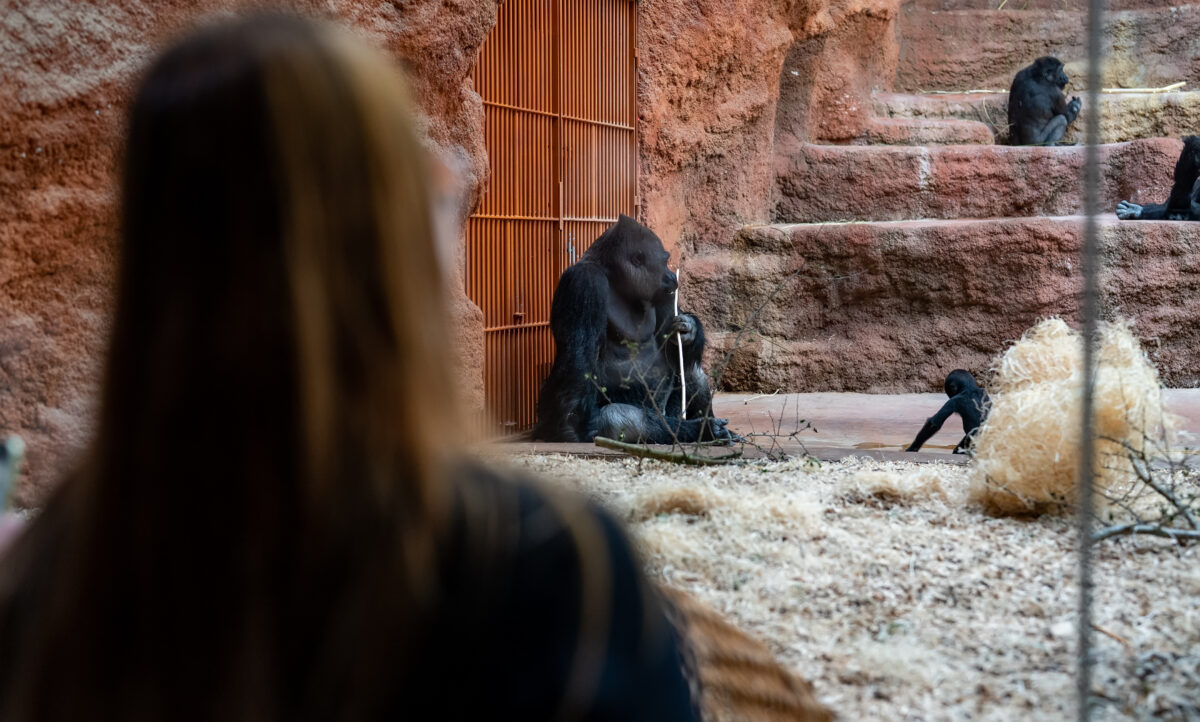
While all eight of Bristol Zoo’s western lowland gorillas were moved, Jock, a 42-year-old silverback and the oldest male in the UK, became unwell and was euthanized. Bristol Zoo Project has said that Jock’s death was due to an aortic dissection.
In a blog post, The Bristol Zoo Project said staff were “deeply saddened” by Jock’s passing and celebrated his role as the “steady centre” of his family group.
“While Jock’s leadership can never be replaced, the strength of the troop lies in the bonds he helped build,” said the post.
Last year, urban explorers shared footage of the gorillas while they were still living at the old Clifton site, which was shut to the public at the time. The video showed overgrown grounds and deserted buildings, and a lone gorilla tapping on the glass.
While members of the public reacted with concern to the “lonely” gorillas, BZS criticized “misleading” claims that the animals were unhappy or neglected.
Read more: Urban Explorers Film ‘Lonely’ Gorillas At Closed Bristol Zoo