Community
 Print
Print



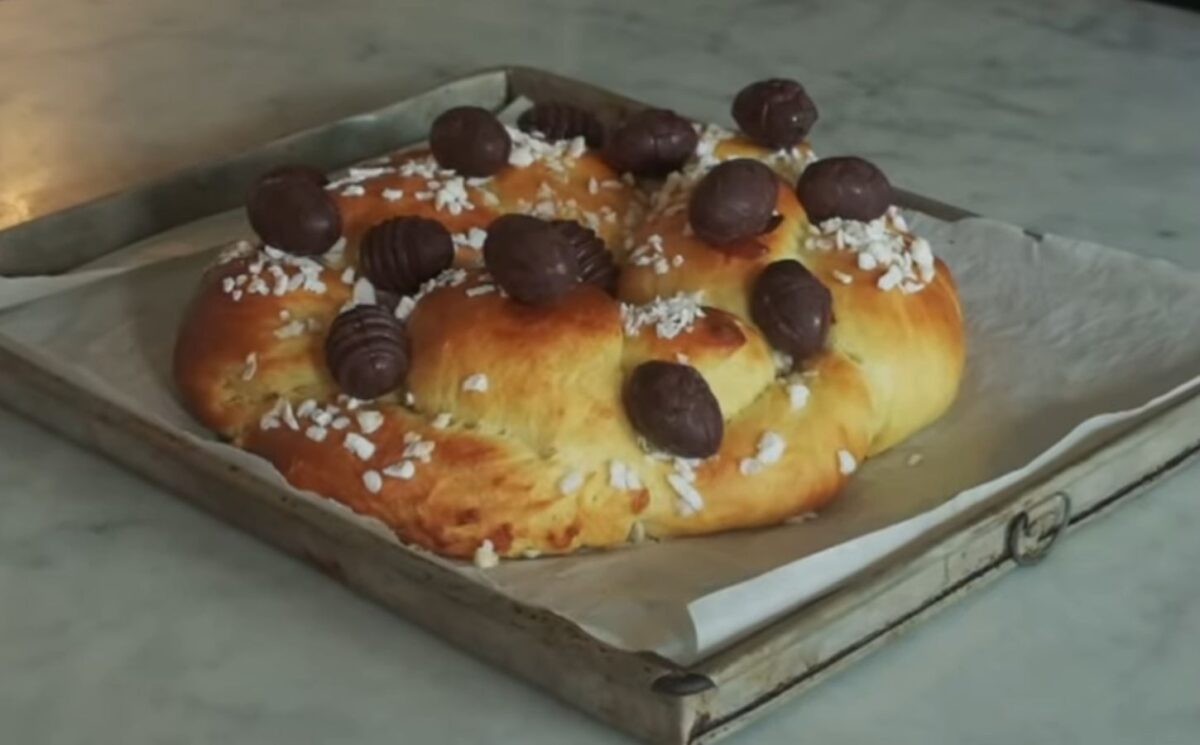
If you really want to impress your Easter brunch guests this year, skip the usual pastries and bring out this stunning vegan Easter brioche instead. Golden, braided, and designed to double as a centerpiece, it looks every bit as indulgent as the classic, yet it’s completely plant-based. Even better, thanks to a clever technique conceived by its creator, Lionel Roudaut, it delivers that soft, fluffy, slightly stretchy crumb you expect from a traditional brioche, with a surprisingly simple method that doesn’t require a single egg.
Roudaut, known for his YouTube channel My Vegan Provence, is a passionate French cook and world traveler who reimagines regional dishes using plant-based ingredients. Drawing inspiration from Provence, Roudaut focuses on preserving tradition while making it accessible for vegan kitchens. In one recent video, he shares how to make a vegan Easter brioche inspired by a classic from Nice, complete with orange blossom, pearl sugar, and chocolate eggs.
Read more: How To Make This Vegan Easter Plait
A traditional brioche, reworked
Brioche is deeply rooted in French baking. It is known for its richness, which comes from large amounts of eggs and butter. That’s what gives it its soft crumb and slightly stretchy texture.
Roudaut keeps that tradition in mind but flips the ingredients. “I will replace the eggs in the recipe by [using] this ingredient, a potato,” he says. “A simple potato, and it works.”
Instead of relying on eggs for structure and softness, he uses cooked potatoes blended into the dough. The result is surprisingly close to the original. “The crumb is moist, it’s stringy, it just tastes like a real brioche,” he adds. “This is just incredible.”
The vegan Easter brioche still includes vegan butter for richness, but the potato does the heavy lifting when it comes to texture.
Building flavor from the start
The process begins with activating the yeast in plant-based milk, a standard step in enriched doughs. From there, Roudaut layers in flavor early, zesting lemon directly into the bowl and adding orange blossom water for a floral, slightly sweet aroma that defines this regional bake.
He then blends the cooked potato with the yeast mixture until smooth. This step is key. The potato must be fully creamy, with no graininess, so it integrates seamlessly into the dough.
Once flour, sugar, and salt are added, the dough starts to form. It is kneaded to develop elasticity, which is essential for trapping air and creating that light, airy texture associated with brioche.
The role of fat and structure
In traditional brioche, butter is gradually incorporated into the dough. The same principle applies here, but with vegan butter.
Roudaut notes that the dough initially resists the fat. “The dough is elastic and is going to resist the incorporation of fat,” he explains. But with continued mixing, the butter is absorbed, and the dough becomes smooth and pliable.
This stage is crucial for achieving the right structure. The dough should stretch easily and hold together, a sign that the gluten has developed properly.
After kneading, the dough is left to rise until it doubles in size. Roudaut then takes things further by chilling it overnight.
“The flavors and the texture of the dough are going to improve drastically with the night spent in the cold,” he says. “Yeast and bacteria are going to develop slowly and create wonderful aromas.”
This slow fermentation not only deepens flavor but also improves the final crumb, making the vegan Easter brioche more complex and bakery-like.
Shaping a symbolic Easter centerpiece
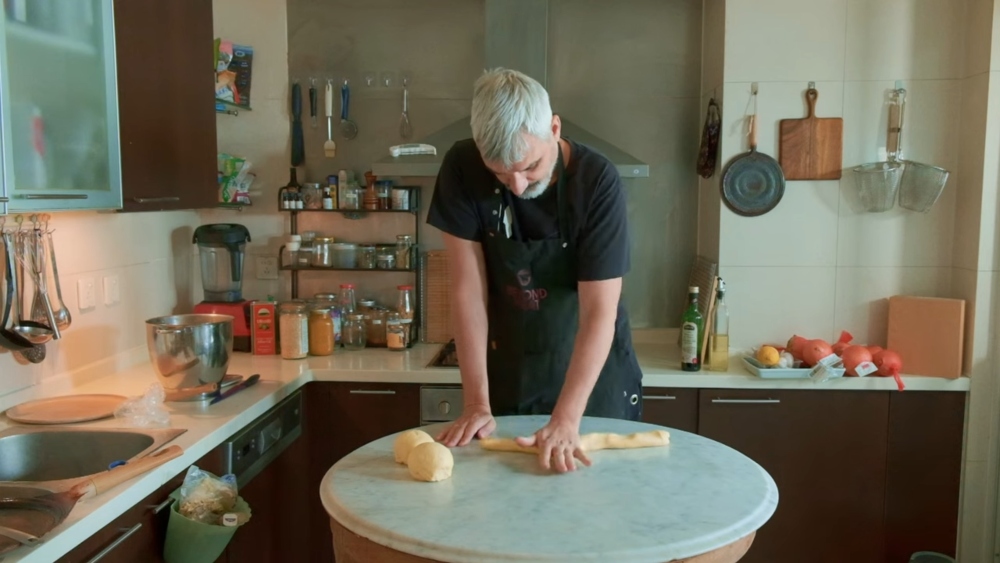
The next day, the dough is divided and shaped into three strands. These are braided together, a traditional technique that carries symbolic meaning.
“The reason why you have three braids is to represent the Trinity,” Roudaut explains.
The braid is then formed into a crown, placed on a baking tray, and left to rise again. To help with this final rise, he adds a bowl of boiling water to the oven to create a warm, humid environment.
Before baking, the brioche is glazed with plant milk and sugar for shine, then topped with pearl sugar. Once baked, it turns golden brown and fragrant.
Finishing touches and serving
After cooling, the final decorative step brings everything together. Chocolate eggs are gently melted and fixed onto the surface, turning the brioche into a festive centerpiece.
The result is a vegan Easter brioche that looks traditional but is entirely plant-based. It is soft, aromatic, and slightly sweet, with that signature pull-apart texture.
For anyone navigating Easter with mixed dietary preferences, this recipe offers a way to keep tradition alive without compromise.
For more of Roudaut’s French and Provençal vegan recipes, visit My Vegan Provence YouTube channel.
Read more: This Vegan Apple Cake Is Perfect For Easter Baking