Community
 Print
Print



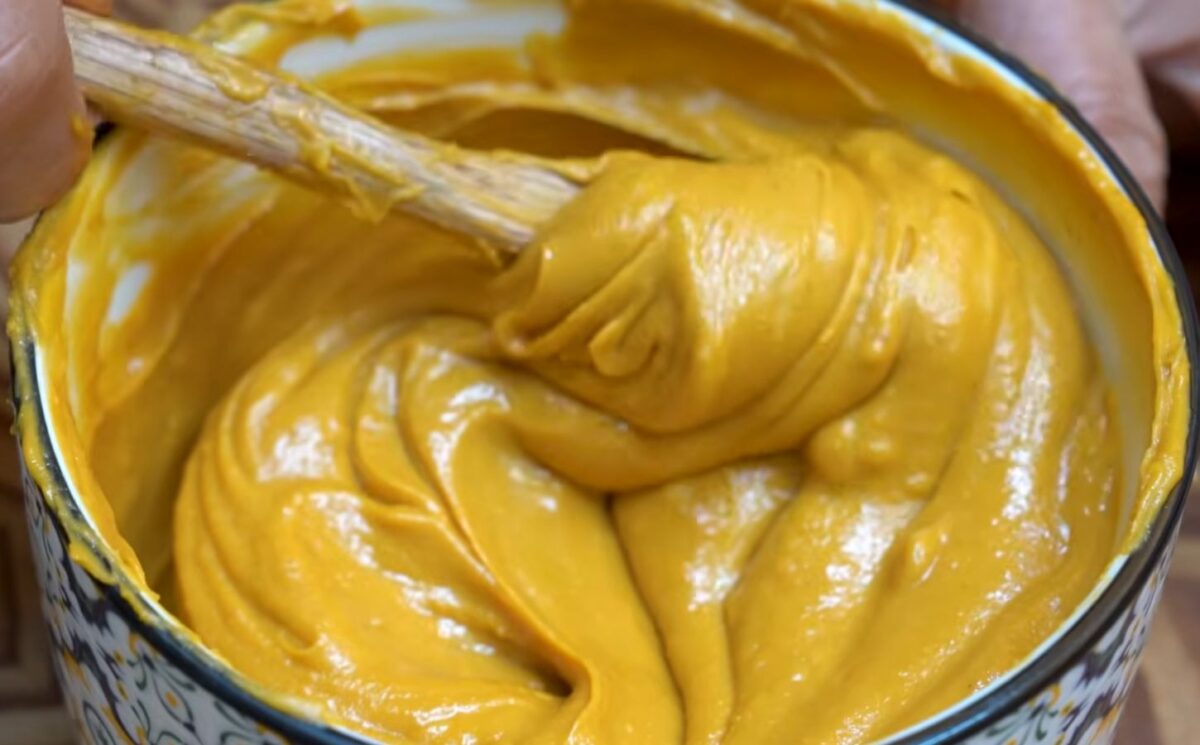
For years, fans have been asking for one thing: the return of vegan roadhouse cheddar. Now, Miyoko Schinner is finally showing viewers exactly how to recreate her cult-favorite vegan roadhouse cheddar at home, and this version goes back to its beer-infused roots.
Miyoko Schinner has spent decades redefining what dairy-free cheese can be. Founder of Miyoko’s Creamery and author of Artisan Vegan Cheese, she is widely credited with helping bring artisan-style vegan cheese into the mainstream. On her YouTube channel, The Vegan Good Life with Miyoko, she revisits one of her most requested recipes: vegan roadhouse cheddar.
Read more: This Fermented Vegan Mozzarella Melts Like The Real Thing
“So many of you have written to me asking me, ‘How do you make the Roadhouse cheddar?’” Schinner says at the start of the video. “Because I can’t get it anymore. And I was hooked.”
The cheese dates back to 2012, when Schinner published what was then called Pub Cheddar in Artisan Vegan Cheese. “The very first recipe that I created for what became Roadhouse was published in Artisan Vegan Cheese, which I wrote and published in 2012, and at that time it was called Pub Cheddar and it had beer in it,” she explains.
The name didn’t last. “I found out that Pub Cheddar was actually a registered trademark of a large dairy company and we couldn’t use it.” A salesperson suggested Roadhouse, and the branding stuck.
In the early days, she partnered with a local microbrewery in Fairfax, California. “We partnered with a local brewery, micro brewery called Iron Springs, and we featured their seasonal brew into our vegan cheeses,” she says. But as the company grew, alcohol had to go. Now, she returns to the original beer-forward flavor that defined vegan roadhouse cheddar.
Choose your beer and build flavor
This version brings beer back into the mix. “You can use any kind of beer you like,” Schinner says. “If you want a light beer flavor, go with a larger. If you want a really robust one, go with some IPA or some ale, Guinness, even whatever.”
She notes that vegan Guinness is available, opening up options for a deeper, maltier edge.
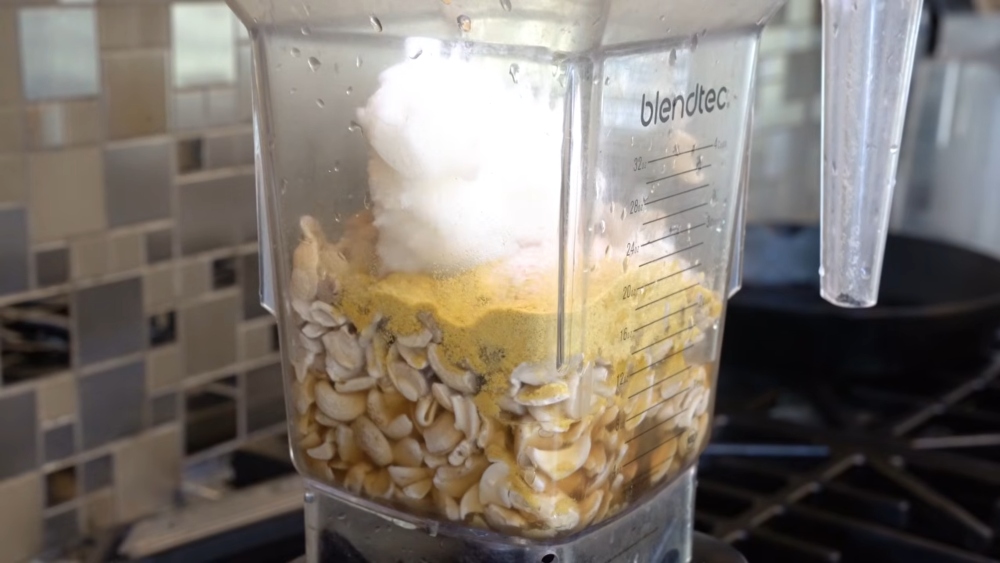
The base begins with cashews, but instead of soaking, Schinner insists on sterilizing. “Whenever you culture or ferment anything, sanitation is key,” she says. Rather than soaking overnight, she boils the cashews for five minutes. “By boiling them in water for a few minutes, we’re not only going to sterilize them, but we’re going to soften them, making them easier to process.”
After draining and rinsing to cool them, “you can’t add the culture to a hot substrate.” The cashews go into a sanitized blender.
She adds about half a cup of beer, miso for depth, nutritional yeast for umami, salt, and soft coconut oil. The oil plays a major structural role. “You can omit the coconut oil entirely, [But] it will impact the texture,” she says. Without it, the result becomes more of a spread. With it, the vegan roadhouse cheddar firms into a sliceable cheese.
For color, she uses annatto extract: “If you want that cheddar color, you can go in with a little bit of annatto extract.”
Schinner opts for avocado oil in this version, but she makes clear that oils are flexible depending on your goals. Coconut oil creates firmness and that classic cheddar bite. Neutral oils like avocado oil keep the flavor clean while adjusting mouthfeel.
Fermentation: where the magic happens
The defining step in vegan roadhouse cheddar is fermentation, and Schinner stresses precision.
Before adding culture, she checks the temperature. “You don’t want it above 110 degrees or so,” she says. Too hot, and the cultures die.
She uses a thermophilic culture but notes alternatives: “This is where you could use a probiotic capsule if you want.” Years ago, she relied on rejuvelac, a homemade fermented beverage, but now prefers commercially available vegan cultures for consistency.
Once blended, the mixture is transferred to a clean container and ferments for 12 to 24 hours at roughly 85 to 90 degrees Fahrenheit. “Until the pH drops and it gets just that right amount of cheesy tang that we’re looking for.”
She measures her batch at 5.7 pH, explaining that cheese can range widely. “If you want it lower, if you want it tangier, just let it ferment longer.”
This is where vegan roadhouse cheddar transforms from a savory cashew blend into a cultured cheese with complexity and bite.
Spreadable or sliceable
After fermentation, the texture depends largely on fat content. “We did use coconut oil to create this cheddar cheesy texture, but you can omit it, and you can get more of a spread like here,” Schinner says. “And they equally taste fantastic. It’s just the difference in texture.”
Without coconut oil, the result is softer, “more like a spread or a dip.” With it, the cheese sets firmer, closer to the original product that fans remember.
Psyllium husk also plays a structural role. It’s added during blending to help bind and give elasticity once the cheese sets. The key is incorporating it after the initial blending of cashews and flavorings but before fermentation, ensuring it hydrates evenly and contributes to that signature cheddar body.
The result is a deeply savory, tangy vegan roadhouse cheddar that channels its pub-inspired origins – this time fully in your control.
For more of Miyoko Schinner’s vegan cheese recipes and more, visit her YouTube channel.
Read more: How To Make Homemade Cashew Cream Cheese In 3 Flavors