Community
 Print
Print



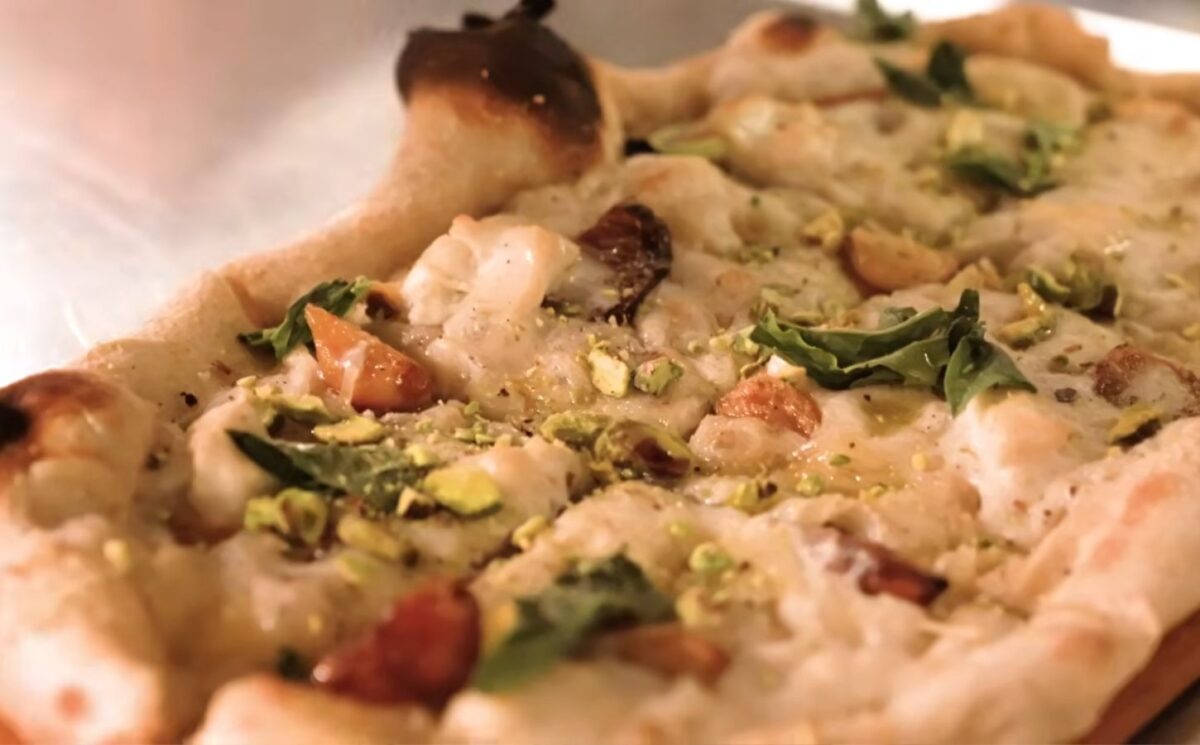
If you have ever been disappointed by vegan cheese that turns into a puddle instead of melting, Miyoko Schinner might have exactly what you are looking for. The vegan cheese pioneer recently shared a new method for making fermented vegan mozzarella that pours like a sauce, then firms up when baked. It is designed for pizza, lasagna, mac and cheese, and any recipe where you want structure, stretch, and that unmistakable baked-cheese bite.
Miyoko Schinner, known for her YouTube channel The Vegan Good Life with Miyoko, explains how this fermented liquid mozzarella comes together quickly but relies on careful technique. The process, she says, only takes minutes of active time, but the fermentation step makes cleanliness and precision essential.
Read more: How To Make Feta Cheese With Watermelon Seeds
A vegan cheese pioneer in her element
Schinner is widely regarded as one of the architects of modern vegan cheese. Her work helped move plant-based cheese away from starch-heavy shortcuts and toward cultured, flavor-driven methods that mirror traditional cheesemaking. In the video, she opens by explaining why she is making such large quantities, saying, “I’m making gallons and gallons of it because I’m going to take it to a pizza party at one of my favorite restaurants in the world, Millennium.”
She adds that the recipe comes directly from The Vegan Creamery and describes it as “a super easy cheese to make,” while stressing that fermentation changes the stakes. “It is fermented,” she says, “so there are a few pointers that I have to give you.”
Fermentation equals sanitation
Because this fermented vegan mozzarella relies on live cultures, Schinner repeatedly emphasizes sterilization. “When you’re fermenting something, you want to make sure that you have the most sanitary conditions you possibly can have,” she explains, adding that the goal is to encourage “only the good bacteria that grows, not the bad.”
She begins with cashews that are already pasteurized, but still boils them briefly in hot water. This step serves two purposes: softening them for blending and reducing microbial risk. “If you’re getting your cashews from the bulk bin,” she says, “you have no idea whether or not there’s other hands that have been in there.”
She applies the same thinking to tools and containers, noting that jars and blender parts are washed with soap and water and then treated with boiling water to ensure they are “super super clean.”
Any plant milk works
While Schinner uses cashews to make a rich cashew milk base, she is clear that the recipe is flexible. “This mozzarella can be made with any plant milk,” she says. Oat milk, sunflower seed milk, or other milks from her book all work, depending on what you have available.
After blending the cashews with water into a creamy milk, she adds oil for richness. Avocado oil is her choice, but she explains that sunflower seed oil or even a mild olive oil will also work. The oil, she says, helps replicate the richness people associate with dairy cheese.
To create the characteristic melt and pull, Schinner adds tapioca flour, explaining that it is responsible for the cheese’s elasticity. She blends this with salt and oil before introducing the culture. The culture she uses is thermophilic, meaning it thrives in warmth. “It loves heat,” she says, which allows the mixture to ferment in environments like a turned-off oven, a proofing box, or even wrapped in blankets to hold warmth.
The goal of fermentation is flavor, not sharpness. “With a mozzarella, you want it to be mild,” she explains. Letting it go too long can push it past that sweet spot. She also dismisses shortcuts like vinegar or lemon juice, saying, “I just don’t think it tastes right.”
When and why psyllium husk matters
One of the most precise steps comes after fermentation. Psyllium husk powder is added only once the cheese has developed a mild tang. “You don’t want to add it too soon,” Schinner says, warning that it can become “too gummy and too thick.”
The amount depends on timing. If the cheese will be used immediately, she says you can add up to a tablespoon. If it will sit for several days, she recommends starting with a teaspoon. “The longer the psyllium husk sits, the thicker it gets,” she explains.
This ingredient gives the mozzarella body and control. “Sometimes vegan cheeses are just sort of like sauce on your pizza,” she says. The psyllium husk helps create “that bite of cheese” and a bit of chew once baked.
From pizza to pasta bakes
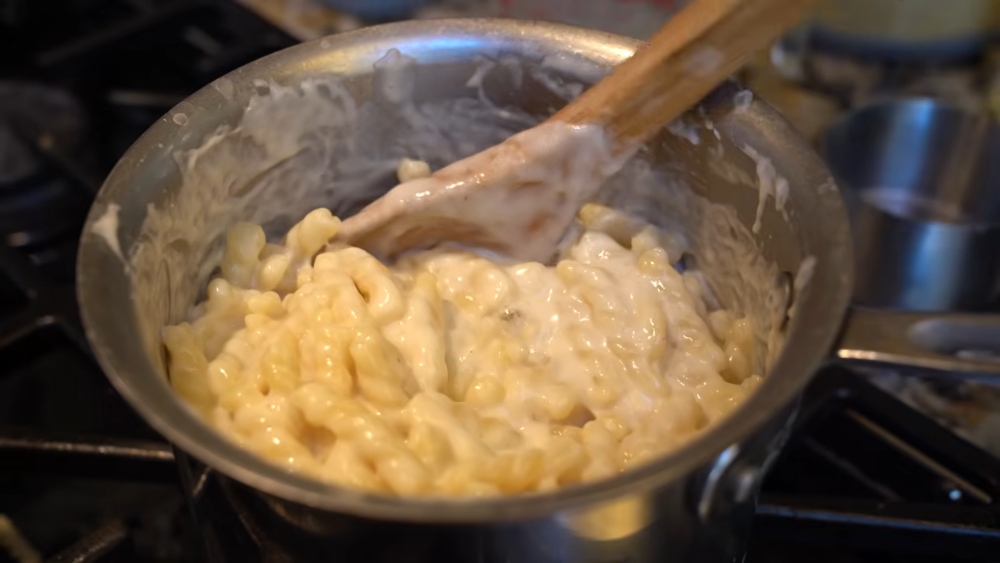
Schinner demonstrates the finished cheese at Millennium’s pizza night, then shows how versatile it can be back in her kitchen. She pours it over pasta for a quick mac and cheese. “It’s not just for pizza,” she says. “You can use it on a lasagna, a pasta bake, a quesadilla, all sorts of uses.”
She starts with cooked pasta and transfers it to a pot, noting that she reserves some of the cooking water. As she pours in the fermented mozzarella, the sauce quickly clings to the pasta. To fine-tune the texture, she adds small splashes of pasta water until it becomes glossy and pourable.
For extra depth, Schinner suggests optional additions rather than altering the base cheese itself. “If you want a little more cheddar flavor, you can add a teaspoon or so of nutritional yeast,” she says, stirring it in as the sauce emulsifies around the pasta.
To finish, Schinner adds a small amount of truffle oil for a richer version, seasoning with black pepper.
Just like the pizza application, the mac and cheese can move from the stovetop to the oven. Schinner explains that you can pour the pasta and sauce into a baking dish with a bit of added liquid and bake it, where it “will bake up into absolute cheesy perfection.” The result, she shows, is a dish that firms on top while staying creamy underneath, proof that her pourable mozzarella is not just a novelty, but a functional base for classic comfort food.
The moment she tastes it, Schinner smiles and sums it up simply: “Magic mozzarella.”
For more of Miyoko Schinner’s magical plant-based recipes, visit her YouTube channel.
Read more: This Vegan Ricotta Recipe Is A Total Game-Changer