Community
 Print
Print



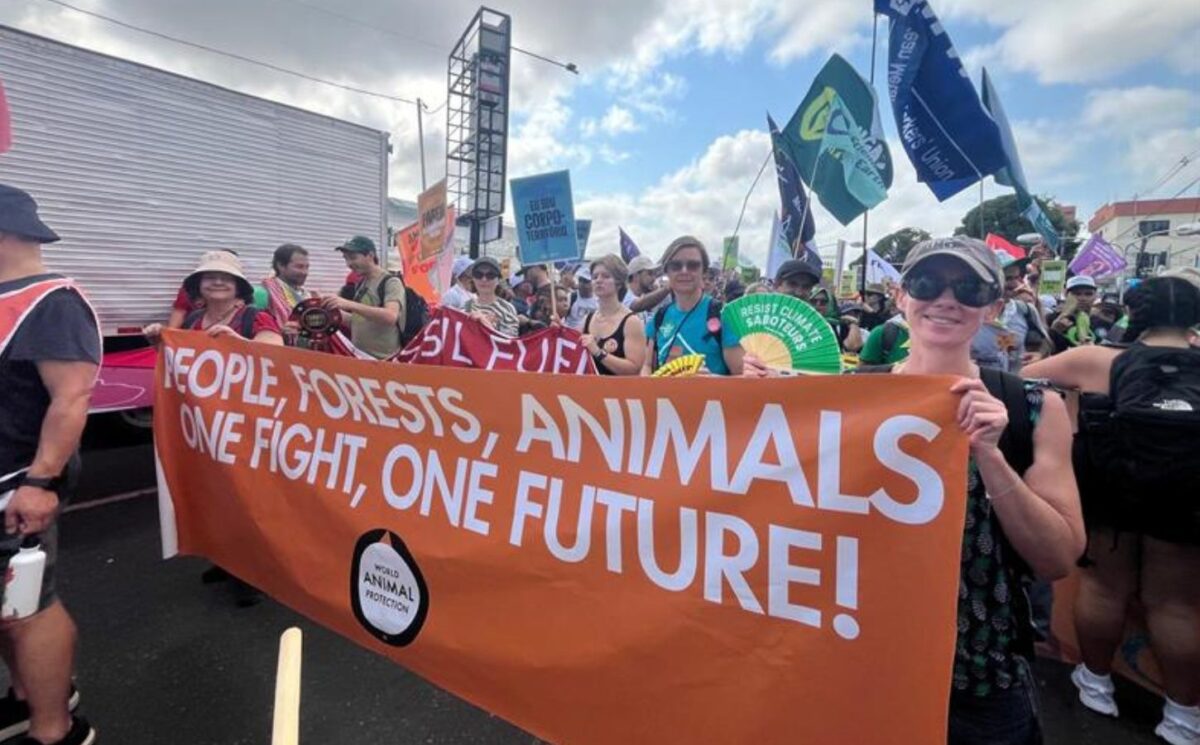
Looking back one month after the annual United Nations Climate Change Conference (COP), a British charity says that COP30 failed to protect animals and the food system.
World Animal Protection has critiqued how COP30 failed to acknowledge the role of industrial animal agriculture in the worsening climate crisis, or how factory farming contributes to an increasingly unsustainable and inequitable food system.
Read more: Investigation Finds Over 300 Industrial Agriculture Lobbyists Participated In COP30 Climate Talks
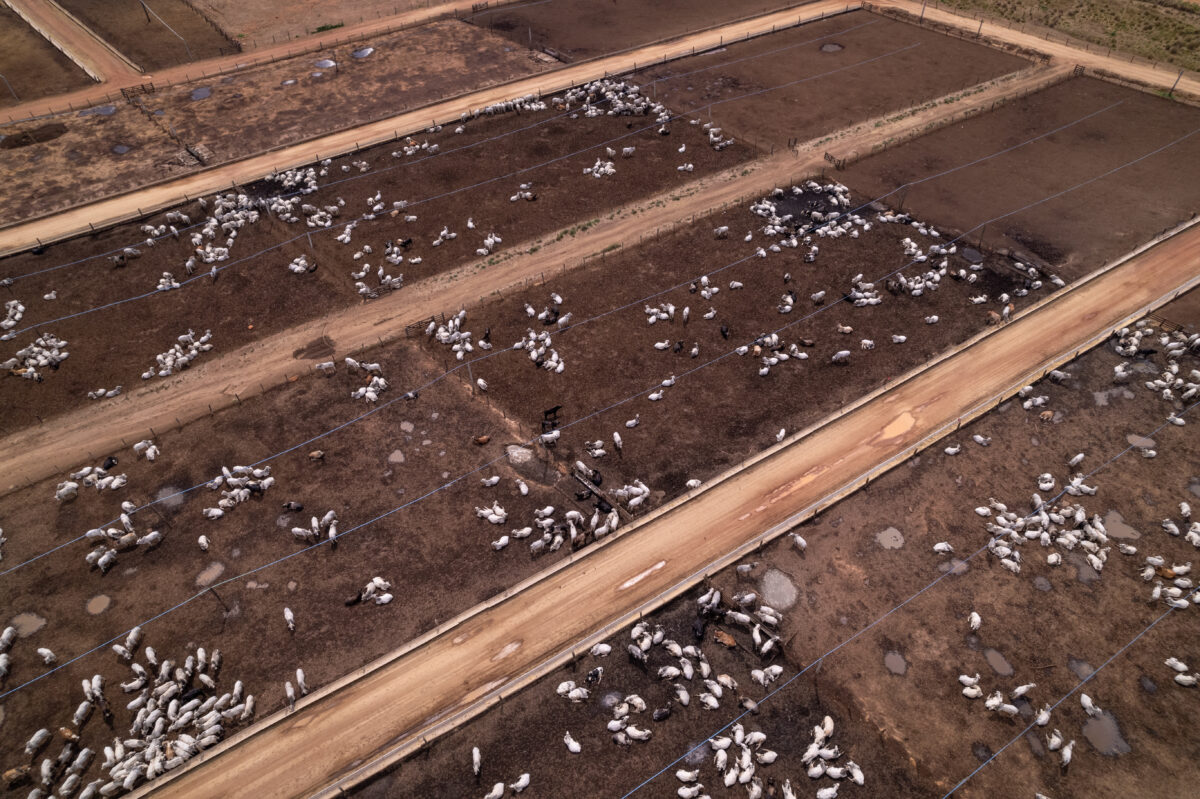
COP30 took place in Belém, Brazil, at the mouth of the Amazon River and next to the Amazon rainforest. According to the WWF, cattle ranching – Brazil’s most prevalent form of animal agriculture – is the “number one culprit” behind deforestation in the Amazon region. It accounts for approximately 80 percent of all deforestation.
In a statement sent to Plant Based News (PBN), Kelly Dent, the director of external engagement for World Animal Protection, said, “For a COP hosted in the Amazon, it’s shattering that deforestation took a back seat. The wildlife, indigenous people, and traditional communities who call the forest their home deserved better than this.”
‘Equitable, humane, and sustainable farming practices must replace the destructive industrial agriculture model’
Dent, who attended COP30, also said, “The Belém Political Package falls short of what animals, people, and planet need to thrive. It fails to acknowledge that agriculture is the major driver of deforestation, and that cutting down our forests is supercharging emissions.”
Animal agriculture is the leading global cause of climate change, surpassing the burning of fossil fuels and causing 53 percent of average global temperature rise between 1750 and 2020. A new report by Mighty Earth described a “striking” lack of action from the world’s largest meat companies on reducing methane emissions.
“Equitable, humane, and sustainable farming practices must replace the destructive industrial agriculture model,” continued Dent. “These solutions not only address the climate crisis but also stop the suffering of billions of animals trapped in factory farms.”
Read more: Whistleblower Says The Meat Industry Paid Them To Discredit Veganism Online
COP30: successes, shortcomings, and next year’s conference
COP30 began on November 10, 2025, and was concluded on November 21. This year’s climate talks were particularly notable in that they championed the social dimension of climate action more than ever, emphasizing the need for an equitable and “just” transition.
“We are pleased to see an emerging recognition of food systems in the negotiations as well as in the Belem Declaration on Hunger, Poverty, and Human-Centred Climate Action,” said Dent. “It’s positive to see recognition in the text of the role of small-scale farmers; however, it’s concerning there is no mention of animal welfare, when the health of animals and our environment are so importantly intertwined.”
The European Commission celebrated COP30’s successes and said the talks showed “multilateralism can still deliver results and progress,” even with the notable absence of the US. However, the commission also noted that COP30 did not make “as much progress as we would like,” and that the outcome “leaves a lot to be desired” for many countries.
‘Climate action cannot be just about humans’
In late November, a joint investigation conducted by DeSmog and the Guardian found that more than 300 industrial agriculture lobbyists attended COP30.
One in four of the 300-plus lobbyists attended as part of a country’s official delegation, while six individuals gained “privileged access” to international negotiations on future climate policies.
Dent noted that while COP30’s “closed-door negotiations provided little room for civil society,” animal-supporting movements still had their voices heard through the protests outside, “directly calling out big agribusiness,” and official events that demonstrated how to reduce emissions, support farmers, and protect animals.
“At COP31, governments must support a just transition away from factory farming, toward equitable, humane, and sustainable food systems,” said Dent. “Governments need to recognise the way we treat animals is connected to our fight against climate change. Climate action cannot be just about humans, because when animals and ecosystems suffer, the outcomes for people are diminished.”
Read more: COP30: Brazilian Farmers Could Double Income With Plant-Based Agroforestry