Community
 Print



According to a new survey, labeling foods as “plant-based” feeds into wider backlash against meat-free foods across Europe and does not support widespread uptake.
The survey found that even though suggestions like “eat less meat” and “go plant-based” dominate current sustainability messaging, this approach is the least effective route to achieving widespread uptake and dietary change in EU countries.
Read more: EU Labeling Ban Could Mean No More Roast Chicken-Flavored Crisps
Researchers from FoodChoices4LIFE, an EU-backed program aiming to help people cut their food bills and reduce emissions, reviewed 73 consumer-facing and 83 chef-facing interventions documented in international scientific literature. They then surveyed and ran focus groups in Belgium, France, Germany, Italy, Poland, Romania, Spain and Sweden, speaking with the general public and with chefs.
The researchers found that 58 percent of reviewed consumer-facing actions were shown to trigger positive change in food behavior, and that of these, simple messages and recommendations “performed the worst of any category” with a 53 percent success rate. In contrast, education had an 86 percent success rate.
Amongst chefs, 70 percent of actions succeeded overall, with recipe changes being the most successful intervention at 91 percent, followed by “nudges” like menu reordering at 76 percent and simple messaging at 69 percent.
Emphasizing seasonal, local ingredients
The researchers found that the content of messaging was important, too.
For example, framing dishes as seasonal or local resulted in much higher uptake (59 and 59.8 percent, respectively) than emphasizing flavor (37.3 percent) or adding dishes but not emphasizing that they are plant-based at all (28.3 percent).
Consumers said they were more likely to cut down on meat by adding more vegetables (37.3 percent) or legumes (32.2 percent) than by purchasing commercial alternative proteins (26.5 percent). They also reported that meat alternatives would “win them over” through improved taste and texture, not for sustainability reasons.
Read more: Most People In The UK Would Cut Meat And Dairy To Improve Food Security
‘People hear it as a lecture, not an invitation’
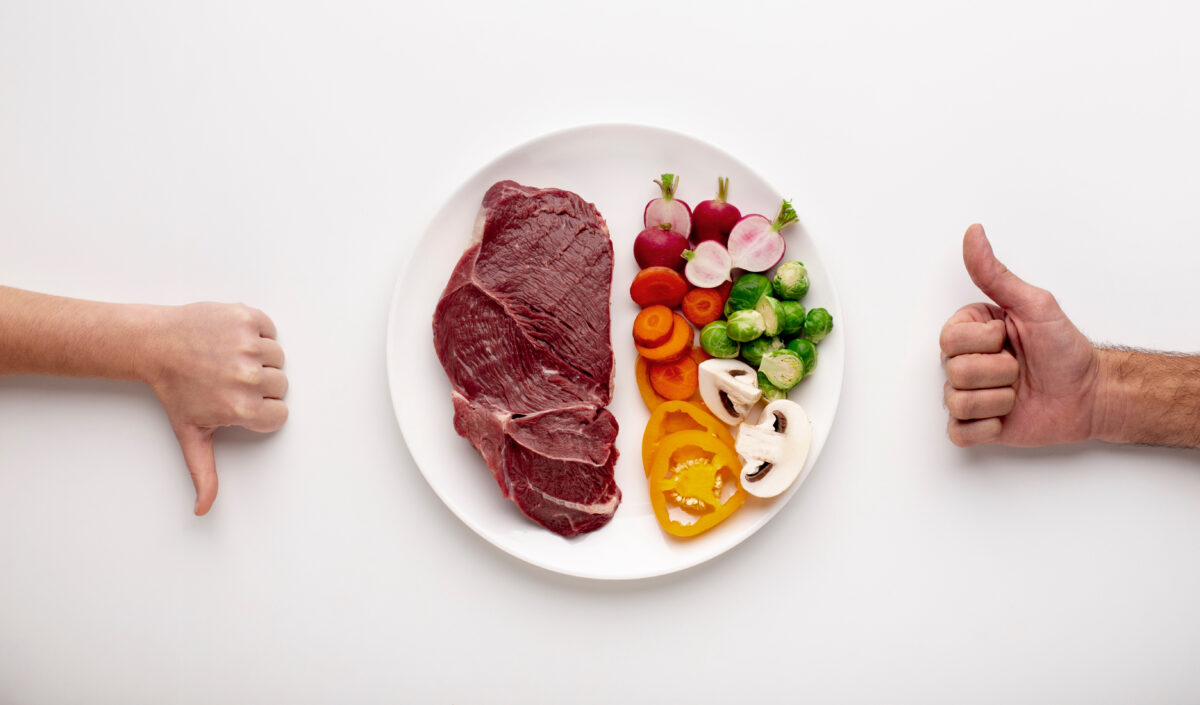
Evidence from the new survey has informed the Cook4Climate project, which brings together “chefs and citizens” to demonstrate the potential of sustainable eating.
The project created a free digital cookbook containing 27 plant-forward recipes, a social media cooking challenge titled #Cook4Climate, more than 50 chef-hosted events throughout Europe in the month of October, a web-based AI-driven app to track food consumption and waste, a food waste quiz, and more.
Betty Chang, research area lead at the European Food Information Council (EUFIC), which coordinates FoodChoices4LIFE, said, “We’ve spent years telling people to eat plant-based, and a lot of that messaging simply hasn’t landed.”
She added, “People hear it as a lecture, not an invitation. Cook4Climate is built on what the research says actually works: small, tasty, feasible swaps, more veg, more legumes, more seasonal ingredients, tap water over bottled, for citizens, with chefs playing their part through practical, recipe-level changes.”
PBN runs a sponsored content model. To explore how you can get featured, please email [email protected] or visit everkinddigital.com