Community
 Print
Print




According to a new study, reducing red and processed meat consumption in favor of vegetables and legumes could significantly reduce chronic disease cases.
Swapping meat for plants could also extend the average person’s lifespan, primarily due to positive “cardiovascular outcomes” from increased vegetable intake.
Read more: Most Health Professionals Think Key Plant Foods Underrepresented In Dietary Guidelines
The European Journal of Nutrition published the study in September. The authors used life table modelling and data from 2019’s UK National Diet and Nutrition Survey to simulate the potential impact of governmental influence on people’s diets.
Based on optimal dietary targets from the UK’s Climate Change Committee (CCC) of a 35 to 50 percent reduction in meat consumption, the authors projected the incidence and mortality rates of key diet-related chronic diseases over 30 years.
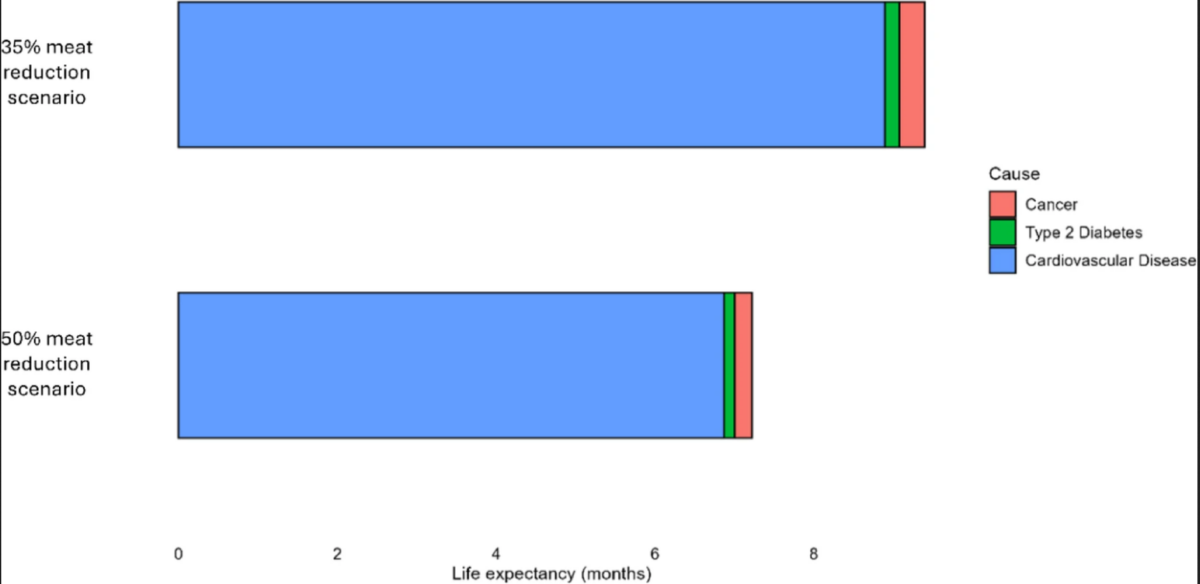
According to the study, achieving the CCC’s red and processed meat reduction targets was associated with a projected increase in life expectancy of 7.2 months in a 35 percent scenario and 9.4 months in a 50 percent scenario.
The authors linked 95 percent of the estimated increase in life expectancy to reduced cardiovascular disease mortality, and around 75 percent of those “mortality gains” to increased consumption of vegetables and legumes. The study also predicted declining rates of colorectal cancer and type 2 diabetes.
“These exploratory estimates suggest policy-driven reductions in red and processed meat aligned with climate goals could deliver substantial public health benefits. While conditional on modelled behavioural trajectories, findings offer relevant insights for European strategies to reduce cardiovascular disease burden and promote sustainable dietary transitions,” wrote the study’s authors.
Read more: Eating A Handful Of Nuts Per Day Reduces Blood Pressure Risk By 20%
Robust, practical dietary guidelines needed for widespread dietary change
According to the World Health Organization (WHO), the “strongest evidence” suggests that eating red and processed meat is linked to increased risk of non-communicable diseases (NCDs) like cancer and cardiovascular disease.
A recent study by ProVeg International and the University of Göttingen found that most health professionals believe key plant-based foods are underrepresented in national dietary guidelines. As noted by ProVeg, scientifically robust, practical, and inclusive guidelines are essential for widespread dietary change.
PBN runs a sponsored content model. To explore how you can get featured, please email [email protected] or visit everkinddigital.com