Community
 Print


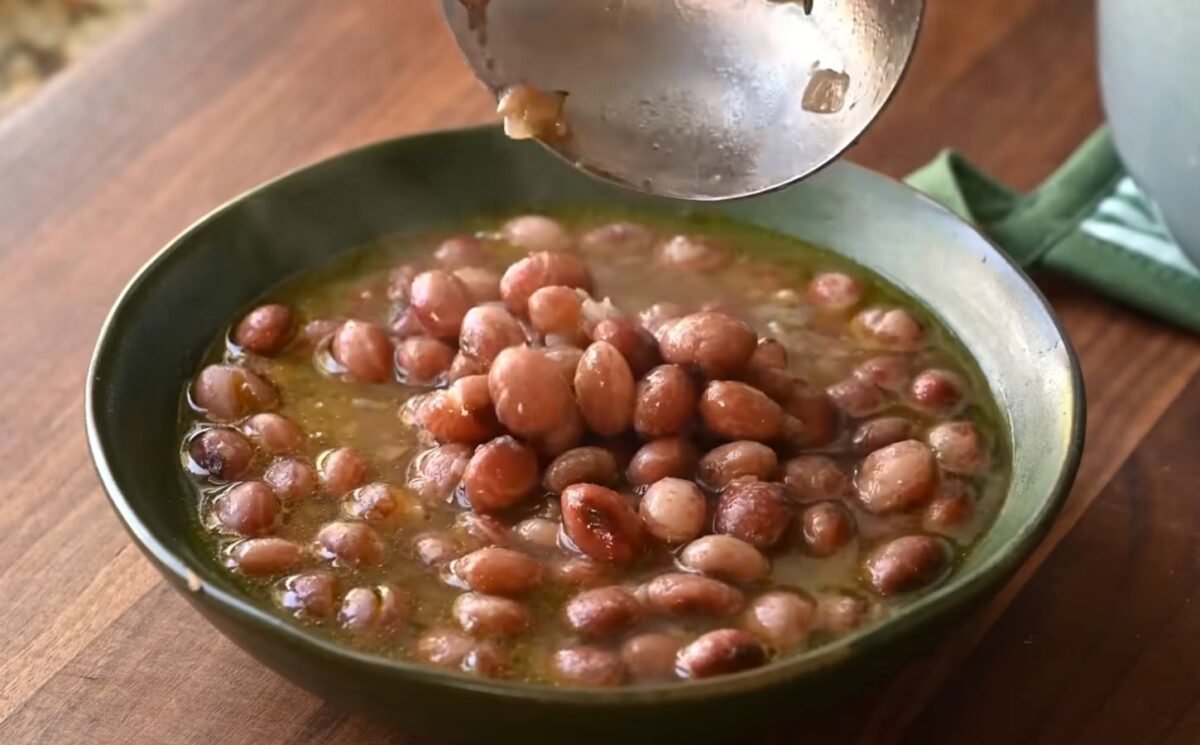
Vegan meal prep beans are unlikely to dominate social media feeds the way overnight oats, protein-packed smoothies, or elaborate Sunday meal prep routines do. But according to vegan recipe creator Nisha Vora, one pot of brothy beans could outperform all of them when it comes to making healthy eating easier, cheaper, and significantly more delicious throughout the week.
Vora, known for her YouTube channel Rainbow Plant Life, built her career around approachable plant-based cooking that prioritizes flavor and practicality. Before becoming a full-time vegan content creator, cookbook author, and recipe developer, Vora graduated from Harvard University and worked as a corporate lawyer. After transitioning to a plant-based lifestyle, she eventually left law behind to focus on helping people cook more confidently with plants, building an audience through recipes that blend technique, nutrition, and realistic everyday cooking habits.
Read more: This Freezer Hack For Weeknight Cooking Could Slash Your Dinner Prep Time
In a recent YouTube video, Vora shares the one preparation habit she says delivers the biggest return on investment in her kitchen: making a large batch of brothy beans. The dish is affordable, nutrient-dense, endlessly adaptable, and capable of turning into multiple meals over several days. More importantly, Vora argues, it removes friction from healthy eating.
“If I could meal prep only one thing every single week,” Vora says, “it might just be a pot of brothy beans.”
According to Vora, a single batch produces roughly six to seven cups of cooked beans and flavorful broth, creating a foundation that can support breakfasts, lunches, dinners, and freezer meals long after cooking day ends.
Why Vora starts with dried beans
For more of Vora’s plant-based recipes and tips, visit her website or her YouTube channel.
Vora begins with dried beans rather than canned versions and says one small but important step often gets overlooked before cooking even starts. She recommends sorting through the beans first to remove debris.
“The first thing you wanna do is just check that there are no pebbles or debris in the beans,” Vora says.
While it may sound overly cautious, dried beans can occasionally contain small stones or damaged pieces that make their way into packaging during processing. Once the beans are cleared, Vora moves to soaking, a step she acknowledges many home cooks skip entirely.
“Some folks will just start cooking their beans right here now,” Vora says.
She prefers soaking for several reasons. The first is texture. Soaked beans develop fewer split skins and cook more evenly, creating a creamier final result. The second advantage is efficiency, since soaking significantly shortens cooking time, particularly for larger bean varieties.
Her third reason arrives with characteristic humor.
“Most importantly, I fart less,” Vora says. “Actually, when I soak my beans, I don’t fart at all. I am fart-free.”
The joke lands, but Vora is also addressing a legitimate concern. Digestive discomfort remains one of the biggest barriers preventing people from eating more legumes, despite extensive evidence supporting beans as a nutritious source of fiber, protein, and micronutrients.
“If you have trouble digesting beans, try soaking them first,” Vora says.
She also adds generous salt to the soaking water, explaining that it helps soften the outer skin of the beans, contributing to a creamier texture after cooking. For larger or denser varieties, she sometimes includes baking soda.
“This is gonna help soften the beans a bit faster,” Vora explains.
The baking soda shortcut is optional, however. Smaller beans often do not need it, and anyone who prefers firmer beans may want to skip it entirely. Depending on the variety, soaking generally takes between eight and 12 hours.
Building layers of flavor
Once soaked, the beans move into a large pot where Vora focuses heavily on building flavor from the beginning rather than treating beans as a blank canvas later.
“If you want luxurious, richly flavored beans, you wanna start your pot of beans off with some sautéed aromatics,” Vora says. “It’s gonna make them so much better.”
She starts by cooking shallots in olive oil, though onions or leeks can also work. Garlic follows shortly afterward.
“And again, we’re just building layers of flavor so our beans are extra delicious,” Vora explains.
Once the soaked beans enter the pot, Vora adds enough water to cover them by roughly an inch. More liquid is not necessarily better.
“When the beans cook, they release all of their delicious starches into the water,” Vora says. “It creates this bean broth.”
Adding too much water dilutes that concentrated flavor and prevents the broth from developing the rich texture Vora aims for. Alongside the liquid comes a bouquet garni, the French cooking term for bundled herbs added during simmering.
“I always use two bay leaves with one pound of beans,” Vora says.
She combines them with sturdy herbs such as thyme, rosemary, sage, or oregano depending on what she has available. Dried chilies also make an appearance.
“It’s gonna gently permeate a mild amount of heat into the beans,” Vora says.
Seasoning develops gradually throughout the cooking process.
“Not too much, seasoning in layers,” Vora says while discussing salt additions.
The cooking method she learned from a bean expert
One of Vora’s techniques comes from Rancho Gordo founder Steve Sando, whose heirloom beans have become highly regarded among serious home cooks.
Rather than maintaining a gentle simmer from the beginning, Vora starts with a brief boil.
“You wanna show the beans in the first 10 minutes whose boss,” Vora says.
After those initial minutes, however, patience becomes essential.
“You wanna cook this low and slow for the rest of the time,” she says.
Cooking beans too aggressively can lead to uneven textures and inconsistent softness. Gentle simmering allows starches to release gradually while concentrating flavor in the surrounding liquid.
Vora also prefers simmering uncovered for much of the cooking process.
“The liquid’s going to gradually evaporate and thicken and become more flavorful and delicious,” Vora explains.
There is no universal cook time. Bean size, freshness, density, and soaking all influence the final timeline.
“There’s no precise cook time I can give you,” Vora says.
Fresh soaked beans may finish surprisingly quickly, while older dried beans can take considerably longer.
Making beans easier to digest
Alongside soaking, Vora offers additional strategies for improving bean digestion. One involves kombu, an umami-rich seaweed commonly used in Japanese cooking.
“This is just an umami-rich seaweed,” Vora says.
The kombu simmers alongside the beans before being removed at the end.
She also recommends asafetida, also known as hing, a spice widely used in Indian cooking traditions.
“Indian families have been using this for generations in their daals and bean dishes to help digest them better,” Vora says.
Rather than sprinkling it directly into water, she recommends briefly cooking it in oil first because it dissolves more effectively.
For people hesitant about legumes because of digestive concerns, these techniques may help make beans a more regular part of their diets.
Read more: These Vegan Cold Noodle Bowls Offer A 4-Day Meal Prep Fix
Turning vegan meal prep beans into easy meals
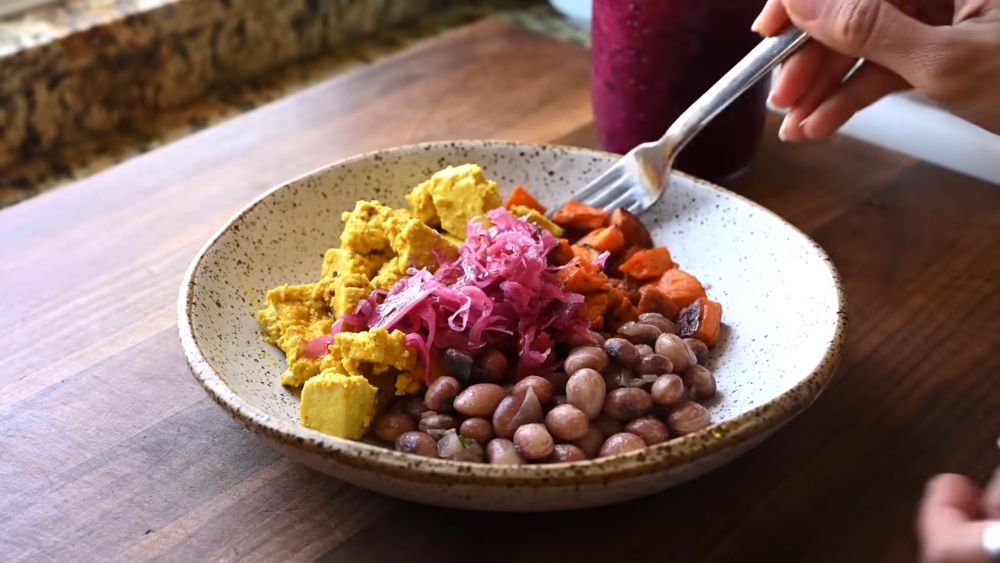
Once cooked, Vora finishes the beans generously with salt, olive oil, and an acidic element. She explains that beans are “really dense,” so proper seasoning makes a big difference.
She adds olive oil toward the end of cooking to build a richer, more luxurious texture. As she puts it, she wants the beans to feel “luxurious and rich.”
A splash of vinegar or lemon juice comes next. In her view, this step simply brightens the dish, “giving the beans a little pep,” as she describes it.
The result is much more than a basic side dish. Vora also freezes portions right away to make future meals easier, explaining that this way she always has a healthy, ready-to-go option on very busy days.
These brothy beans are highly versatile: they can be eaten as a simple soup with vegetables, spooned over toast with toppings like cashew cream, folded into tacos, added to burrito bowls, or paired with other meal-prep staples such as tofu scramble and roasted sweet potatoes. As she notes, “you’re really only limited by your imagination.”
The strength of Vora’s approach lies in its simplicity. A single batch of well-prepared vegan beans creates flexibility, convenience, and a reliable healthy default in the fridge for moments when cooking feels like too much effort. For anyone trying to eat more plants consistently, this kind of basic preparation can be more useful than any elaborate meal plan.
Please note: PBN runs a sponsored content model. To explore how you can get featured, please email [email protected] or visit everkinddigital.com.