Community
 Print
Print



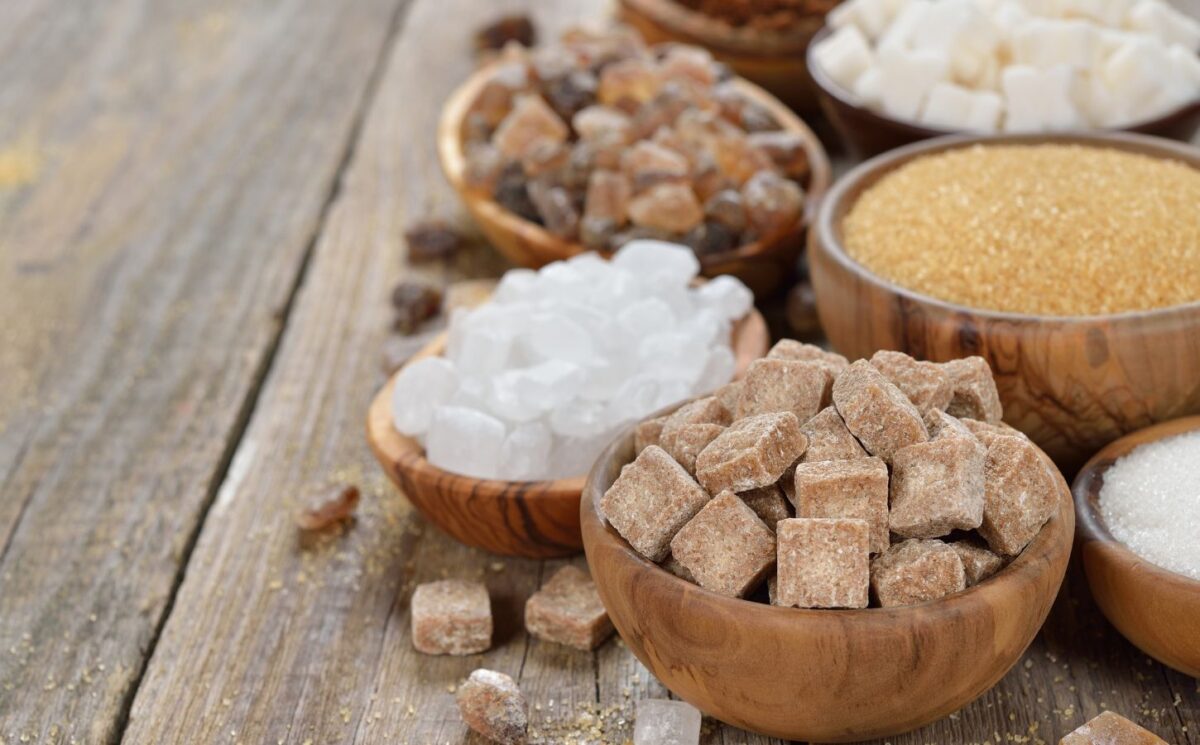
If you’ve ever stood in a grocery aisle wondering which sugar is the least bad option, you’re not alone. The search for the healthiest vegan sweeteners can feel confusing when every label claims to be “natural” or “better for you.” That’s exactly the problem Mic the Vegan sets out to tackle in a recent video, where he ranks 12 common sugars from least healthy to healthiest using what he calls a “sugarithm” (sugar rhythm) scoring system.
Known for breaking down nutrition studies with humor and spreadsheets, Mic explains that this ranking is not about pretending sugar is healthy. It’s about understanding relative harm, based on measurable markers like glycemic index, antioxidant content, and documented health effects. “We all know that sugar, especially more refined sugar, is not healthy,” he says, “but why not overthink it?”
Read more: Cutting Back On Sugar? Here’s What Science Has To Say About Stevia
How the sugar rhythm works
Before comparing sweeteners, Mic explains the system he uses to score them, jokingly calling it the “sugarithm.” (Like an algorithm.) The ranking combines three main markers: glycemic index, antioxidant content, and documented health effects.
The glycemic index measures how quickly a food raises blood sugar. Mic explains, “The glycemic index is something that is a result of giving 50 grams of carbs, not including fiber, and then measuring a blood sugar response from that food.” Foods higher in glucose tend to spike blood sugar more quickly, while fructose lowers glycemic index but brings its own concerns when refined and consumed in large amounts.
Antioxidant content also plays a role. He references studies measuring antioxidant activity using FRAP, or ferric reducing antioxidant power, a method that evaluates how compounds counter oxidative damage at the molecular level.
Finally, he assigns additional points based on unique health effects, both positive and negative. These include links to inflammation, fatty liver disease, mineral content, or beneficial compounds such as prebiotic fibers.
The least healthy group: highly refined syrups and sugars
At the bottom of the list are brown rice syrup, corn syrup, and high fructose corn syrup. These sweeteners share several characteristics: extremely high glycemic index scores, little to no antioxidant content, and heavy processing.
Brown rice syrup ranks last, largely because it is almost entirely glucose and scores poorly across all categories. Corn syrup follows closely behind for similar reasons.
High fructose corn syrup sits slightly higher, but Mic still describes it in blunt terms, calling it “Satan itself” while explaining that its glycemic index is somewhat lower due to fructose content. However, he notes that refined fructose carries its own risks.
He explains that high intake of refined fructose has been linked to fatty liver disease and metabolic changes. He also highlights research showing increased triglycerides and LDL levels in young people after just two weeks of consuming high-fructose beverages.
Another concern involves gut permeability and inflammation. According to Mic, “Really high levels of refined fructose up against the barrier of your intestines can cause some gut permeability or leaky gut.” This process can allow endotoxins into the bloodstream and contribute to inflammation.
White refined sugar and agave nectar also fall in this lower tier. White sugar contains a 50-50 mix of glucose and fructose and has a high glycemic index. Agave nectar, often marketed as healthy, ranks poorly because it can contain up to 90 percent fructose and provides virtually no antioxidants.
Mic cautions that even when the glycemic index appears lower, that does not automatically make a sweetener healthy. Both refined glucose and refined fructose can contribute to oxidative stress and metabolic problems when consumed frequently.
The middle group: slightly better but still far from health foods

Brown sugar, fruit juice concentrates, maple syrup, and unrefined cane sugar land in the middle of the ranking. These sweeteners show small improvements in antioxidant levels or glycemic index but remain refined sources of sugar overall.
Brown sugar performs only marginally better than white sugar because it is slightly less refined and retains trace antioxidants. Fruit juice concentrates rank similarly because, while their glycemic index can be moderate, most fiber and beneficial compounds are removed during processing.
Maple syrup surprises Mic by scoring lower than expected in antioxidant content. While it contains unique compounds, the overall antioxidant level remains low compared with top-ranking sweeteners.
Unrefined cane sugar ranks somewhat higher because of modestly higher antioxidant levels than refined sugar, though Mic emphasizes that it still should not be considered a health food.
He repeatedly reminds viewers that being higher on the list does not mean a sweetener is beneficial in large amounts. The difference between middle and top-ranked sugars is substantial.
The top tier: coconut sugar, molasses, and date sugar
The three highest-ranked sweeteners stand out because they contain additional nutrients or bioactive compounds.
Coconut sugar ranks third, partly due to its antioxidant content and the presence of inulin, a prebiotic fiber linked to digestive and metabolic benefits. Mic notes that the amount is small but still meaningful enough to affect scoring. Coconut sugar may also slow starch digestion by inhibiting amylase activity.
Blackstrap molasses takes second place. It has the highest antioxidant content in the comparison and provides minerals such as iron. Mic explains that a serving can supply a notable portion of daily iron needs, although taste can limit how much people use. He jokes that it can overpower baked goods, adding, “I personally think blackstrap molasses will ruin anything that you bake in terms of the taste, unless it’s a gingerbread cookie.”
Date sugar ranks first. Because it is made from ground whole dates, it retains fiber, phytochemicals, and other beneficial compounds that refined sugars lack. It also has relatively high antioxidant levels and a lower glycemic index than many other sweeteners.
Mic says he was surprised by the research on dates, noting evidence of cholesterol-lowering effects and reductions in inflammatory markers such as interleukin-1. Some studies also suggest potential benefits related to pregnancy outcomes and reproductive health, although much of the reproductive research has been conducted in animals.
“These are a fruit,” he says, emphasizing that their whole-food structure makes them fundamentally different from refined sugars.
What this means for everyday eating
Despite ranking certain sweeteners higher, Mic stresses that most sugars should still be minimized. Even the better options remain calorie-dense and can contribute to excess energy intake when used heavily.
He concludes that the results mainly reinforce a simple principle: whole foods outperform refined ingredients. Dates and other minimally processed sweeteners retain fiber and phytochemicals, while highly refined syrups provide concentrated sugar without protective compounds.
For anyone curious about the healthiest vegan sweeteners, the takeaway is not that some sweeteners are healthy in large amounts, but that the level of processing, antioxidant content, and metabolic impact can make a meaningful difference.
As Mic puts it, most of the sweeteners on the list are things “you want to either seriously, heavily minimize or eliminate altogether,” with whole-food options like dates standing out as the least harmful way to add sweetness.
Find more videos about vegan health, science, and nutrition on Mic the Vegan’s YouTube channel.
Read more: New Study Suggests Popular Artificial Sweetener Could Increase Heart Disease Risk