Community
 Print
Print




Blueberries are often held up as the gold standard of antioxidant-rich foods. They are juicy, familiar, and widely promoted for their health benefits. But new research highlighted by Plant Based Science London suggests there may be a more powerful contender hiding in plain sight.
According to the channel, the health benefits of black beans extend far beyond their fiber and protein content. In fact, black beans may deliver nearly double the polyphenols found in blueberries, while also influencing inflammation, blood vessel function, and even gene activity.
Read more: 11 Black Bean Recipes – And Their Incredible Health Benefits
Plant Based Science London is known for breaking down complex nutrition research into short, accessible videos. Their focus is on what the evidence actually shows, rather than hype. In this video, the team walks through several studies that suggest black beans deserve far more attention, especially at a time when cost and accessibility matter more than ever.
Why black beans stand out nutritionally
The narrator opens with a nutrient snapshot that immediately reframes black beans as more than a basic pantry food. Just half a cup provides six grams of fiber, eight grams of protein, and nearly half the daily value for folate. It also delivers almost a third of the daily value for vitamin B1 and contains more potassium than a large banana.
But what truly sets black beans apart is their polyphenol content. As the narrator explains, “just half a cup contains 2,200 milligrams of polyphenols, which is almost double the amount found in blueberries.” Polyphenols are bioactive compounds linked to reduced inflammation and improved metabolic health, and they are often used as a marker of a food’s antioxidant potential. This is where the health benefits of black beans begin to rival, and in some cases exceed, those of blueberries.
More than antioxidants: effects at the genetic level
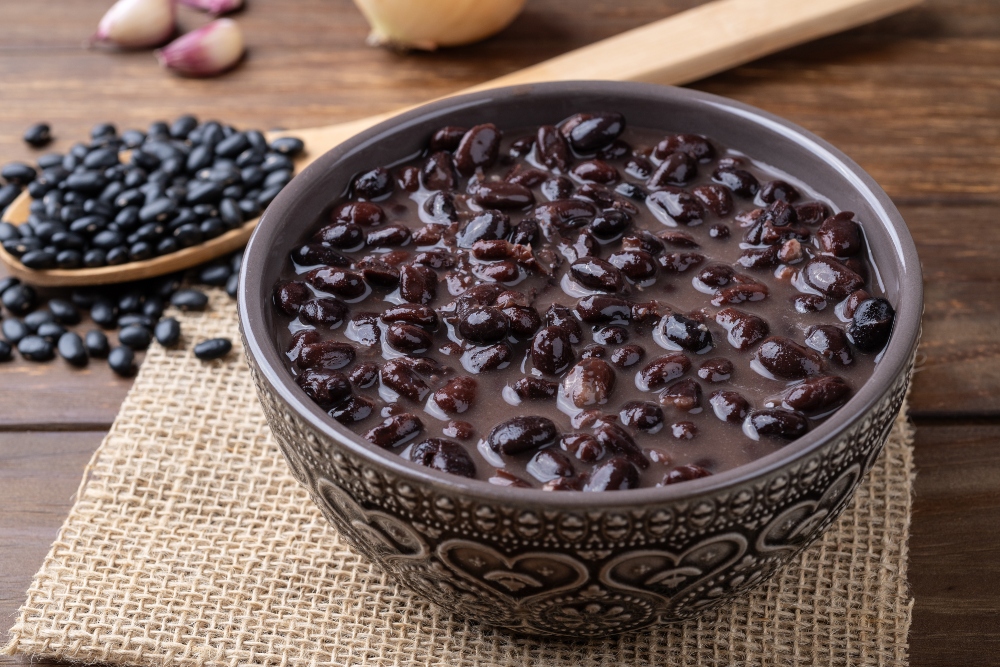
Several studies discussed in the video suggest black beans do more than neutralize free radicals. One study examined what happened when researchers used an extract from black beans. The results were striking. The extract altered the activity of 406 protein-coding genes, 33 microRNAs, and 39 long non-coding RNAs.
The narrator explains that these genes are involved in key metabolic pathways. The anthocyanins that give black beans their dark color appear to be “changing functions at the genetic level.” This means black beans may influence how cells behave, not just protect them from oxidative damage. In other words, they are not only antioxidants. They may actively modulate cellular function, which helps explain their wide-ranging effects on health.
Black beans and inflammation reduction
Human trials add to the picture. In one study highlighted in the video, participants ate one cup of black beans every day for three months. Researchers measured levels of interleukin-6, a protein commonly used as a key marker of chronic inflammation.
Over the course of the trial, average interleukin-6 levels dropped from “2.57 picograms per milliliter to 1.88.” This was considered a significant decrease. The lead researcher explains why this may be happening, noting that “They have something called polyphenolic compounds, which are bioactive and have antioxidant and anti-inflammatory activity.”
Participants were given a range of meals, including black bean chili, black bean brownies, a bean-based snack dip, and a colorful bean salad. This suggests the benefits were not tied to a single preparation, but to the beans themselves. These findings further strengthen the case for the health benefits of black beans, particularly for people concerned about low-grade chronic inflammation.
Immediate benefits for blood vessel function
Another small but revealing study looked at how black beans affect blood vessels shortly after a meal. This randomized, single-blind crossover trial included eight participants. Each person ate meals containing either black beans, other types of beans, or white rice as a control.
Researchers measured vascular tone, blood pressure, and arterial stiffness before eating and then one, two, and six hours afterward. The results stood out. After eating black beans, participants showed improved vasorelaxation at six hours, meaning their blood vessels were more relaxed. Pulse wave velocity, a measure of arterial stiffness, was also lower. The narrator notes that “the darker color the bean the stronger vascular benefits were seen.”
What makes this especially notable is the timing. The study showed that eating black beans produced measurable, short-term improvements in blood vessel function, not just long-term associations seen in population studies.
Why black beans may edge out blueberries
The comparison to blueberries is not just about biology. Practical factors matter too. Black beans are cheaper, more shelf-stable, especially in dry form, and far more accessible for many households. While blueberries remain a nutritious choice, they are often more expensive and less available year-round.
Plant Based Science London emphasizes that canned black beans are an easy option, though they note concerns around packaging safety, which they address in another video. Even so, the evidence presented makes a strong case that black beans deserve a place alongside, or even ahead of, blueberries in conversations about powerful plant foods.
Taken together, the research suggests that the health benefits of black beans go well beyond what most people expect. From gene expression to inflammation and vascular health, this humble legume may be one of the most underestimated foods on the plate.
Find more plant-based health and nutrition content on Plant Based Science London’s YouTube channel.
Read more: 7 Plant-Based Foods That Fight Inflammation and Boost Energy