Community
 Print


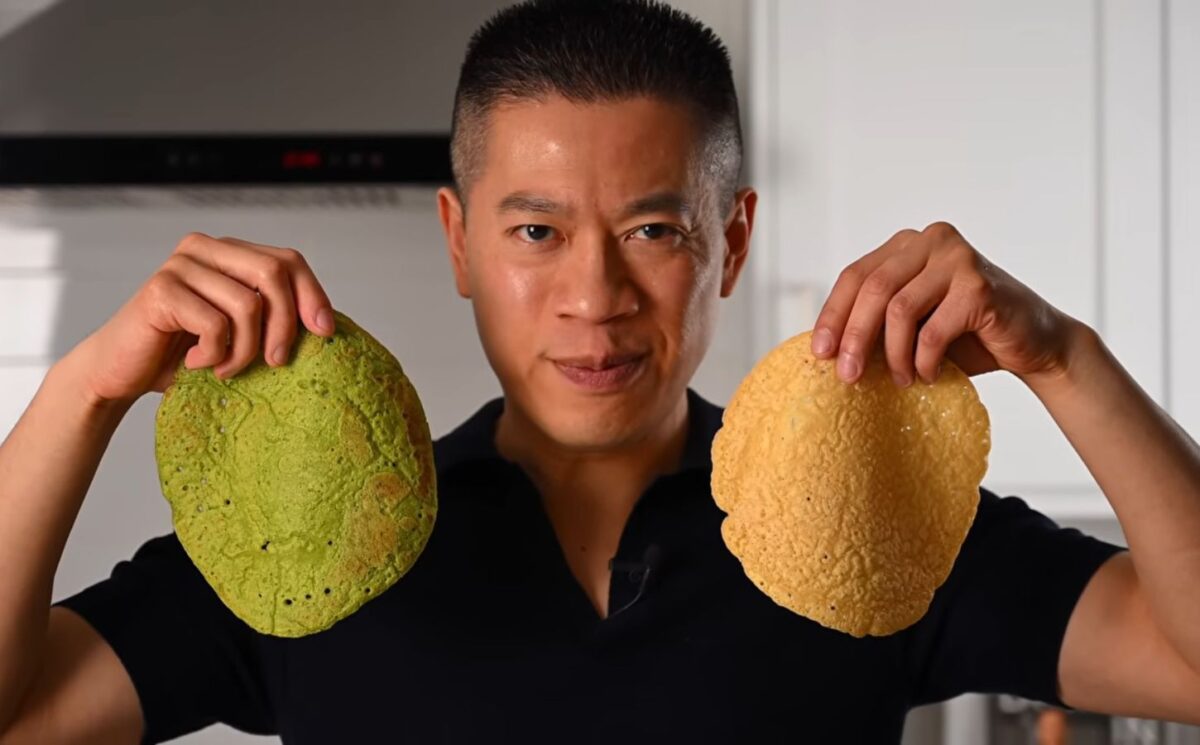
A packet of store-bought wraps is handy to have at home, but making your own can be cheaper, less processed, and surprisingly simple. Wil Yeung’s 3-ingredient lentil wraps offer a clever way to turn red lentils, water, and salt into a flexible base for lunches, quick dinners, and meal prep.
Yeung, the creator behind Yeung Man Cooking, is a Hong Kong-born Canadian cook, photographer, filmmaker, entrepreneur, and cookbook author. His plant-based YouTube channel focuses on approachable recipes that help people cook more at home. In a recent video, Yeung shares a lentil wrap recipe from one of his cookbooks and shows how easily it can be adapted with greens, spices, and fillings.
Read more: 3 High-Protein Vegan Lunch Wraps To Make This Week
“This is a literal three-ingredient recipe,” Yeung says in the video. “And two of those ingredients [are] water and salt.”
Making the lentil batter
For more creative and simple plant-based recipes, visit Wil Yeung’s YouTube channel.
Yeung starts by adding one cup of red lentils to a heatproof bowl. He boils water in a kettle, setting it to the highest temperature if the kettle has options, then pours the hot water over the lentils. He does not measure the soaking water. He simply uses enough to keep the lentils fully submerged.
While the lentils can soak overnight, Yeung says the faster method works well. “I find soaking them in boiling hot water, 20, 25 minutes is sufficient,” he says. After soaking, he rinses and drains the lentils before adding one cup of fresh water.
The lentils then go into a blender with a couple of pinches of salt. Yeung blends the mixture on high until it turns completely smooth, which takes about a minute. The finished batter should look thin and pourable, closer to a runny pancake mix than a thick dough. Yeung says the recipe makes about six to seven wraps, though it can be multiplied for a bigger batch.
Cooking the wraps
To cook the wraps, Yeung uses a nonstick pan over medium-low heat. He cooks with a carbon steel pan, so he warms it dry for a couple of minutes first. He then spreads a very thin layer of avocado oil over the pan with a paper towel.
Yeung pours in about half a cup of the lentil mixture and quickly spreads it with a ladle, using the same motion you would use to make a crepe. He warns that the batter needs a gentle hand. Pressing too hard or using a pan that is too hot can cause the wrap to break.
“Just spread it out once and leave it,” he says.
The wrap cooks for about two minutes on the first side. Yeung then releases it with a spatula, flips it, and cooks the other side for another couple of minutes. At that point, the wrap should already be sturdy enough to handle. He points out that the plain version is still useful on its own, especially because the wraps are flexible and easy to roll.
“They’re very pliable and rollable as well,” he says.
How to make green spinach lentil wraps
After showing the plain red lentil version, Yeung turns the base recipe into a green spinach wrap. He adds garlic powder, onion powder, fresh cracked pepper, and packed fresh spinach to the remaining batter. Kale would also work, he says, and the choice comes down to preference.
The mixture goes back into the blender until smooth. After about 30 seconds, the batter turns a bright green. Yeung then cooks it in the same way, spreading about half a cup into the pan and flipping it after a couple of minutes.
The spinach version adds more flavor and color without making the recipe complicated. Yeung says the wraps are also forgiving, since you can lift an edge and check whether they are done before flipping.
The same idea works with other ingredients. Paprika can give the batter an orange tint, while turmeric can make it golden. Yeung also suggests taking the flavor further with ingredients such as sun-dried tomatoes or smoked paprika.
“You can really let your imagination go wild with how you want to flavor these wraps,” he says.
Read more: Your Vegan BBQ Needs These Mango Salsa Lettuce Wraps
A flexible base for lunch
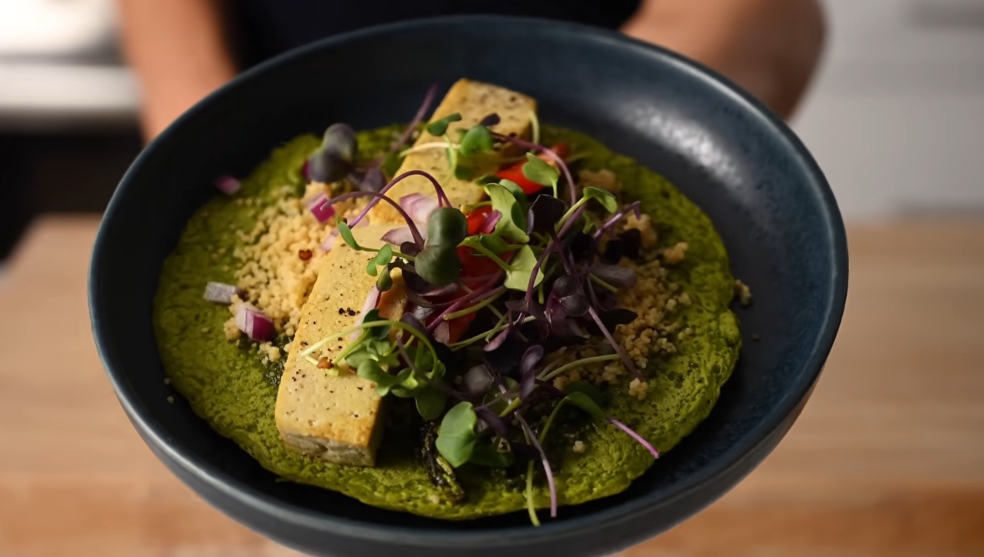
To show how the wraps work in a meal, Yeung makes a simple lunch wrap with seared tofu, chimichurri, leftover couscous, grilled asparagus, tomatoes, chopped red onion, and microgreens. The filling shows why the recipe works well for leftovers. The wraps can hold grains, vegetables, tofu, sauces, and fresh toppings without needing much extra prep.
Yeung notes that the plain red lentil wrap has a mild flavor. He describes it as seasoned but simple, saying it “basically just tastes like a gluten-free lentil pancake.” The green version looks more striking and tastes stronger because of the garlic powder, onion powder, pepper, and spinach.
The wraps also store well. Yeung says they can be refrigerated and enjoyed for a week or two, or frozen for longer storage. He recommends warming them slightly before using them, which helps restore their texture and pliability.
For anyone trying to cook more at home, these 3-ingredient lentil wraps are the kind of recipe that can make meal prep feel less rigid. They start with a basic pantry ingredient, but they can become plain wraps, green wraps, spiced wraps, or a sturdy base for whatever needs using up in the fridge.
“These wraps are so versatile, and the base wrap is only made of literally three ingredients,” Yeung says.
With a blender, a pan, and a little practice, red lentils can become something far more useful than a soup or stew ingredient. They can become wraps for the week.
Please note: PBN runs a sponsored content model. To explore how you can get featured, please email [email protected] or visit everkinddigital.com.