Community
 Print
Print



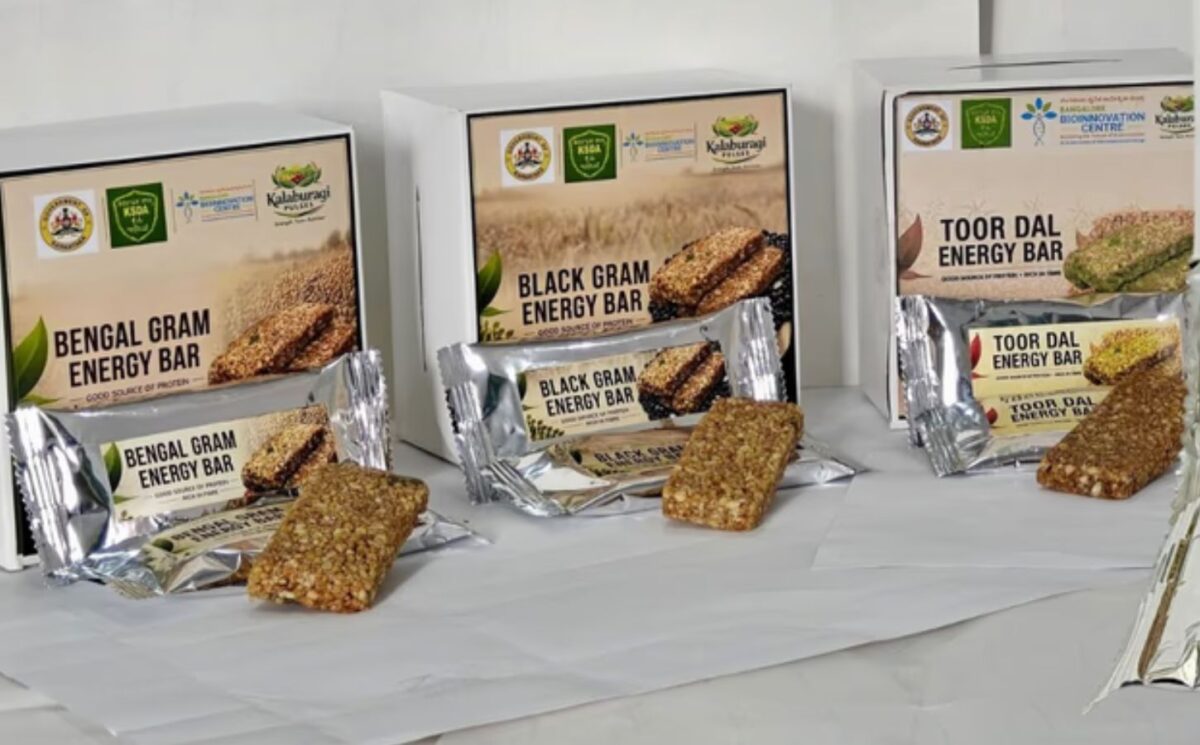
Bangalore Bioinnovation Center (BBC) has partnered with the state agriculture department of Karnataka, India, to make energy bars made with local pulses.
According to BBC, the project supports a commitment to strengthen “science-to-farm innovation” that helps farmers and promotes sustainable agriculture.
Read more: You Can Turn Lentils Into Fake Meat With This Simple Method
The six ready-to-eat energy bars feature locally grown toor dal, black gram, green gram, and Bengal gram, processed into high-protein crisps and combined with plant-based ingredients such as peanuts, jaggery, oats, and pumpkin seeds.
The portfolio also includes a bar made with a blend of pulses, and an option with added protein. The standard 30g bars made with one variety of pulse each contain roughly 4g of protein and 1.8 – 2g of dietary fibre, and no synthetic additives.
‘Innovation is not just about developing new products’
BBC, a state-backed innovation hub, launched the project as part of the Kalyana Karnataka Bio-Economy Mission, which aims to create a regional roadmap based on agricultural output. The center recently presented an overview of its initiatives to Shri Priyank Kharge, the Minister for IT, Biotechnology, and e-Governance.
Kharge said, “Karnataka has strong agricultural production, but the next opportunity is to create more value from what we grow. Innovation is not just about developing new products; it is about understanding what we produce, recognising emerging market and consumer demand, and finding new ways to present our agricultural products so that they can reach more consumers and increase consumption.”
BBC has noted that local value addition, in this case the transformation of pulses into ready-to-eat plant-based bars, is particularly important in Karnataka, where a “significant share” of pulses are exported as raw produce.
Read more: Nearly 60% Of Young Indians Are ‘Meat-Reducers,’ And Half Of Non-Reducers Are Open To Veganism
‘Innovation that begins with what the region grows’
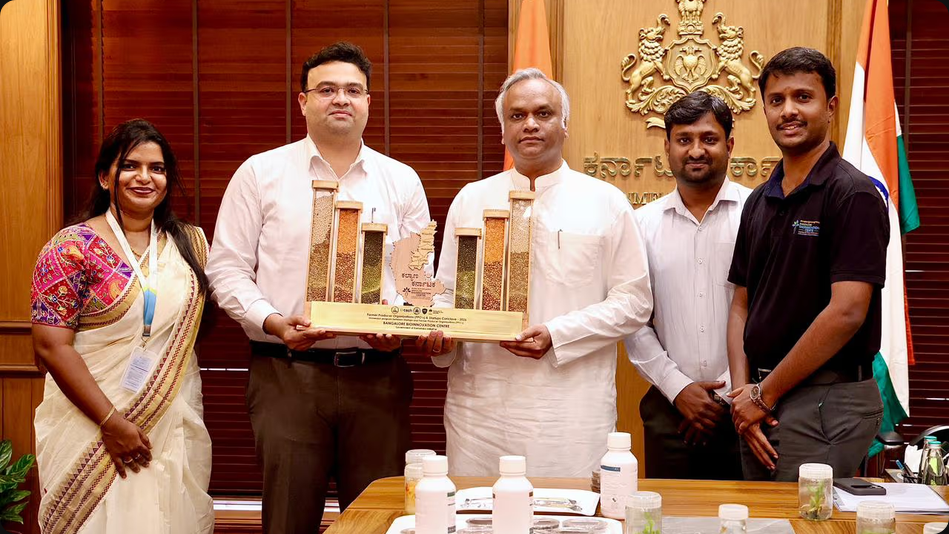
In a post on LinkedIn, BBC wrote, “Innovation that begins with what the region grows and creates greater value, income and enterprise where it is grown.”
BBC is also developing quality, disease-free planting material for the Kamalapur Red Banana, and to expand cultivation in the Kalaburagi region. The center is also developing customized biofertilisers using microorganisms from local soil.
PBN runs a sponsored content model. To explore how you can get featured, please email [email protected] or visit everkinddigital.com