Community
 Print
Print




What if improving your mood involved looking beyond your brain and paying more attention to what is happening in your gut? The growing conversation around the gut and mental health suggests the two may be far more connected than many people realize. For anyone already filling their plate with beans, whole grains, vegetables, and other plant foods, the research is especially intriguing.
Gastroenterologist and author Dr. Will Bulsiewicz has made a career out of explaining how the gut affects whole-body health. Known for his books and The Gut Health MD YouTube channel, he recently turned his attention to the connection between the gut and depression. In episode 10 of his Gut Insiders podcast, Bulsiewicz speaks with Chuck from the Physicians Committee about the gut-brain connection and his own experience with depression. “I was crushing every goal I set. And yet, I was miserable,” he says.
Read more: 5 Ways To Protect Your Gut From Chronic Stress
Depression is not simply ‘all in your head’
For more tips to support your gut and mental health, check out Bulsiewicz’s YouTube channel and website.
During his fellowship, Bulsiewicz says he was professionally successful but deeply unhappy. He was also 50 pounds overweight, bloated, and exhausted. His blood pressure and cholesterol were moving in the wrong direction. Long hospital shifts left little time for exercise, home cooking or sunlight. His sleep was irregular, fast food was convenient, and drinking took up some of his limited free time.
Looking back, Bulsiewicz believes those factors formed part of a much bigger picture. He rejects the idea that depression can always be reduced to brain chemistry alone.
“My argument is that depression is not simply a neurotransmitter imbalance,” he says. “There’s a bigger story there.”
Bulsiewicz stresses that he is not opposed to antidepressants. He says medications can be life-changing for people who need them. Instead, he wants people to consider other biological systems that may also affect mood. These include inflammation, diet, lifestyle, the microbiome, and communication between the gut and brain.
How the gut talks to the brain
One major communication route is the vagus nerve. Bulsiewicz calls it “the centerpiece of the conversation on brain-gut.” The nerve connects directly with the brain and travels down through the body into the abdomen. There, it connects with the vast nervous system surrounding the digestive tract.
The communication also works both ways, although Bulsiewicz says it is surprisingly uneven.
“The gut is very talkative, right? And the brain is mostly listening,” he says. Around 80 percent of information traveling through the vagus nerve goes from the gut toward the brain, according to Bulsiewicz. The remaining 20 percent travels from the brain toward the gut.
Chemical signals also matter. Bulsiewicz notes that around 95 percent of the body’s serotonin is produced in the gut. However, he makes an important distinction: serotonin does not directly cross into the brain. Precursors such as 5-HTP can cross and later contribute to serotonin production. He also discusses dopamine, GABA, and short-chain fatty acids produced through activity in the gut.
Another part of the story is inflammation. Bulsiewicz describes the inflammation associated with depression as chronic and low-grade rather than obvious swelling. He compares it with a smoldering fire. This neuroinflammation can contribute to fatigue, brain fog, and changes involving neurotransmitters, he says.
People with major depression may also have lower gut microbial diversity and fewer butyrate-producing microbes, according to Bulsiewicz. Butyrate is a short-chain fatty acid associated with anti-inflammatory effects.
That does not prove the gut alone causes depression. Bulsiewicz instead describes the relationship as a “two-way street.” Depression may affect eating, movement, and the microbiome, while the gut may also send signals influencing mood.
Bulsiewicz recommends eating more plant diversity
Diet is one of Bulsiewicz’s most practical tools for supporting gut and mental health. He highlights the SMILES trial, which studied a plant-predominant Mediterranean-style dietary intervention among people with depression. Bulsiewicz says remission rates were four times higher in the dietary intervention group. He connects this with microbiome research linking greater plant diversity with a more diverse gut ecosystem.
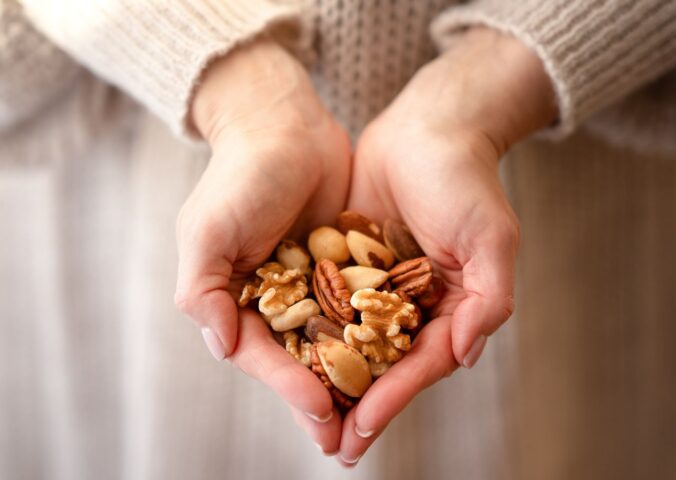
His advice is to aim for 30 different plants per week. “Eat for diversity,” he says. Fruits and vegetables count, but so do beans, whole grains, nuts, seeds, herbs and spices.
Bulsiewicz also recommends reducing ultra-processed foods. He says these foods are associated with around a 20 percent higher risk of depression. Sugary drinks and refined sugar are particular concerns.
For Bulsiewicz, the important point is not that a single food causes or cures depression. It is that dietary patterns can influence the gut microbiome and compounds produced by gut microbes.
Read more: Your Morning Coffee Really Is Making You Happy, Says Study
6 other habits he says may support mood

Food is only one part of Bulsiewicz’s seven-part approach. Exercise comes next. He says both resistance and cardiovascular exercise can benefit mood. Resistance training has also been associated with greater gut diversity and more short-chain fatty acid producers, he says.
Sleep is another priority. Bulsiewicz recommends at least seven hours of actual sleep each night and maintaining a consistent bedtime. He says his own erratic sleep schedule contributed to his difficulties during fellowship.
He also recommends getting outside in the morning. Natural light helps regulate circadian rhythms, which can influence alertness, sleep, and mood. Bulsiewicz suggests at least 10 minutes outside after waking. “Outdoor light is always superior even on a cloudy day,” he says.
Cutting back on alcohol is another recommendation. Bulsiewicz notes that alcohol is a depressant and says it can negatively affect the microbiome and promote an inflammatory pattern.
His final tool is free: slow breathing. Bulsiewicz recommends extending the exhale to activate the vagus nerve and shift the body toward a calmer parasympathetic state.
“Here’s the key. It’s the length of exhale,” he says. One option is breathing in for four seconds and out for six. He also discusses the physiological sigh, involving two inhales followed by a long exhale.
Ultimately, Bulsiewicz presents these habits as complementary rather than replacements for mental health treatment. His larger message is simple. The brain does not operate separately from the rest of the body. Understanding gut and mental health may give people additional ways to support both.
Please note: PBN runs a sponsored content model. To explore how you can get featured, please email [email protected] or visit everkinddigital.com.