Community
 Print
Print



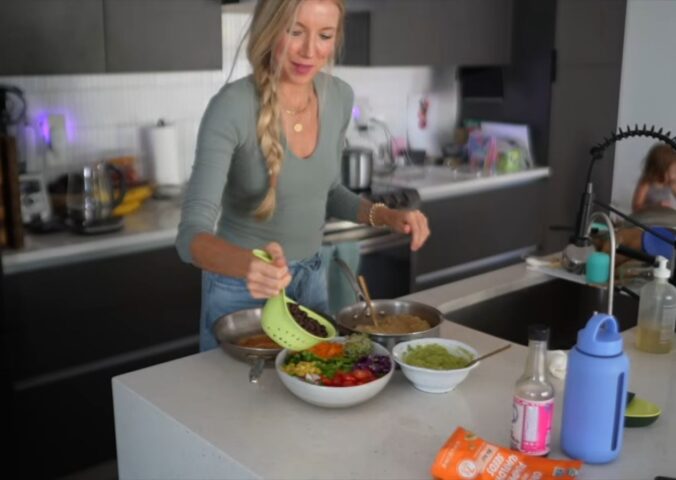
For anyone who has stared at a takeout menu while wondering whether something healthier and more exciting could be made at home, Wil Yeung has the answer. In a Yeung Man Cooking video, the cookbook author prepares three Chinese-style vegan recipes using crisp rice noodle rolls, aromatic fried rice and meltingly tender eggplant.
Born in Hong Kong and based in Ontario, Canada, Yeung is the creator and host of the plant-based YouTube cooking show Yeung Man Cooking. His background stretches well beyond food: He studied music and education, trained as a violinist, and has worked as a photographer, filmmaker, and entrepreneur. He has also published four cookbooks, and the dishes featured in the video come from his collection of recipes.
Read more: 13 Chinese-Inspired Dishes That Are Vegan
Throughout the episode, Yeung shows that restaurant-worthy food does not require overcomplicated techniques. Instead, it depends on preparing ingredients carefully, giving them time to brown, and layering flavors with aromatics, chili oil, and fermented sauces.
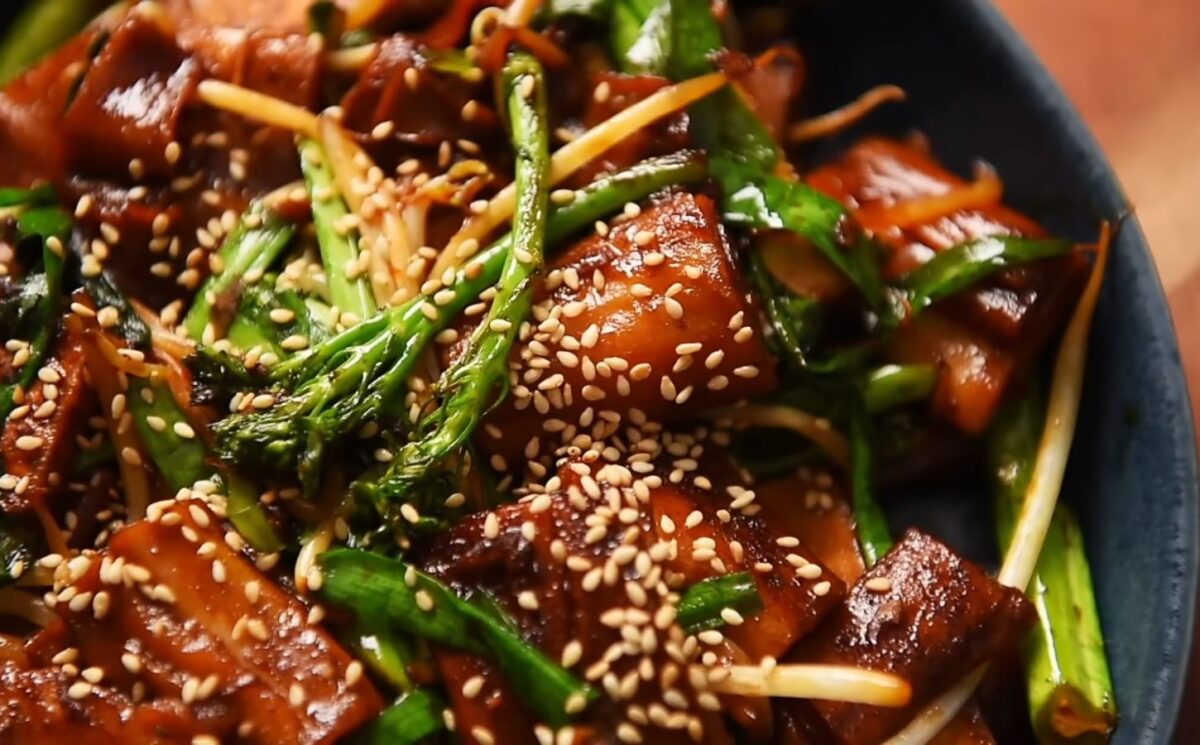
Pan-fried cheung fun with smoked tofu
For more restaurant-quality plant-based recipes from around the world, check out Wil Yeung’s YouTube channel.
Yeung begins by patting approximately 75 grams of smoked tofu dry before slicing it widthwise. Smoked tofu has a firm texture and an already-developed savory flavor, making it particularly well suited to quick pan-frying.
He cuts garlic chives into pieces roughly the same size as the tofu, noting that green onions can be used instead. He also chops 50 grams of broccolini into bite-sized pieces.
The foundation of the dish is fresh cheung fun, or rice noodle rolls, which can often be found at Asian grocery stores. Yeung cuts the rolls into pieces about two inches long before gently separating them into smaller bites.
Temperature matters here. Cheung fun taken directly from the refrigerator can be stiff and difficult to separate without tearing. Yeung recommends microwaving the noodles for about 30 seconds or leaving them at room temperature for a few hours before handling them. This softens the rolls and helps them fry more evenly.
The sauce combines one and a half tablespoons of soy sauce, 1 teaspoon of dark soy sauce, and one tablespoon of plant-based oyster sauce. Vegan oyster sauces are generally made with mushrooms, often shiitakes, which provide an earthy umami flavor.
Yeung grates a small piece of garlic, then adds toasted sesame oil. This is followed by a quarter teaspoon of cayenne pepper and a couple of tablespoons of water. He stirs the sauce and sets it aside.
In a nonstick pan over medium heat, he adds one teaspoon of avocado oil, followed by the smoked tofu and broccolini. The ingredients sauté for several minutes until they begin to brown.
“Be patient and allow the veggies to get a little bit of color,” Yeung says.
Once browned, the tofu and broccolini are removed. Yeung adds one tablespoon of smoky chili oil to the pan, followed by the cheung fun. He allows the noodles to sear undisturbed for several minutes, tosses them, and lets the other sides develop color.
“Be patient with this, as this is what creates that iconic seared look and flavor,” he says.
Garlic chives and approximately 75 grams of bean sprouts are added near the end so they retain some freshness and crunch. The tofu and broccolini return to the pan, followed by the prepared sauce.
Everything cooks for about a minute, until the noodles have absorbed most of the liquid. Yeung plates the cheung fun and sprinkles white sesame seeds on top. The dish makes roughly one to two portions and combines crisp edges with soft, chewy centers.
Smoky chili oil fried rice
For the second dish, Yeung focuses on one of the most important rules of fried rice: The grains should be relatively dry before entering the pan.
Although leftover rice refrigerated overnight is the traditional choice, Yeung demonstrates how to prepare rice for frying on the same day. He rinses 1 cup of jasmine rice two or three times to remove excess starch. Then he combines it with one cup of water.
The saucepan is placed over medium-high heat. Once the water begins to bubble, he stirs the rice, lowers the heat to medium-low, and covers the pot. The rice cooks for 15 minutes. Yeung then turns off the heat and leaves it covered for another 10 minutes.
Meanwhile, he finely chops three or four garlic cloves. He also chops three or four green onion stalks. These serve as both an aromatic and the main vegetable in the dish.
Seeds are removed from approximately four dried chili peppers before the peppers are roughly chopped. Removing the seeds reduces some of their heat while preserving their smoky flavor.
When the rice has finished steaming, Yeung fluffs it and transfers it to a large mixing bowl. Using a rice paddle, he spreads the rice into a thin layer around the bowl. This releases steam, draws out moisture, and helps the grains cool quickly.
The rice rests for at least 25 to 30 minutes. Skipping this step could produce soft or clumpy fried rice, while properly cooled grains remain distinct in the pan.
Yeung warms a nonstick pan over medium-low heat and adds two to three tablespoons of chili oil. The green onions, garlic and dried chilies cook for one to two minutes, releasing their aroma without burning.
He raises the heat to medium and adds the rice. This is followed by one and a half tablespoons of soy sauce and approximately one teaspoon of dark soy sauce. The mixture fries for four to five minutes, allowing the grains to absorb the seasonings while becoming slightly drier and more separated.
The finished rice can be spooned directly onto a plate, but Yeung packs it into a tall bowl and flips it onto a serving plate for a restaurant-style presentation. A final drizzle of chili oil adds extra heat and gloss.
It is one of the simplest Chinese-style vegan recipes in the video. However, the combination of garlic, green onions, chilies, and smoky oil produces layers of flavor from a relatively short ingredient list.
Read more: Ditch Ramen For This Rich, Creamy Vegan Khao Soi
Eggplant and tofu in chili garlic sauce
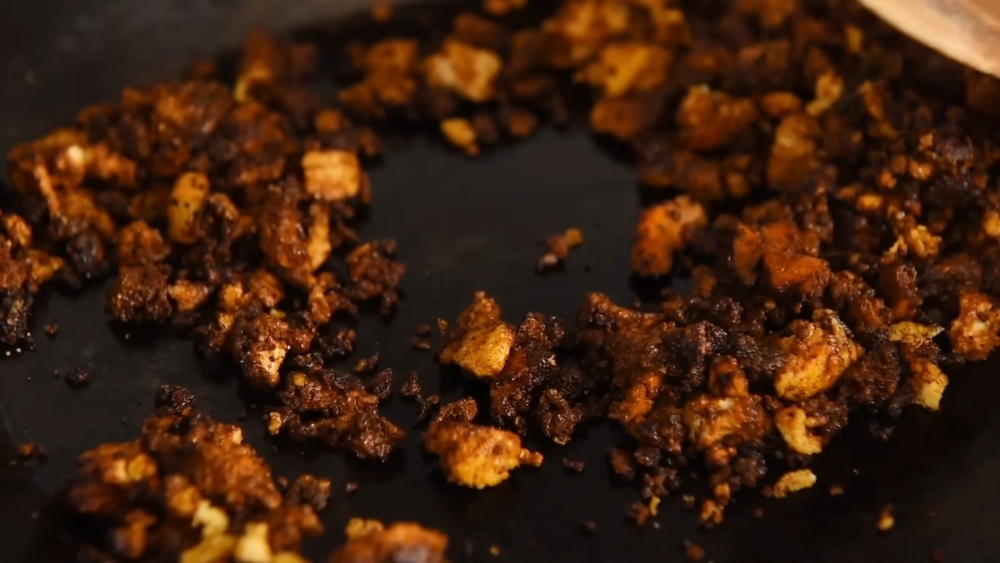
The final dish pairs tender Asian eggplant with crumbled tofu in a rich chili garlic sauce, served alongside steamed jasmine rice.
Yeung starts the rice first, using the same basic method: one cup of rinsed jasmine rice, 1 cup of water, 15 minutes over medium-low heat and another 10 minutes resting with the heat turned off.
For the sauce, he finely chops four garlic cloves, a medium piece of ginger and one deseeded long red chili. The long chili is relatively mild, though Yeung says red Thai chilies can be substituted for more heat.
Approximately 175 grams of extra-firm tofu is patted dry and crumbled by hand. The uneven pieces give the sauce texture and body.
Yeung removes the stems from two Asian eggplants, cuts them lengthwise into quarters and chops each long section into thirds. Larger Italian eggplants can also be used if cut into similarly shaped pieces.
A nonstick pan is warmed over medium heat with 1 tablespoon of chili oil. Yeung sautés the crumbled tofu for three to four minutes. This allows moisture to evaporate and the edges to become slightly crisp. He adds two teaspoons of dark soy sauce. This seasons the tofu and gives it a caramel color, then sets it aside.
Another tablespoon of chili oil goes into the pan. The eggplant is arranged so each piece touches the hot surface. It sears for one to two minutes, is tossed, and then browned on another side before being removed.
In a sauté pan, Yeung heats 1 teaspoon of avocado oil and cooks the garlic, ginger, and red chili for two to three minutes. He adds the tofu and 1 tablespoon of plant-based oyster sauce. Then he mixes in one tablespoon of soy sauce and 1 tablespoon of doubanjiang, a fermented chili bean paste that supplies heat, saltiness, and deep umami.
Two cups of vegetable stock are poured in, followed by the eggplant. Yeung brings the mixture to a boil, lowers the heat to medium and covers it for about five minutes.
Meanwhile, he combines two teaspoons of potato starch or cornstarch with water to form a slurry. Once the eggplant is tender, the slurry is stirred into the pan, thickening the liquid into a glossy sauce that clings to each piece.
Yeung serves the eggplant and tofu with fluffy white rice and fresh cilantro.
“There is a reason why this is a childhood favorite,” he says.
The eggplant becomes soft and almost creamy inside, while the crumbled tofu gives the sauce substance. Garlic, ginger, chili and fermented bean paste create a bold, savory dish that looks equally at home on a weeknight table or a restaurant menu.
Together, the three recipes show how small details such as warming chilled noodles, drying freshly cooked rice, and browning eggplant before simmering it, deliciously transform common ingredients. Yeung’s approach makes staying in feel far more appealing than opening another takeout app.
Please note: PBN runs a sponsored content model. To explore how you can get featured, please email [email protected] or visit everkinddigital.com.