Community
 Print


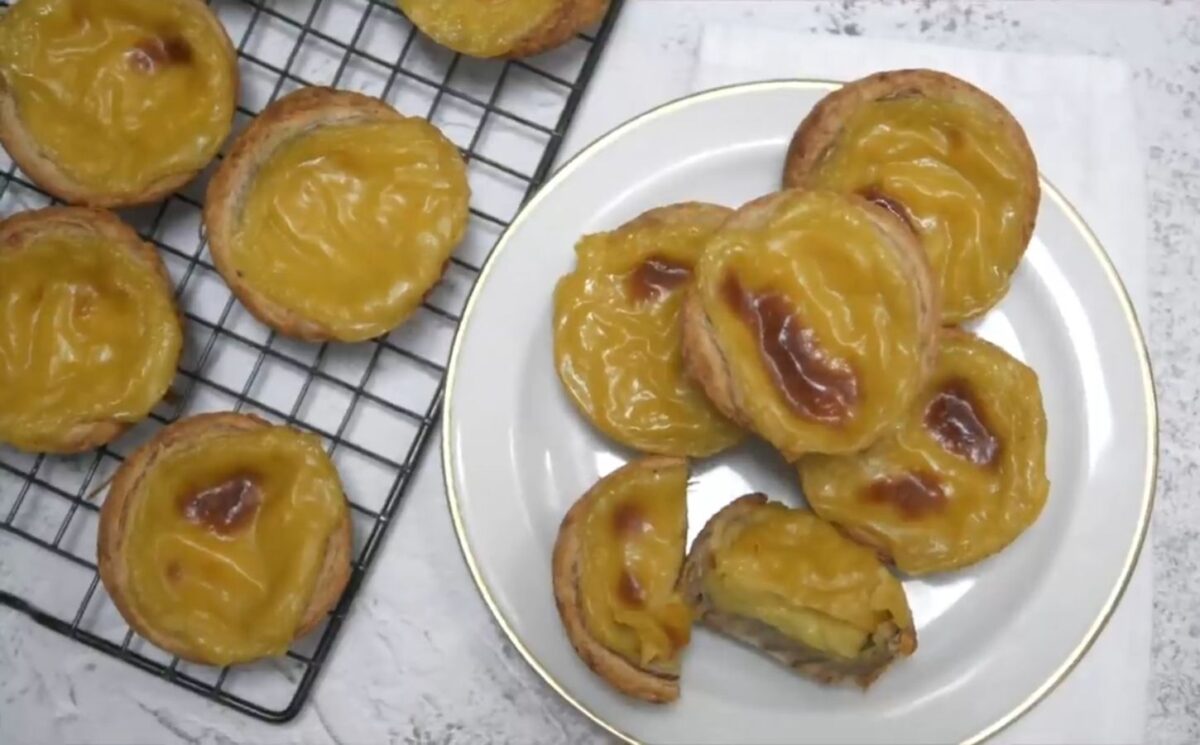
Even as plant-based options become more widely available, finding vegan Portuguese custard tarts can be surprisingly difficult. The iconic Portuguese pastry, known as pasteis de nata, traditionally relies on eggs, cream, and buttery pastry. But Canadian vegan YouTuber Candice Hutchings believes vegans shouldn’t have to miss out on one of Portugal’s most beloved desserts. In a recent video, the creator behind Edgy Veg shares her method for making vegan Portuguese custard tarts at home, using a combination of coconut milk, starches, and clever flavor additions to recreate the rich custard filling and caramelized top that make the original so famous.
Hutchings, who has spent years developing plant-based versions of classic comfort foods, explains that this recipe grew out of an existing favorite. “I have a creme brulee recipe on my website, and I have a recipe in my cookbook,” she says. “I’m going to take the base of that recipe and kind of really try and bring out an eggy flavor.”
Read more: Chai-Spiced Custard Tart With Mango
Starting with accidentally vegan puff pastry
For more vegan recipes, follow Edgy Veg on her YouTube Channel.
According to Hutchings, the first challenge is recreating the pastry shell. Fortunately, she points out that this step is often easier than many people realize.
“So for the pastry, a lot of puff pastry is actually vegan,” she says. “It’s by accident. It’s because they use oil and not butter.”
To add extra flavor and texture, Hutchings rolls out thawed puff pastry sheets and sprinkles them with cinnamon sugar before shaping them into tight logs. While she notes that the cinnamon sugar is completely optional, she likes the subtle sweetness it brings to the finished tarts.
After rolling the pastry into logs, she wraps them and chills them in the refrigerator. This step helps firm up the dough before it is sliced into portions and pressed into a muffin tin. Hutchings hopes the rolling technique will create additional layers and flakiness in the finished pastry shell.
“What I’m hoping with the whole rolling situation is that we get some added flakiness,” she says.
Rather than using specialty tart molds, she opts for a standard muffin tin, carefully pressing each slice of pastry into shape and extending it slightly above the rim to mimic the traditional look of pasteis de nata.
Building a custard from coconut milk
The filling is where most of the experimentation happens. Hutchings explains that traditional Portuguese tarts are essentially an egg custard baked inside pastry, so recreating that texture without eggs requires a strategic combination of ingredients.
“It’s pretty much an egg custard in a pastry,” she says. “It’s delicious, it’s incredible.”
Her base begins with coconut milk, sugar, and a cinnamon stick. Instead of adding ground cinnamon directly, she gently infuses the coconut milk with cinnamon flavor, allowing the spice to steep after briefly simmering.
The choice of coconut milk might raise concerns about coconut flavor, but Hutchings deliberately develops the recipe to avoid that outcome.
“For the custard itself, it’s going to be a coconut milk base,” she explains. “So it will taste a little bit of coconut, but I’m hoping that the flavors that I’m adding in kind of get rid of that.”
While the coconut mixture infuses, she prepares a second mixture using tapioca starch, corn starch, and unsweetened soy milk. The starches provide the thick, silky texture associated with custard. Hutchings notes that viewers can use only cornstarch if tapioca starch is unavailable.
She gradually combines the two mixtures while whisking continuously over heat. As the liquid approaches a simmer, the starches begin thickening the mixture into a custard-like consistency.
The ingredients that create an eggy flavor
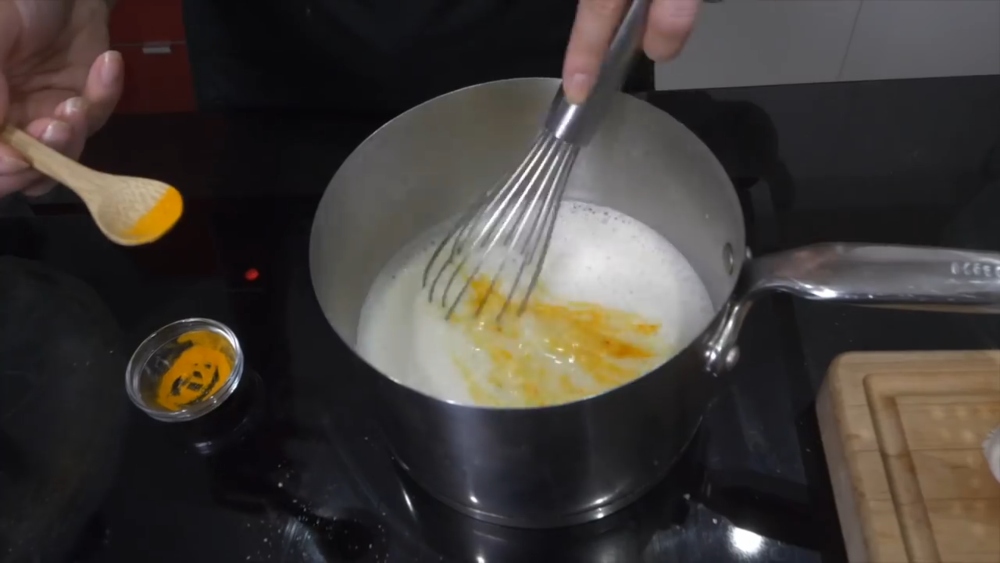
One of the most interesting parts of Hutchings’ recipe is how she recreates the flavor of egg yolks without using eggs.
First, she adds nutritional yeast, which she says contributes some of the rich, buttery qualities associated with traditional custard.
“This will give it kind of that like distinct eggy buttery flavor that you get from like an egg yolk,” Hutchings explains.
Vanilla adds depth, while turmeric helps create the characteristic golden-yellow color found in traditional pasteis de nata. Hutchings adds the turmeric gradually, carefully adjusting the shade as the custard cooks.
To take the flavor even further, she turns to kala namak, also known as black salt.
“This is an Indian salt,” she says. “And what it does is it kind of smells and tastes sulfuric.”
That sulfuric quality is often used in vegan cooking because it closely resembles the aroma and flavor of cooked eggs. Hutchings recommends adding it gradually and tasting along the way until the custard reaches the desired level of egginess.
After tasting her finished mixture, she declares, “It’s perfectly eggy for me.”
Read more: This Crème Brûlée is 100% Vegan
Filling and baking the tarts
Once the custard reaches the right consistency, Hutchings works quickly to fill the prepared pastry shells before the mixture begins setting.
She estimates that each tart requires roughly two to three tablespoons of filling and advises distributing the custard evenly before topping up individual tarts.
The color, she notes, looks remarkably close to the original Portuguese version. The filled tarts are then baked for approximately 15 to 20 minutes, though Hutchings emphasizes that oven performance can vary.
As they bake, the pastry becomes crisp while the custard sets. Traditional pasteis de nata are known for their dark, blistered tops, and Hutchings aims to achieve a similar appearance.
After baking, she recommends leaving the tarts in the pan for about 10 minutes before transferring them to a wire rack. This cooling period allows the custard to fully set and prevents the delicate pastries from falling apart.
Looking back on the batch, Hutchings admits she slightly overfilled them. Still, she isn’t complaining.
“I’m not upset about it because who doesn’t love custard?” she says.
For anyone searching for vegan Portuguese custard tarts that capture the texture, appearance, and flavor of the original, Hutchings’ recipe offers an inventive plant-based solution built from years of vegan recipe development and a few carefully chosen ingredients.
Please note: PBN runs a sponsored content model. To explore how you can get featured, please email [email protected] or visit everkinddigital.com