Community
 Print
Print



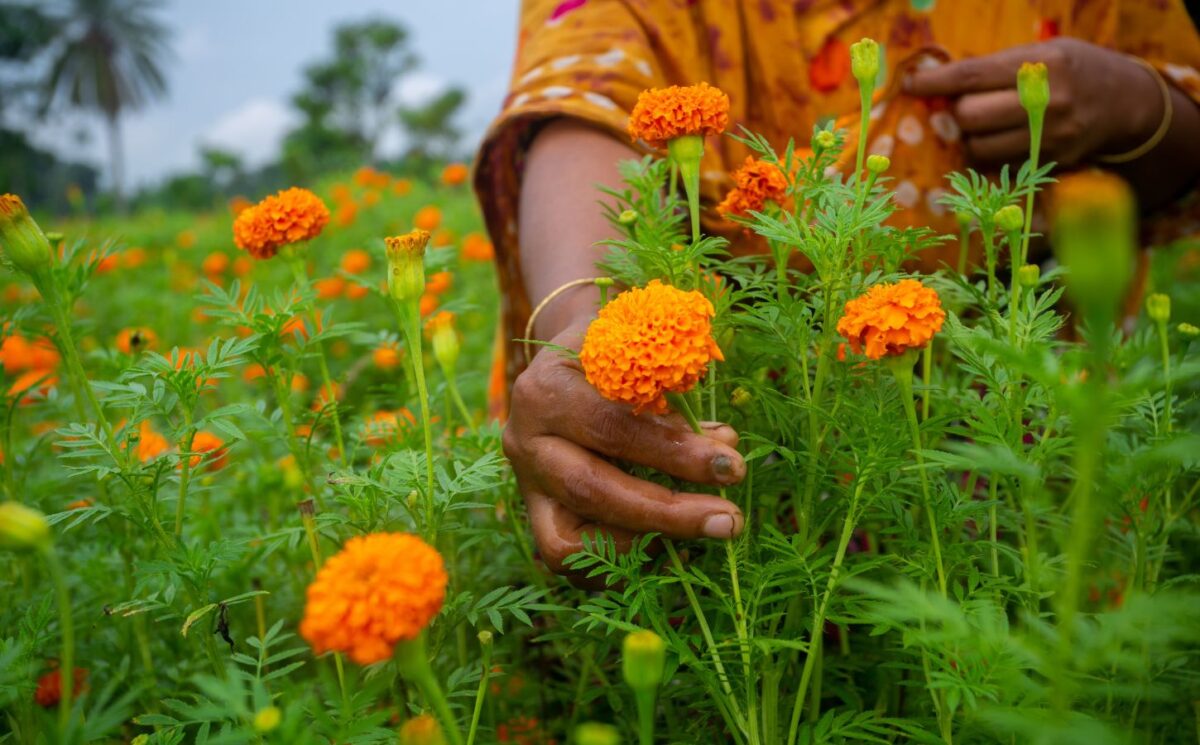
A study has found that upcycled marigold flowers could be a new source of protein.
According to the study, marigold-derived protein could be a functional, sustainable, plant-based ingredient in future foods and alternative proteins.
Read more: New Bipartisan Legislation Could Help Expand Plant-Based Manufacturing In The US
A team of researchers from the University of Georgia’s Department of Food Science and Technology set out to explore the potential for marigold flowers, an underutilized and common plant, as a potential source of sustainable plant-based protein.
Anand Mohan, an associate professor of Food Science and Technology at the University of George and the study’s corresponding author, noted that Marigold flowers are widely cultivated, yet around 40 percent of production is discarded.
“We saw an opportunity to valorize this agricultural byproduct by exploring its protein fraction, given the growing demand for plant-based and sustainable food ingredients,” Mohan said.
Umami taste, heat-resistance, and emulsifying capacity
The researchers ground pot marigold flowers into a fine powder, then isolated proteins in four sequential liquid extractions, collecting different protein molecules in each. According to their lab tests, some of the protein extracts contained high levels of glutamic acid and aspartic acid, which could give foods an umami taste.
The proteins also stayed stable up to 221 degrees Fahrenheit (105 degrees Celsius), demonstrating a higher heat tolerance than plant proteins like pea and chickpea. Finally, two protein extracts had excellent emulsifying capacity, which suggests that they could be useful in salad dressings, mayonnaise, and dairy alternatives.
The researchers found that marigold flowers could be a new, sustainable, and versatile protein source, with qualities that make it ideal for further nutrient-enrichment. The next steps include studying the proteins’ health benefits, making prototype products such as baked goods and dressings, and taste-testing.
Read more: The Tiny ‘Kiwiberry’ Could Help Stop Or Slow Lung Cancer Growth, Finds Study
‘Something as common and overlooked as a flower can be transformed’
As noted by Mohan, marigolds are both widely cultivated and often wasted. They are highly perishable and often used in religious ceremonies, but unsold flowers lose value fast, and there is little infrastructure for collection or disposal. Marigold flowers are already certified as GRAS (Generally Recognized As Safe) in the US.
“People are increasingly aware of food waste and are seeking innovative solutions,” Mohan said. “Demonstrating that something as common and overlooked as a flower can be transformed into a valuable food ingredient makes science both relatable and impactful.”
ACS Food Science & Technology published the study in April.
Please note: PBN runs a sponsored content model. To explore how you can get featured, please email [email protected] or visit everkinddigital.com