Community
 Print
Print



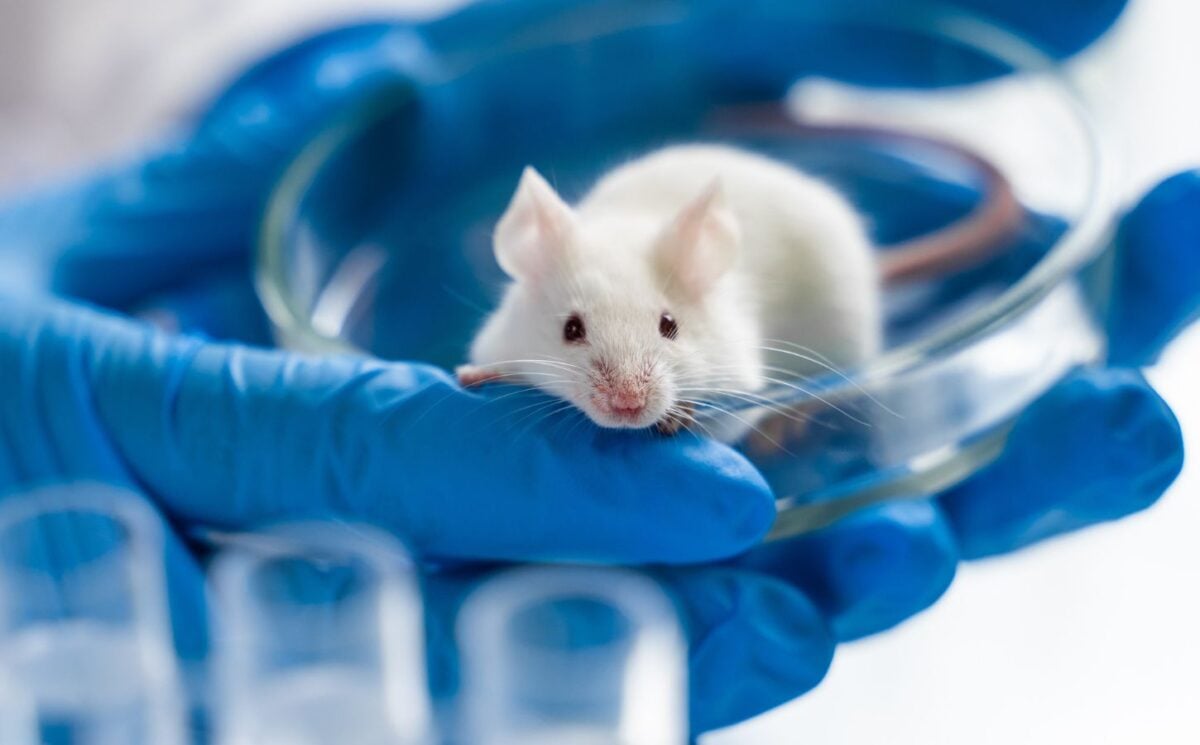
The UK science minister has proposed a new nationwide strategy to replace animal testing with emerging technology and alternative methods as soon as possible.
Specific alternatives mentioned in the strategy include 3D bioprinted tissues, which can be used to create realistic human samples, large-scale AI-powered data analysis, and organ-on-a-chip systems, which are small devices that mimic organs.
Read more: Brazil Makes History With Partial Ban On Live Animal Testing For Cosmetics
Patrick Vallance, the Minister of State for Science, Research and Innovation, published the policy paper, titled “Replacing Animals In Science,” earlier this month.
It specifies that phasing out animal testing can only happen once alternative methods are deemed equally accurate and safe for human exposure. It therefore prioritizes supporting the development, validation, and uptake of alternatives, so as to replace animal testing as soon and as safely as possible.
The paper pledged £75 million in funding, with £60 million from the government and £15.9 million from the Medical Research Council (MRC), Innovate UK, and the Wellcome Trust, for the advancement of promising “human in vitro models.”
“Nobody in our country of animal lovers wants to see suffering, and our plan will support work to end animal testing wherever possible and roll out alternatives as soon as it is safe and effective to do so,” said Vallance in a statement. “This is a roadmap which will ensure government, businesses, and animal welfare groups can work together to find alternatives to animal testing faster and more effectively.”
Read more: UK Meat Industry Told To Phase Out CO2 ‘Stunning’ For Pigs Within Five Years
New strategy described as a ‘welcome recognition that the future of science must be animal-free’

Other key plans under the strategy include ending regulatory animal testing for skin and eye irritation by the end of 2026, and ending botox strength tests on mice by 2027. By 2030, researchers should have ceased pharmacokinetic testing – the study of how the body interacts with administered substances – on dogs and primates.
Animal rights groups have reacted positively, with some caveats. Cruelty Free International’s director of science and regulatory affairs, Emma Grange, welcomed the strategy as a “very exciting move,” but noted that it was also “long overdue.”
“It is a strong step forward and shows that the government is listening to scientists and the public, to uphold its own promise to work towards phasing out animal experiments,” said Grange. “The commitments to funding, regulatory reform, and measurable targets are exactly the kind of leadership we need and mark a serious move towards alleviating the suffering caused by the millions of animal tests which happen every year in this country.”
Animal Free Research UK also welcomed the move, but suggested that the government’s plan does not go far enough. Carla Owen, the CEO of Animal Free Research UK, said: “Today’s announcement is a welcome recognition that the future of science must be animal-free, but it must be seen as the first step. The direction that [the] government has committed to would be far stronger if it [were] underpinned by a clear timeline, firm targets, and binding legislation.”
Read more: Animal Testing: Is It Effective, And What Happens To ‘Lab Animals’?