Community
 Print
Print




Hot flashes, bloating, poor sleep, mood changes, and brain fog are often filed under one frustrating explanation: hormones. But according to gastroenterologist and author Dr Will Bulsiewicz, supporting gut health during perimenopause may be an overlooked part of helping the body through this transition.
Bulsiewicz, known online as The Gut Health MD and for books including Fiber Fueled, recently shared a YouTube video explaining why plant foods can be “incredible allies” for people trying to support hormonal balance during perimenopause. The message is not that broccoli can magically replace ovaries, or that tofu is a cure-all. It is that the gut, inflammation, and hormones are deeply connected, and that connection may be more actionable than many realize.
Read more: 3 Diet Changes That Can Help Ease Menopause Symptoms
He says he has cared for many women who describe a similar experience: After years of feeling like their bodies, digestion, sleep, and energy were predictable, things suddenly start to shift in their 40s. Many are told the explanation is simple: hormones. Bulsiewicz argues that this is only part of the story.
“It’s their gut. It’s inflammation,” he says. “And the two are tangled together with their hormones in a way that changes what you should do about it.”
Perimenopause symptoms are often attributed primarily to the ovaries, which do play a central role. As estrogen production becomes less predictable, symptoms can emerge or intensify. But Bulsiewicz says the body’s handling of estrogen is not only about how much the ovaries produce. It is also about what happens after estrogen has been processed by the liver and sent into the gut.
He uses the image of a sink to explain it. Estrogen is the water. The ovaries are the faucet, pouring estrogen in. The gut is the drain, helping determine how much estrogen leaves the body and how much may be recirculated.
How the gut microbiome influences estrogen balance
For more info on how to support your gut health, visit Bulsiewicz’s YouTube channel and website.
In the liver, estrogen is broken down and placed into bile, which then moves into the intestines. From there, it can leave the body through stool. But along the way, it meets gut microbes. A subset of the microbiome known as the estrobolome can influence whether some estrogen is reactivated and returned to circulation.
“A healthy estrobolome actually slows the drain,” Bulsiewicz says. “It allows your body to hold on to estrogen longer.”
That becomes especially relevant in perimenopause, when the ovarian “faucet” is no longer steady. “You just can’t crank it back open,” he says. “You can’t just pour out more estrogen.”
Inflammation complicates the picture further. Bulsiewicz explains that estrogen is not only a reproductive hormone; it also has anti-inflammatory effects. It helps maintain the gut barrier, supports a diverse microbiome, and helps regulate immune activity. As estrogen levels fluctuate and decline, he says, the gut barrier may loosen. Bacterial fragments can then pass into the bloodstream, activating the immune system and raising inflammation.
That inflammation can further damage the gut barrier, disrupt the microbiome, and affect the estrobolome’s ability to help regulate estrogen. Bulsiewicz says inflammation may even stress the ovaries themselves.
“What you’ve been told is that menopause is one problem. It’s all happening in the ovaries,” he says. “And I’m saying to you: There’s three parts. It’s the ovaries, it’s the gut, and it’s the inflammation that ties it all together.”
He also emphasizes that women should not be hearing this information only after symptoms begin. Perimenopause is not a surprise event, he argues, but a predictable transition for which people should be prepared in advance.
“The mistake that we have made is not preparing women with the right health habits and the right foods to protect themselves and mitigate these symptoms,” he says.
Here are the five plant-based foods and food groups Bulsiewicz recommends for supporting gut health during perimenopause and helping the body navigate hormone changes.
1. Eat 30 different plants a week
Bulsiewicz’s first recommendation is not a single food, but a target: Eat 30 different plants each week.
That does not mean 30 servings. It means 30 different types of plant foods, including fruits, vegetables, whole grains, seeds, nuts, legumes, herbs, spices, and mushrooms. In other words, your weekly grocery shop has permission to get a little chaotic – in the best possible way.
“Diversity in our diet translates into diversity within our gut,” Bulsiewicz says.
He points to research from the American Gut Project, which found that people eating at least 30 plant foods a week had healthier gut microbiomes. Bulsiewicz says this diversity matters because a diverse gut can better support the estrobolome, helping regulate how estrogen is processed and recirculated.
But the benefits do not stop there. A diverse microbiome also produces short-chain fatty acids, compounds made when gut bacteria ferment fiber. These help strengthen the gut barrier and calm inflammation, both of which Bulsiewicz describes as key targets during perimenopause.
This is also familiar territory for anyone who follows his work. Bulsiewicz has long argued that fiber-rich plant foods are one of the most powerful tools for supporting the gut microbiome. In this video, he connects that same principle directly to hormonal transition.
The takeaway is refreshingly practical: Do not obsess over one “superfood.” Instead, aim for variety. Add berries to breakfast, lentils to lunch, herbs to dinner, pumpkin seeds to a snack, and mushrooms wherever they make sense. Tiny plant-based additions count.
2. Whole soy foods
Soy has been unfairly haunted by nutrition myths for years, but Bulsiewicz places it near the top of his list for perimenopause. He recommends whole soy foods such as soy milk, edamame, tofu, and tempeh.
The reason is isoflavones, plant compounds often described as phytoestrogens. These compounds can interact with estrogen receptors, but Bulsiewicz stresses that they do not behave exactly like the estrogen produced by the body.
“They don’t behave the same as regular estrogen,” he says.
In some cases, he explains, soy isoflavones may block estrogen receptors. In others, they may activate them in beneficial ways, such as supporting bone strength. This means soy may offer some of the effects people are looking for from estrogen while avoiding some potential downsides.
Soy also has a gut microbiome angle. Gut bacteria can convert the main soy isoflavone into a more active compound called equol. Not everyone produces equol equally, which Bulsiewicz says is another example of the estrobolome influencing how much benefit someone gets from a food.
Of the five foods and food groups he lists, Bulsiewicz says soy has the most direct evidence for menopause symptoms, particularly hot flashes. He cites randomized controlled trial evidence showing that soy isoflavones reduced the frequency of hot flashes.
He also directly addresses one of the biggest fears around soy: breast cancer risk. Bulsiewicz calls the idea that soy raises cancer risk “a myth,” and says major cancer organizations consider whole soy foods safe and potentially protective. He says higher soy intake has been linked to better survival and lower recurrence among breast cancer patients.
For those new to soy, he suggests a simple starting point: “A glass of soy milk is a great place to start.”
3. Ground flaxseed
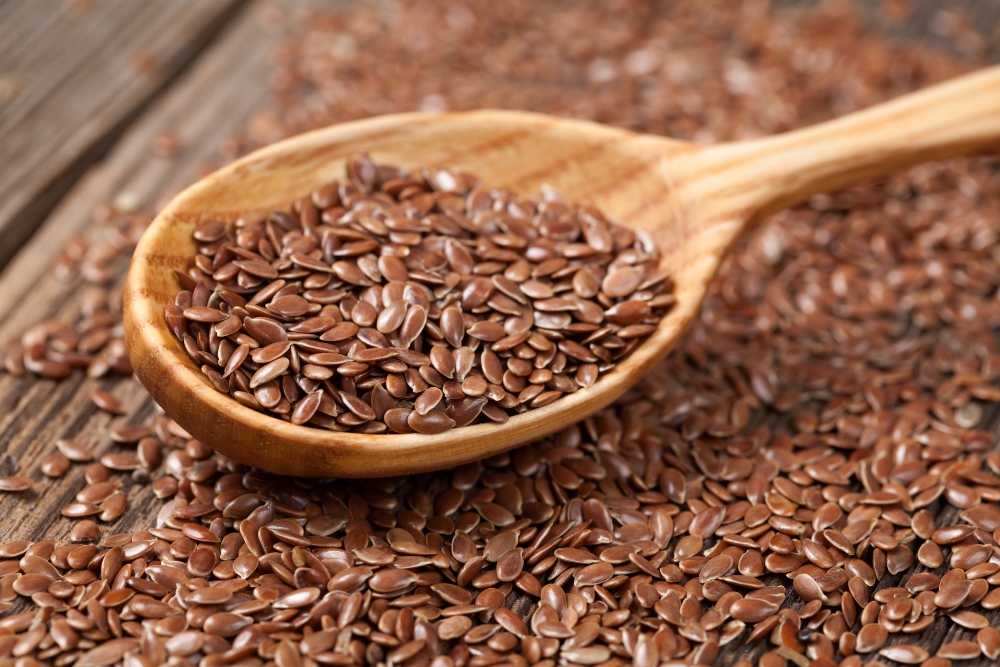
Next up is flaxseed, but Bulsiewicz is very specific here. It should be ground flaxseed, not whole. “The whole flax will just sail right through you, and you don’t get the benefits,” he says.
Grinding flaxseed breaks open the outer shell, allowing the body and gut microbes to access what is inside. One of the key compounds in flaxseed is lignans. Bulsiewicz explains that gut bacteria convert these lignans into enterolignans, including enterodiol and enterolactone.
This, again, is the estrobolome at work. These compounds function in a somewhat similar way to soy isoflavones, interacting with hormone pathways and potentially supporting better long-term health outcomes.
Bulsiewicz says higher levels of these lignans have been tied to a lower risk of chronic disease. His recommended amount is simple: one to two tablespoons of ground flaxseed a day.
That could mean stirring it into oatmeal, blending it into a smoothie, sprinkling it over plant-based yogurt, or adding it to pancake batter. The flavor is mild and nutty, and unlike some wellness routines, this one does not require a spreadsheet, a shaker bottle, or an expensive subscription.
The key is consistency. Ground flaxseed is not the kind of thing most people eat once and notice a dramatic overnight transformation. It is a small daily habit that helps feed the gut and support the microbial processes that Bulsiewicz says matter during perimenopause.
4. Cruciferous vegetables
Broccoli, cabbage, Brussels sprouts, cauliflower, and arugula all fall into the cruciferous vegetable family. Bulsiewicz recommends them because they support the liver as it metabolizes estrogen.
This matters because estrogen balance is not only about production or recirculation. It is also about how estrogen is broken down and cleared. In Bulsiewicz’s explanation, cruciferous vegetables help the liver handle estrogen more favorably.
He references a randomized trial in which compounds from cruciferous vegetables shifted estrogen metabolism in a favorable direction and raised sex hormone-binding globulin, or SHBG. SHBG is a protein that binds to sex hormones and helps regulate how much is available for the body to use.
“That’s the protein that helps to keep your hormones in balance,” Bulsiewicz says.
This food group is particularly interesting because it brings the liver and gut into the same conversation. The liver processes estrogen. The gut helps determine what happens next. Cruciferous vegetables, Bulsiewicz suggests, can support both sides of that system.
For people who think they hate Brussels sprouts, this may be a cooking issue rather than a Brussels sprouts issue. Roasting, shredding, sautéing, or pairing cruciferous vegetables with tahini, lemon, garlic, chili, or miso can make them much more appealing. Arugula also counts, which means a handful of peppery greens on top of a meal is doing more than making it look restaurant-worthy.
5. Fermented foods
Finally, Bulsiewicz recommends fermented foods such as yogurt, kefir, sauerkraut, kimchi, and miso. For Plant Based News readers, plant-based versions of yogurt and kefir, as well as naturally vegan options like sauerkraut, kimchi, and miso, can all fit the bill.
Bulsiewicz points to a Stanford trial led by professors Christopher Gardner, Justin Sonnenburg, and Erica Sonnenburg, which found that adding fermented foods increased microbiome diversity and lowered markers of inflammation.
“It’s really a quite striking and amazing thing that in just eight weeks of adding more fermented food to the plate you could achieve this result,” he says.
For Bulsiewicz, fermented foods are important because they target the upstream issues that influence hormonal health: gut diversity, inflammation, and the gut barrier. He describes the goal as “more gut diversity, less inflammation, a tighter gut barrier, less fire.”
Unlike soy, fermented foods may not have the most direct evidence for hot flashes or other specific menopause symptoms. Bulsiewicz is transparent about that. He says soy has the strongest direct data for symptoms such as hot flashes, while flax and cruciferous vegetables have evidence related to estrogen handling. The others, including fermented foods and overall plant diversity, work more upstream by supporting the gut and lowering inflammation.
That distinction matters. It keeps the advice grounded rather than promising that a spoonful of sauerkraut will fix perimenopause. The argument is more nuanced: If gut health and inflammation are part of the hormonal story, then foods that improve gut diversity and reduce inflammation deserve attention.
Read more: Low Fat Plant-Based Diets Reduce Severe Hot Flashes by 92%, Study Finds
Beyond the five foods
Bulsiewicz also briefly discusses protein, resistance training, and hormone therapy. He says protein needs rise with age and gives a typical target of 1.2 to 1.6 grams of protein per kilogram of body weight per day. For many women, he says, that may work out to around 90 to 110 grams per day, or about 30 grams per meal.
He also strongly encourages resistance training two or three times a week, working major muscle groups. He says it supports muscles, bones, and the gut microbiome, noting that resistance training has been shown to shift the microbiome toward more short-chain fatty acid producers.
On hormone therapy, Bulsiewicz says the science has shifted over the past decade. For many healthy women who start hormone therapy within about 10 years of menopause or before age 60, he says experts now generally believe the benefits outweigh the risks. But he emphasizes that this is a conversation to have with a doctor, since the decision depends on personal health history.
The larger message is that perimenopause is not a personal failure, and the body is not broken. It is changing. Bulsiewicz argues that while women cannot fully control what the ovaries do during this transition, they can influence the gut barrier, the microbiome, and inflammation through food and lifestyle.
“Feed the estrobolome, seal the gut barrier, reduce the inflammation,” he says.
For anyone entering perimenopause, already in it, or wondering why nobody explained this earlier, his advice is both practical and oddly hopeful: The next meal matters.
Please note: PBN runs a sponsored content model. To explore how you can get featured, please email [email protected] or visit everkinddigital.com.