Community
 Print
Print




Could your sex influence which vegetables offer the biggest benefits for your heart? Gastroenterologist and author Dr. Will Bulsiewicz explores that question in a recent episode of The Gut Insiders podcast. Known as “The Gut Health MD,” Bulsiewicz has built a following through his work on digestive health, his books, and his YouTube channel.
Speaking with Chuck from the Physicians Committee, he discusses research suggesting men may particularly benefit from beans, while women may show stronger associations with cruciferous vegetables. The findings raise questions about the healthiest vegetables for men versus women, but Bulsiewicz insists that nobody needs separate grocery lists.
Read more: A Gut Health Doctor Recommends 5 Plant Foods For Perimenopause
Beans for men, broccoli for women?
You’ll find more tips to improve your gut health on Bulsiewicz’s YouTube channel and website.
The study examined five broad vegetable groups: legumes, cruciferous vegetables, alliums, leafy greens and colorful vegetables. Researchers then compared participants’ diets with signs of cardiometabolic risk.
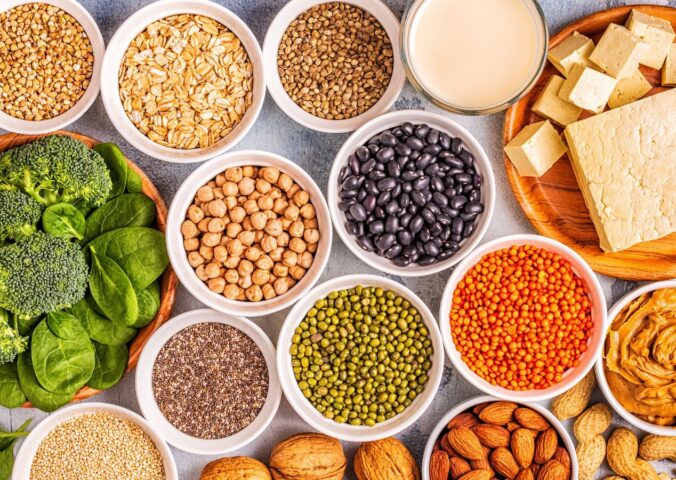
Among men, those eating more legumes were 72 percent less likely to fall into the high-risk cardiometabolic group, Bulsiewicz explains. For women, cruciferous vegetables appeared to stand out instead. Those eating more broccoli, cauliflower, arugula, broccoli sprouts and similar foods were 85 percent less likely to fall into the high-risk group.
The finding lends itself to a catchy “beans for men, broccoli for women” takeaway. But Bulsiewicz quickly urges caution.
The research was cross-sectional and observational, meaning it captured participants at one point in time. It cannot prove that eating beans caused lower cardiometabolic risk in men, or that cruciferous vegetables caused the association seen in women.
“You can’t infer causation,” Bulsiewicz says. Instead, the results reveal an association that researchers can investigate further.
Heart health warning signs can appear early
Perhaps the most striking finding is not the difference between vegetables, but the age of the participants. Many were around 22 years old, yet roughly one in five already showed cardiometabolic warning signs.
These were not necessarily symptoms someone would notice in everyday life. Bulsiewicz highlights elevated blood pressure, an enlarged waist circumference, high triglycerides, low HDL cholesterol, and elevated blood sugar. He calls them “shots across the bow” that can reveal an unhealthy trajectory before someone feels seriously unwell.
That distinction is critical. Someone can feel healthy, look healthy, and still have metabolic changes developing beneath the surface.
Bulsiewicz says conditions such as hypertension, prediabetes and abnormal blood lipids are easier to address when caught early. Diet and lifestyle changes can play an important role at this stage, although medication may still be appropriate for some people.
Why might men and women respond differently?
Bulsiewicz discusses two possible explanations for the findings: hormones and the gut microbiome.
Men generally have higher testosterone levels, while premenopausal women have higher estrogen and progesterone levels. However, Bulsiewicz says he could not find convincing evidence that these hormones directly explain the differences observed in the study.
The study authors also raise hormones as a possibility, but Bulsiewicz considers the explanation speculative. There is not enough evidence, for example, to say testosterone explains why legumes appeared more beneficial for men.
The microbiome offers another possibility. Bulsiewicz says male and female gut microbiomes differ, particularly after puberty. Those differences appear to become less pronounced after menopause, suggesting hormones help shape the gut microbial environment.
However, the vegetable study did not analyze participants’ microbiomes, so researchers cannot say they caused the results. Bulsiewicz points to separate research suggesting the male microbiome may produce more short-chain fatty acids, which help process legumes. He also suggests female microbiomes could potentially process cruciferous vegetables differently. For now, these remain theories rather than established explanations.
You do not need separate grocery lists
Despite the attention-grabbing results, Bulsiewicz is clear that men should not stop eating broccoli. Women should not stop eating beans either.
“I don’t think you need separate shopping lists,” he says. Both food groups provide different benefits for the gut and overall health.
Beans are rich in fiber, resistant starch and polyphenols, which Bulsiewicz describes as valuable fuel for gut microbes. Cruciferous vegetables bring their own collection of beneficial plant compounds.
Even among people of the same sex, microbiomes differ significantly. Diet itself can also influence their composition and how foods are processed.
“I want you eating both,” Bulsiewicz says, warning against interpreting the research as permission to exclude one category. For anyone wondering what vegetables to eat, the bigger message is therefore variety rather than separation.
How to prep broccoli and beans
Bulsiewicz says preparation can affect some of the beneficial compounds in cruciferous vegetables. Eating them raw preserves the greatest amount, while light steaming retains less and prolonged boiling retains the least.
He recommends a technique he calls “chop then stop.” Chopping broccoli, cauliflower, or Brussels sprouts breaks down plant cells and allows glucosinolates to interact with the enzyme myrosinase. This helps produce isothiocyanates, compounds Bulsiewicz describes as protective for heart health and against cancer.
After chopping, he recommends leaving the vegetables for about 10 minutes before cooking. For people who prefer vegetables thoroughly cooked, mustard powder offers another option. Bulsiewicz says sprinkling it on cooked broccoli can provide myrosinase and help restore the reaction needed to form those compounds.
Beans require a different strategy, particularly for people who experience gas or bloating. Bulsiewicz recommends gradually increasing portions instead of suddenly eating large amounts.
For dried beans, soaking them before cooking can remove some compounds associated with digestive discomfort. Canned beans should be rinsed thoroughly for similar reasons. If beans initially cause bloating, he says the gut microbiome can adapt as intake increases gradually.
Read more: Leading Heart Health Organization Says Eat More Plant Protein, Not Meat
Diversity matters more than finding one perfect vegetable
By the end of the episode, Bulsiewicz returns to the central question. Do men and women need different vegetables? His answer is no.
He notes that this was a relatively small study involving young adults and says broader research supports beans for cardiovascular health. Both legumes and cruciferous vegetables remain worthwhile additions to the plate. Rather than obsessing over the healthiest vegetables for men versus women, Bulsiewicz recommends eating a wide variety of plant foods and paying attention to individual tolerance.
“Don’t put too much pressure on yourself,” he says. “Listen to your body.” His broader message is simple: diversity matters, and there is room for both beans and broccoli on everyone’s grocery list.
Please note: PBN runs a sponsored content model. To explore how you can get featured, please email [email protected] or visit everkinddigital.com.