Community
 Print
Print



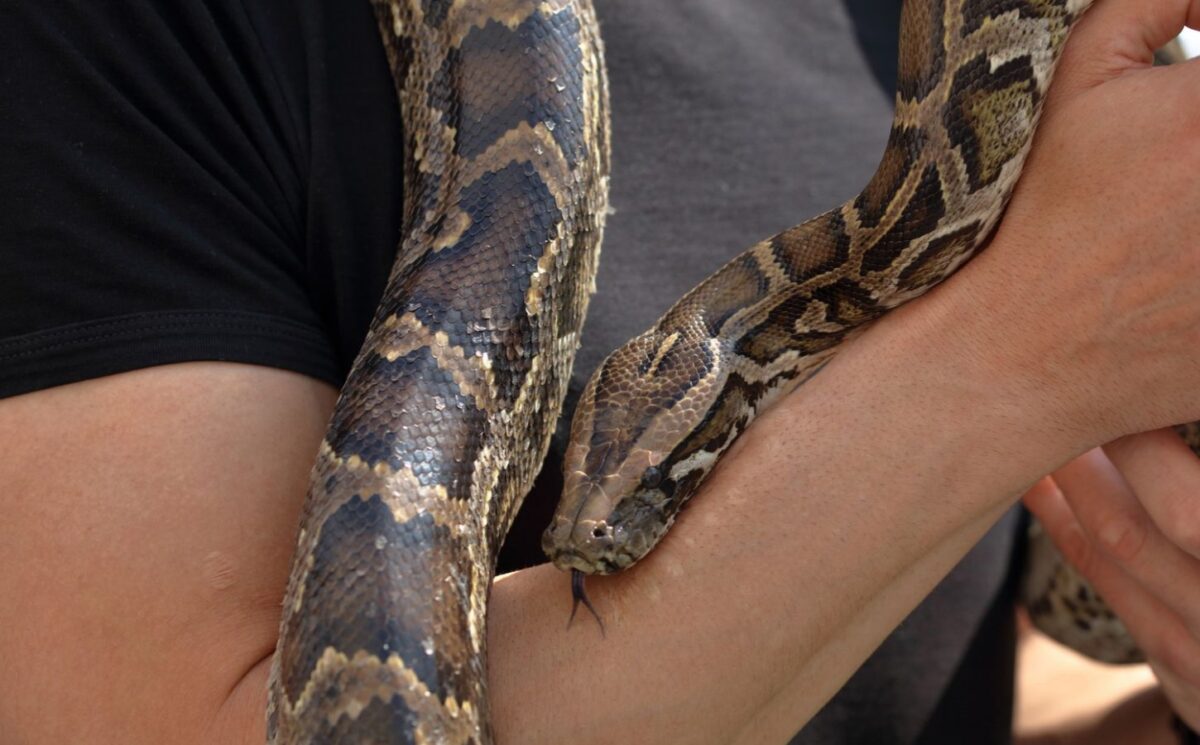
Monsters of God, a new HBO documentary from Tiger King creator Eric Goode, tackles the illegal reptile trade.
According to HBO, Monsters of God sees Goode follow “his first love,” reptiles, into the “dark and gonzo world of exotic animal smuggling.”
Read more: Pesticides Poison Nearly Half Of Farmers Every Year, Finds Study
Monsters of God is a five-part series streaming on HBO Max. It follows the evolution of reptile trade over decades, and includes interviews with animal enthusiasts, notorious wildlife traffickers, and some of the federal agents who pursued them.
The documentary series examines links between the international reptile trade and drug trafficking, and, notably, how reptile dealers are known to have supplied illegal animals to major zoos across the US. In the very first episode, Tom Crutchfield, a reptile salesman from Florida, says that he previously sold illegal animals to the Detroit Zoo. During his interview, Crutchfield also names the New York Zoological Society, Fort Worth Zoo, Gladys Porter Zoo, and Los Angeles Zoo.
‘We’re the monsters that are destroying the planet as we see it’
Goode has been very clear that the “monsters” named in the show’s title are the humans, not exotic reptiles. Speaking to USA Today, Goode said, “We’re monsters, and we do it under the veil of saying we’re godly creatures when we’re really part of the animal kingdom.” He added, “We use the guise of religion as sort of a way of making us special when we’re animals and we’re homosapiens. We evolved out of apes and animals, but yet we like to put ourselves in another category.
“We’re the monsters that are destroying the planet as we see it.”
Monsters of God was produced by Goode Films, A24, and Central Pictures. The show is based on 2008’s The Lizard King: The True Crimes and Passions of the World’s Greatest Reptile Smugglers by Bryan Christy, an investigative journalist.
Read more: Oregon To Transition Its Primate Research Center Towards Human-Based Research
Social media and modern illegal wildlife trafficking
As reported by the Animal Legal & Historical Center, the global wildlife trade is worth between USD $30.6 and $42.8 billion per year, of which just $22.8 billion is thought to be legal. ALHC has noted that animals are often taken from biodiversity-rich but capital-poor countries and exported to wealthy nations, such as the US.
According to United for Wildlife, it is estimated that at least 100 million animals and plants are trafficked each year internationally. That statistic excludes both internal trafficking and other wildlife crimes. In recent years, social media has facilitated demand for certain types of exotic pets, including otters, primates, and reptiles.
PBN runs a sponsored content model. To explore how you can get featured, please email [email protected] or visit everkinddigital.com