Community
 Print
Print



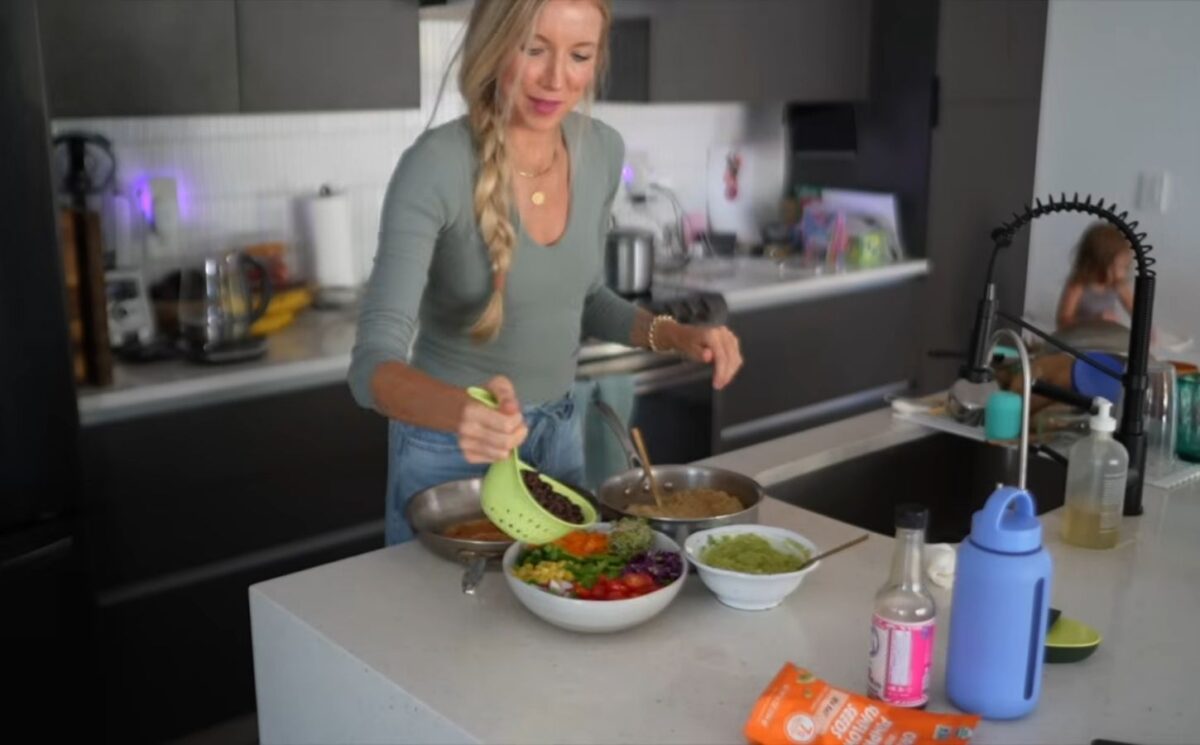
Erin Stanczyk says she is approaching 40 feeling better than she did in her 20s. The Eat Move Rest creator recently shared what she eats in a day after revealing her “biological age.” Stanczyk, 39, says testing put her biological age at 22, a difference she describes as “pretty extreme.” Rather than crediting cleanses or restrictive diets, she points to a colorful routine built around whole plant foods. “There are no detoxes, cleanses, crash diets, no extremes,” she says.
Stanczyk is also a mother of three, an author and a lifestyle coach alongside her husband, Dusty. Her busy family life has shaped how she approaches food and meal preparation. Her answer is to keep things simple and prepare several components ahead each week. “We’re all about simplicity because simple is sustainable,” she says.
Read more: Alana Blanchard: ‘What I Eat In A Day As A Vegan Pro Surfer And Mom’
Her daily framework includes a smoothie at breakfast, a salad at lunch and a soup-style cooked meal for dinner. Within that structure, she prioritizes greens, beans, grains, fruit, plant protein, and healthy fats. Stanczyk presents these habits as part of the lifestyle she has followed for more than a decade.
Breakfast starts with a high-protein green smoothie
You’ll find more plant-based lifestyle and nutrition tips on the EatMoveRest YouTube channel.
Breakfast is where Stanczyk says she likes to “frontload” her day with what she calls “hyper nourishment.” Her smoothie contains greens and tropical fruit, alongside chia, flax, spirulina and plant-based protein powder. To save time, she prepares jars containing her smoothie additions on the weekend. She says this removes around five to seven minutes from her morning routine.
Stanczyk starts with three cups of water and one prepared smoothie jar. She adds celery, greens, and a green Granny Smith apple, with Dino kale as her favorite. Frozen ingredients include three ripe bananas, two cups of mango and one cup of pineapple. Mango and pineapple can be used separately, but she considers bananas important for creaminess and sweetness. “All of this together gives you such a satisfying first meal of the day,” she says. “I cannot live without it.”
She also prioritizes plant protein at breakfast. Stanczyk adds protein powder to the smoothie she shares with her husband. She also serves oatmeal, overnight oats, pancakes, waffles, or baked berry oats when more food is needed. Her breakfast priorities are leafy greens, plant protein, and overall nutrient density.
Lunch is a rainbow salad with greens, grains and beans
Lunch shifts toward raw foods, although Stanczyk stresses that she does not eat an entirely raw diet. Her formula starts with a green, followed by a grain, bean, extra protein, and healthy fat. She also looks for variety in the bowl. “The number one thing I pay attention to is are all colors of the rainbow present,” she says.
In the salad shown, Stanczyk uses green leaf lettuce and broccoli sprouts. Quinoa provides the grain component, while drained and rinsed black beans add another hearty ingredient. She says she often soaks and cooks chickpeas instead.
For extra protein, she uses tempeh. Stanczyk slices it thinly and cooks it with water and coconut aminos for around 10 minutes. Tofu is another option. “It’s kind of one of those if it’s not broken, don’t fix it things,” she says.
She completes the bowl with avocado and sprouted pumpkin and sunflower seeds. Red, orange, yellow, green, and purple vegetables add more variety. Quinoa, beans, tempeh and sprouts can all be prepared at the beginning of the week, reducing daily cooking time.
Stanczyk also keeps dressings uncomplicated. She mashes avocado with salt and pepper, then adds coconut aminos, sauerkraut and nutritional yeast. She recommends roughly one-quarter to one-half cup of heartier ingredients, depending on energy needs, and around one tablespoon of seeds.
Dinner is warm, hearty, and made to last

Dinner is the most cooked meal of Stanczyk’s day, and it also needs to work for her family. Her priorities are making it child-friendly, filling, and rich in plant-based protein. Batch cooking is especially important because one meal can last several evenings. “Dinner, like I said, was prepped and it lasts us a couple nights,” she says.
The meal shown is an Indian-inspired dish served over brown rice. Stanczyk compares it with chili, although it uses Indian-style spices rather than lots of heat. Red lentils form the base, alongside sweet potatoes, onions, garlic, chickpeas, peas, kidney beans and cauliflower.
Stanczyk sometimes combines multiple beans to make dinner more substantial. Turmeric is among the spices she uses as part of her wider focus on low-inflammation eating. Once reheated, the mixture is served over brown rice.
Bread also has a place at the table. Stanczyk says her family eats sprouted Ezekiel bread or simple sourdough. She also mentions a homemade three-ingredient flatbread that can double as naan, tortillas, or wraps.
Having nourishing food ready is especially useful when busy days run late. “Meals like this come in so clutch,” she says. Cooking larger portions can mean preparing dinner only two or three nights a week, depending on family and portion size.
Read more: What This Vegan Mom And Her One-Year-Old Eat In A Day
Her formula is designed to be repeated
Stanczyk’s approach is less about making different meals every day than building ones she can comfortably repeat. Breakfast is nutrient-dense and protein-focused, while lunch emphasizes raw vegetables, color and fiber. Dinner brings together cooked grains, legumes and family-friendly plant proteins.
That simplicity has helped her maintain the routine for more than a decade. She says she once counted calories closely and relied heavily on packaged meals. Today, she says she eats more food, does not count calories, and enjoys her meals. Her green smoothie remains a favorite. “My green smoothie feels like a dessert for breakfast,” she says.
Stanczyk links her young biological age with the broader low-inflammation lifestyle she has built over time. Her framework comes down to three memorable formats: smoothie, salad, and soup. She says smoothies should prioritize plant protein, lunches should be simple and repeatable, and dinners should work for the whole family.
For her, that repeatability separates the routine from a short-term diet. “It’s the perfect formula to get you through your days without extremes,” she says. The focus is on a way of eating she can maintain through work, parenting, and everyday life.
Please note: PBN runs a sponsored content model. To explore how you can get featured, please email [email protected] or visit everkinddigital.com.