Community
 Print


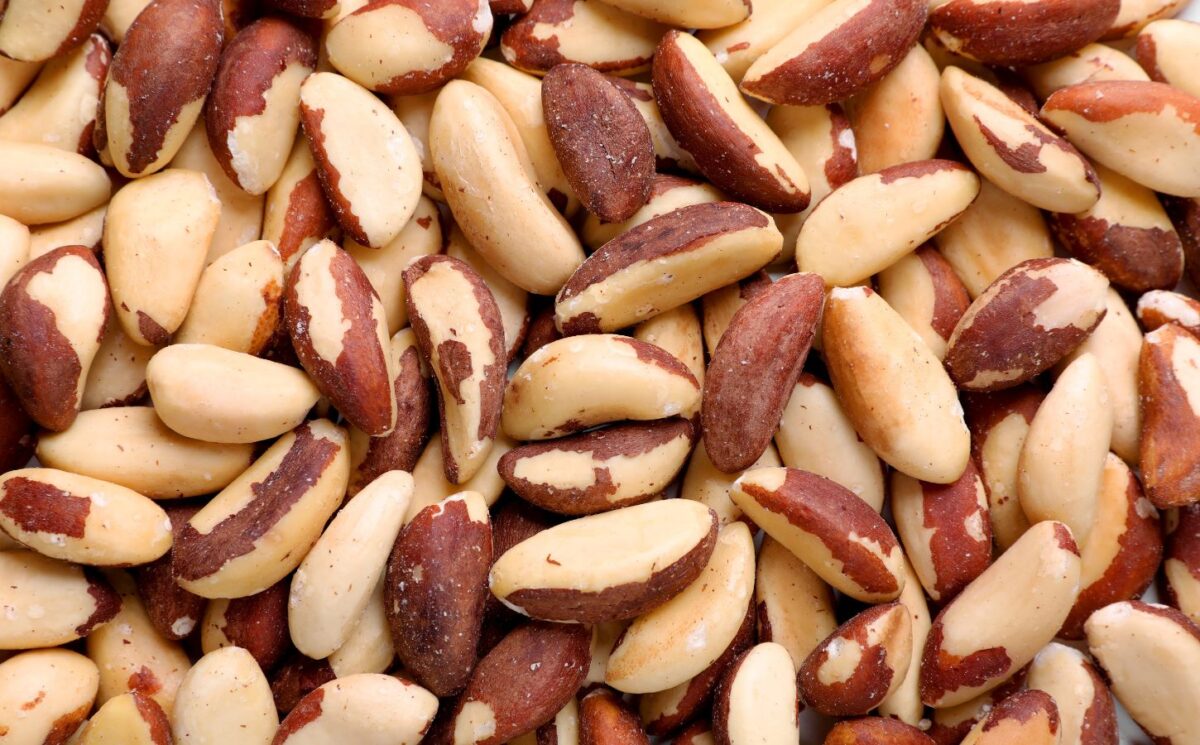
Could eating Brazil nuts to lower cholesterol work a little like taking a pill? One small study suggests that a single serving may dramatically reduce “bad” LDL cholesterol, with the effect apparently lasting for an entire month.
Mic the Vegan, the nutrition-focused YouTuber known for examining research through a plant-based lens, recently took a closer look at that surprising finding. In his video, he explores studies on Brazil nuts, cholesterol, inflammation, selenium, and blood vessel function, while asking whether the results are scientifically convincing or simply too good to be true.
Read more: Planetary Health Diet Cuts Heart Disease Risk By 28%, Finds 20-Year Study
The headline-grabbing experiment was small, involving around 10 people, and Mic is careful to acknowledge that its findings require more research. Still, the results were unusual enough to warrant attention.
A one-time serving with monthlong results
Find more videos about vegan health, science, and nutrition on Mic the Vegan’s YouTube channel.
In the study, participants consumed either zero, 5, 20, or 50 grams of Brazil nuts. Because one nut weighs roughly 5 grams, the 20-gram serving amounted to around four nuts.
Researchers measured participants’ cholesterol after one, three, six, nine, and 24 hours, then again after 48 hours, five days, and 30 days.
The most dramatic response came from the 20-gram group. Their average LDL cholesterol reportedly fell by about 20 milligrams per deciliter within 24 hours, dropping from approximately 85 to 65. Levels remained similarly low at the later measurements, including the 30-day mark.
“This is nuts,” Mic says while introducing the research.
The participants’ LDL levels were not especially high to begin with, making the size of the decline even more striking. The study also recorded an increase in HDL, commonly called “good” cholesterol, although Mic notes that medications designed specifically to raise HDL have not consistently reduced heart disease risk.
The study was not an industry-funded project, according to Mic. It received grant support from Brazil’s National Council for Scientific and Technological Development.
Nevertheless, it had clear limitations. The group was extremely small, and the trial was not randomized. A single experiment of this size cannot establish that four Brazil nuts will reliably lower everyone’s cholesterol for a month.
Do other cholesterol studies support it?
A later meta-analysis examining three randomized trials found no significant overall difference in LDL cholesterol. On the surface, that seems to undermine the original finding. Mic argues, however, that the individual studies deserve closer examination.
One randomized trial involving children with obesity reported a roughly 14-point reduction in LDL, a result broadly consistent with the initial experiment.
The other trials used defatted Brazil nut flour rather than whole Brazil nuts. That distinction may matter because removing the fat also changes the food’s overall nutritional composition.
One study compared Brazil nut flour with cassava flour, which contains fiber and may itself help lower LDL. Cholesterol declined in both groups, meaning the Brazil nut intervention did not significantly outperform the control. Around 90 percent of participants were also taking statins, making it more difficult to identify an additional cholesterol-lowering effect from the nuts.
Another trial included participants with elevated cardiovascular risk, around 80 percent of whom were taking statins. The Brazil nut flour group still showed a nonsignificant trend toward a five-point reduction in LDL.
Taken together, the evidence for using Brazil nuts to lower cholesterol remains intriguing but far from conclusive. The strongest results appear in studies involving whole nuts and participants who are not already taking powerful lipid-lowering medication.
Selenium may be only part of the story
Brazil nuts are famous for their selenium content. A single nut can contain more than the recommended daily amount, which is why they are sometimes treated almost like a supplement within vegan diets.
Selenium supports antioxidant enzymes, including glutathione peroxidase. This enzyme helps neutralize peroxides that can contribute to oxidative stress, DNA damage, and the oxidation of LDL cholesterol.
One proposed explanation is that selenium may influence HMG-CoA reductase, an enzyme also targeted by statin medications. However, selenium supplements alone have generally not produced cholesterol reductions comparable to those seen in the Brazil nut study.
Mic points to mixed findings from meta-analyses. Even at relatively high supplemental doses, selenium appears to produce only modest changes in LDL. That suggests Brazil nuts may contain a combination of fats, antioxidants, and phytochemicals that work together, rather than selenium acting alone.
It is also possible that participants in the original study had relatively low selenium levels before eating the nuts. Correcting a deficiency may have helped normalize processes involved in cholesterol regulation.
“We need to study this more,” Mic says.
That uncertainty is important because Brazil nuts contain exceptionally concentrated selenium. More is not necessarily better, and regularly eating large quantities could result in excessive intake. The studies highlighted in the video examined specific portions, not unlimited consumption.
Nitric oxide and healthier blood vessels
One of the randomized trials also reported increased systemic availability of nitric oxide following Brazil nut supplementation.
Nitric oxide helps blood vessels relax and widen, supporting blood flow and healthy blood pressure. The function of the artery lining, or endothelium, is a major component of cardiovascular health, independent of cholesterol levels.
Mic describes the finding as especially important because improved blood vessel dilation may offer benefits even when changes in LDL are small or statistically uncertain.
In other words, Brazil nuts may influence cardiovascular health through more than one pathway. Their potential value is not necessarily limited to what appears on a standard cholesterol test.
Evidence of lower inflammation
The research on inflammation may be more consistent than the cholesterol evidence.
In another experiment from the team behind the original study, participants again consumed zero, 5, 20 or 50 grams of Brazil nuts. Researchers recorded improvements in three inflammatory markers, including interleukin-1 and tumor necrosis factor-alpha. The most notable changes occurred after the 20- and 50-gram servings.
A larger 2024 study followed 54 women who ate 8 grams of Brazil nuts a day – around one and a half nuts – for eight weeks. The Brazil nut group recorded lower levels of several inflammatory biomarkers, including C-reactive protein, tumor necrosis factor, and interleukins associated with inflammatory activity.
The study also reported changes connected with intestinal permeability, suggesting that the nuts may have affected both systemic inflammation and gut barrier health.
A meta-analysis cited in the video concludes that Brazil nut consumption improves selenium status and produces antioxidant effects that may help protect against metabolic disorders involving altered blood lipids.
While researchers still need to determine how meaningful these biomarker changes are for long-term disease prevention, the repeated anti-inflammatory findings make Brazil nuts worthy of further study.
What about radiation?
Brazil nuts naturally contain small amounts of radioactive material absorbed through their extensive root systems. Mic notes that the exposure is measurable but appears small compared with the radiation people encounter from other natural and medical sources.
According to figures discussed in the video, eating one or two Brazil nuts daily for a year could result in an effective dose of roughly 88 to 220 microsieverts. By comparison, the average person in the U.S. receives around 6,000 microsieverts annually from all sources.
The presence of radioactivity may sound alarming, but the estimated dose from moderate consumption is a small fraction of typical yearly exposure.
Please note: It’s advised to limit consumption of Brazil nuts to around 1-2 each day due to their high selenium content. Find more information on Brazil nut intake here. You should always consult your doctor for personal health advice.
Read more: Many US Adults Incorrectly Think Meat And Eggs Reduce High Cholesterol Risk
Brazil nuts depend on a living Amazon

These nuts are not usually cultivated in conventional orchards. Brazil nuts are largely gathered from towering wild trees in the Amazon, with production concentrated in Brazil and Bolivia. The industry supports tens of thousands of people, including many Indigenous harvesters and members of local cooperatives.
That livelihood is threatened by deforestation.
Although cutting down Brazil nut trees is illegal in Brazil, surrounding forest can still be cleared. Stripped of their wider ecosystem, surviving trees may dry out, weaken, and eventually stop producing nuts.
Cattle ranching is the leading driver of Amazon deforestation, while land is also cleared for crops including soy, corn and palm. Mic argues that reducing beef consumption can therefore help protect not only the rainforest but also the communities that depend on Brazil nut harvesting.
The idea of four nuts functioning like a month-long cholesterol pill remains an extraordinary claim, and the evidence is not yet strong enough to treat Brazil nuts as a substitute for medication or medical advice. Larger, randomized studies using whole nuts are needed.
But the findings on LDL, nitric oxide, antioxidant activity, and inflammation suggest that this often-overlooked member of the mixed-nut bowl may have more to offer than many people realize.
Please note: PBN runs a sponsored content model. To explore how you can get featured, please email [email protected] or visit everkinddigital.com.