Community
 Print
Print




Low iron is common, often missed, and frequently blamed on everything from stress to a busy schedule. But according to Dr Will Bulsiewicz, a gastroenterologist, author, and the physician behind the popular YouTube channel The Gut Health MD, learning how to fix low iron can be life-changing, especially for people who have been told their exhaustion is “just stress.”
Bulsiewicz, known to many as Dr B, is a triple board-certified gastroenterologist with more than 20 years in medicine. He is also the author of books, including Fiber Fueled, and has built a large following for translating gut health science into practical, plant-forward advice. In a recent YouTube video titled “7 Things I Do to Fix Low Iron,” he lays out seven simple strategies he uses to improve iron levels, from what to eat to how to absorb it better.
Read more: ‘The Foods I Eat To Get Enough Iron In My Plant-Based Diet’
The issue, he says, is not always obvious. Low iron can show up as fatigue, brain fog, cold hands, hair loss, or feeling short of breath while doing basic tasks, such as walking up a flight of stairs. These symptoms are easy to dismiss or mislabel, particularly in people juggling work, family, caregiving, or stress.
But iron is not optional. As Bulsiewicz explains, iron helps carry oxygen through the body. Every cell needs oxygen, and every breath brings it in, but iron helps deliver it to the tissues that need it. When levels run low, the body can feel like it is “running on a low battery.”
Women can be particularly affected. Periods can drain iron stores each month, especially when bleeding is heavy. Pregnancy increases iron needs because the body is building the baby’s blood supply as well as its own. Perimenopause can also bring heavier and less predictable cycles. But Bulsiewicz is clear that low iron should not simply be brushed off as a menstrual issue without asking what is really going on.
Here are the seven things Bulsiewicz says he does to help fix low iron.
1. Eat iron-rich plants on purpose
You’ll find more plant-forward tips to support your gut and overall health on Bulsiewicz’s YouTube channel and website.
Bulsiewicz says many people immediately think of steak when they think of iron, but plant foods can also be rich sources of the mineral.
His go-to list includes lentils, beans, tofu, tempeh, pumpkin seeds, spinach, oats, and dark chocolate, specifically the kind that is 70 percent cocoa or higher.
He acknowledges the obvious pushback: Plant-based iron does not absorb as easily as iron from meat. That is true because there are two types of dietary iron. Heme iron is found in animal foods, especially meat and red meat, while non-heme iron is found in plants.
Heme iron is more easily absorbed, but Bulsiewicz says that comes with a trade-off. The body can regulate the absorption of non-heme iron more carefully. When iron stores are full, absorption goes down. When they are low, absorption goes up.
Heme iron, he says, does not work in the same way. “It actually slips past the thermostat,” Bulsiewicz says.
That matters because too much iron can contribute to oxidative stress, which can drive cellular wear and tear. Bulsiewicz also points to research linking higher heme iron intake with colorectal cancer risk, and says lab studies have explored mechanisms by which heme iron may drive DNA damage in colon cells.
He is not saying heme iron is “evil,” but he rejects the idea that it should automatically be seen as the superior source. Plant-based iron sources come with much more than iron, including fiber, polyphenols, healthy fats, and other phytochemicals.
“We don’t eat for single nutrients,” Bulsiewicz says. “We eat for all of the good stuff that our food can provide.”
2. Pair iron with vitamin C
This is the trick that makes plant-based iron work harder.
Bulsiewicz says vitamin C can significantly improve how much non-heme iron the body absorbs. It helps convert plant-based iron into a form the body can take up more easily.
The best part is that the combinations are simple. Add salsa to beans. Squeeze lemon over kale or lentils. Put bell peppers in a tofu stir-fry. Add citrus or strawberries to morning oats.
“When you pair iron with vitamin C, you are creating nature’s synergy,” Bulsiewicz says.
For anyone trying to fix low iron on a plant-based diet, this is one of the most important habits to build into meals. It does not require a complicated supplement routine, and it can make iron-rich foods much more effective.
3. Move coffee and tea away from high-iron meals
Coffee and tea may be beloved daily rituals, but Bulsiewicz calls them “a quiet saboteur” when they are consumed with iron-rich meals.
The reason is tannins. These compounds, found in coffee, black tea, and green tea, can block the absorption of non-heme iron. That means someone could eat an iron-rich breakfast and then reduce its benefit by washing it down with coffee.
His rule is straightforward: Drink coffee and tea between meals, not with the meal that is meant to boost iron.
Bulsiewicz recommends leaving about an hour on either side. It is a small adjustment, but he says it can make a difference.
4. Cook in a cast iron pan
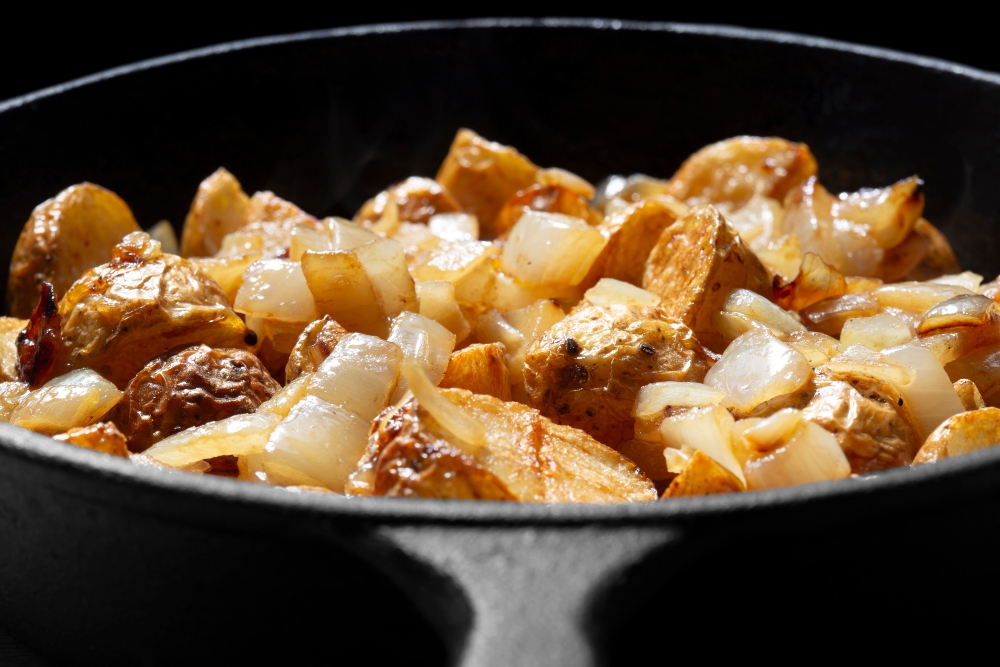
Bulsiewicz describes this as a “secret weapon” for people who are not already doing it.
Cooking in cast iron can add small amounts of iron to food. Acidic foods, such as tomato sauce, are especially helpful because they can pull more iron from the pan into the meal.
This is not a massive dose, and it should not be treated as a replacement for medical care or supplementation when those are needed. But as Bulsiewicz explains, it can add up over time.
It also fits neatly with his other advice. If you cook a tomato-rich lentil dish in cast iron, for example, you are combining plant-based iron, vitamin C, and extra non-heme iron from the pan.
5. Supplement gently and smartly
Sometimes food is not enough, and supplementation is needed. But Bulsiewicz says the type of supplement and the timing matter.
Many people are given ferrous sulfate, a common iron supplement. It can work, but it can also be hard on the gut, causing nausea, stomach discomfort, and constipation. For some people, the side effects are bad enough that they stop taking it.
Bulsiewicz says he prefers gentler chelated forms, such as ferrous bisglycinate. He cites a head-to-head trial in which a chelated iron source caused gut side effects in just 2 percent of women, compared with 18 percent for ferrous sulfate.
He also says more is not always better. Taking iron every day can raise hepcidin, a hormone that reduces iron absorption from the next dose. Taking it every other day may allow the body to absorb a larger fraction and reduce side effects.
“The goal isn’t to flood your body with iron,” Bulsiewicz says. “It’s to restore it.”
Anyone considering iron supplements should speak with a health professional and have their levels checked, since iron needs vary and too much iron can be harmful.
6. Do not chase iron in isolation
For Bulsiewicz, iron is part of a much bigger gut health picture.
He says people should focus on a diverse, plant-rich plate, not just one nutrient. That means eating a wide range of plants, pairing iron-rich foods with vitamin C, and supporting the gut so it can absorb nutrients properly.
“You can eat all the iron in the world, but if your gut isn’t absorbing it, you’re going to stay low,” he says.
That is why Bulsiewicz connects iron levels back to digestive health. If the gut lining is inflamed or damaged, iron absorption can suffer. A plant-rich diet may help support a healthier gut environment while also providing fiber and other nutrients that are absent from animal-based iron sources.
Read more: Boost Your Iron with This Hydrating Green Juice
7. Find out why iron is low
Bulsiewicz highlights that this is the most important step.
Iron deficiency is not just a number on a lab test. It is a clue. The body does not usually run low on iron for no reason, and Bulsiewicz urges people not to stop at simply replacing it.
He says there are three major questions to ask.
First: Are you getting enough iron in your diet? Sometimes the answer really is that intake is too low, and the food strategies above can help.
Second: Are you absorbing it? This is where gut conditions come in. Bulsiewicz highlights celiac disease, an immune reaction to gluten that can damage the lining of the small intestine, where iron is absorbed. He also mentions Crohn’s disease and chronic inflammation, both of which can interfere with iron absorption.
Third: Are you losing blood? Gastrointestinal blood loss can be obvious, but it can also be silent. Bulsiewicz explains that slow, ongoing blood loss may come from an ulcer, a fragile blood vessel, or a growth in the colon.
This is especially important for men and postmenopausal women, who are not losing blood through monthly periods. In those groups, he says, low iron should be considered a red flag until proven otherwise. For many people, the investigation may involve an upper endoscopy and a colonoscopy to look for causes such as celiac disease, Crohn’s disease, ulcers, or colon growths.
“Replacing the iron treats the number,” Bulsiewicz says. “But really, it’s finding the cause that protects your life.”
Bulsiewicz’s advice to fix low iron is not about chasing one magic food or supplement. It is about eating iron-rich plants, pairing them with vitamin C, avoiding coffee and tea around iron-focused meals, using cast iron, supplementing carefully when needed, supporting gut health, and – most importantly – finding out why iron is low in the first place.
Please note: PBN runs a sponsored content model. To explore how you can get featured, please email [email protected] or visit everkinddigital.com.