Community
 Print
Print



The Netherlands has reduced its national meat recommendations by 40 percent.
In April, the Netherlands Nutrition Center (Voedingscentrum) updated its Wheel of Five (Schijf van Vijf) national dietary guidelines. The new recommendations include a reduction in meat and cheese consumption and an increased emphasis on legumes.
Read more: Changing Your Diet Is ‘Number One’ Way To Help The Planet, Woody Harrelson Says
The “essence” of the updated Wheel of Five “remains unchanged,” and it still recommends “lots of vegetables,” along with fruit, legumes, and wholegrain foods.
The most notable adjustments are related to the recommended amount of each food group. These vary depending on age, gender, need, and preference, but for adults aged 18-50 who eat meat and fish, the Netherlands Nutrition Center recommends increasing legume consumption from 180 grams per week to 250 grams.
It also recommends that people reduce their meat consumption from 500 grams per week to 300 grams (of which no more than 100 grams should be red meat), and reduce cheese consumption from 40 grams to just 20 grams per day. Furthermore, the Netherlands Nutrition Center suggests alternating between dairy and dairy-free.
Writing in an Instagram post, ProVeg International said, “This isn’t just a suggestion on a website; it’s a policy shift. From Amsterdam banning meat advertising in public spaces to new guidelines for school and office catering, the Netherlands is moving fast toward a 50 percent plant-based future.”
Read more: Study Finds Children And Teenagers Are More Open To Meat-Free Diets
‘Health, sustainability, and food safety are inextricably linked’
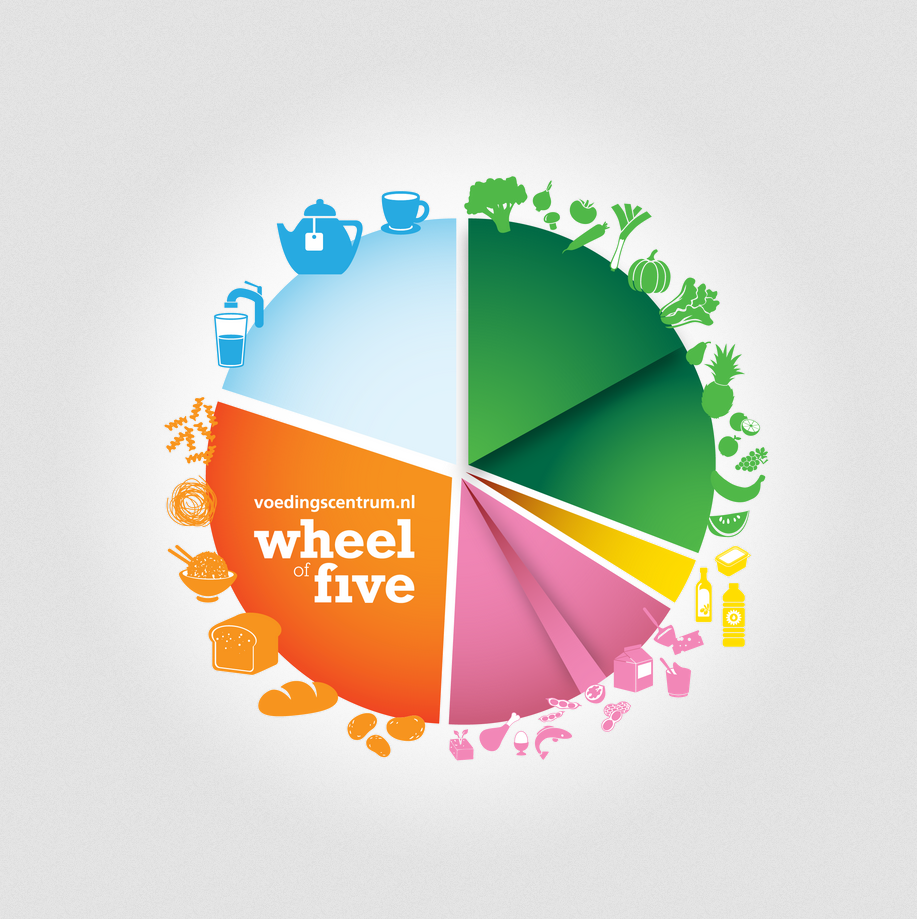
Those who are vegetarian or vegan can use the Netherlands Nutrition Center’s Wheel of Five tool to receive custom food and nutrition recommendations.
Petra Verhoef, director of the Netherlands Nutrition Centre, said, “Health, sustainability, and food safety are inextricably linked. We demonstrate this with the updated Wheel of Five. All calculated dietary patterns are as healthy as possible, have a low environmental impact, and respect safe limits. That way, we take good care not only of ourselves, but also of the world around us and future generations.”
Please note: PBN runs a sponsored content model. To explore how you can get featured, please email [email protected] or visit everkinddigital.com