Community
 Print
Print



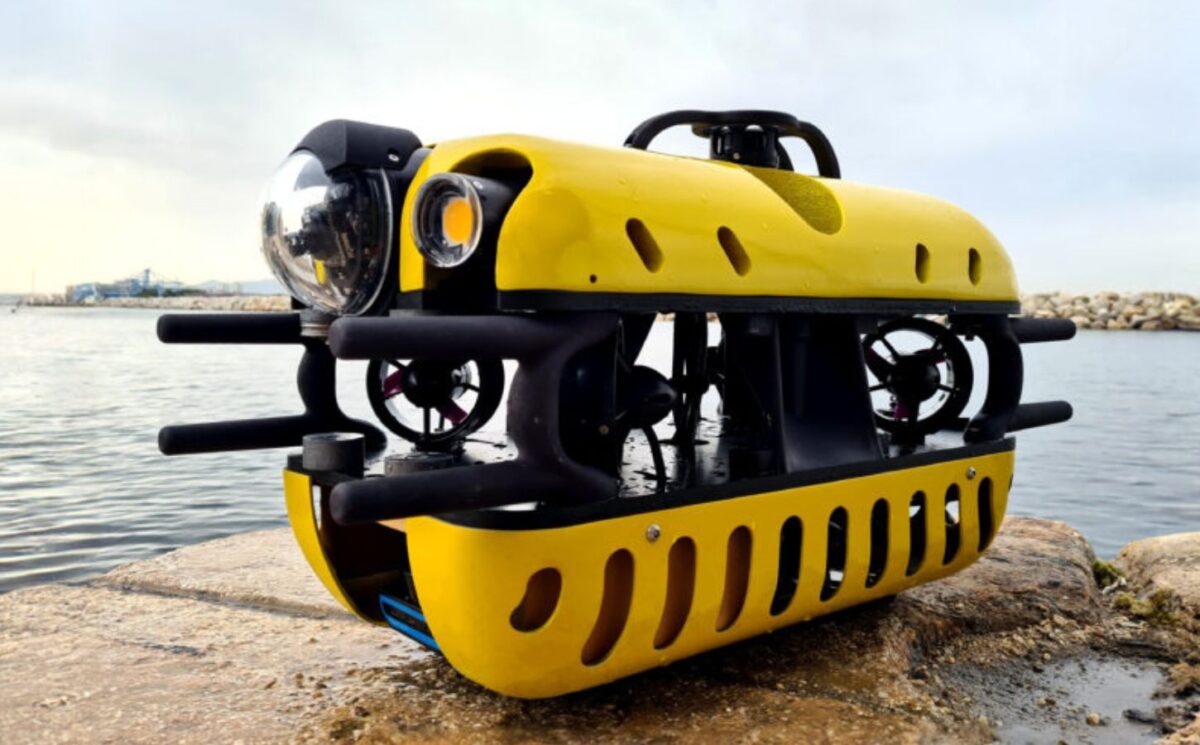
A team of autonomous and remotely operated robots is cleaning up litter from the ocean floor.
The futuristic, Wall-E-like “SeaClear” fleet includes an autonomous barge, litter-detecting drones, a smart grapple system that can lift more than 250kg, and the Mini TORTUGA, a surprisingly compact Remotely Operated Vehicle (ROV).
Read more: Scientists Detect Giant Squid In Australian Waters
As reported by Euronews, the Scientists and companies behind SeaClear have developed this team of AI-powered robots to be able to distinguish common litter, such as bottles and tyres, from rocks, plants, and sea life.
The robots, which are overseen by humans, are able to map, collect, and transport marine litter in a cost-effective and safe fashion. Where traditional cleaning operations require divers to collect litter by hand, SeaClear’s robots operate like a “well-coordinated clean-up crew.” In the future, the uncrewed SeaClear fleet could potentially be able to detect unexploded mines on the sea floor.
“We’re not exactly where we want to be yet,” Yves Chardard, CEO of SeaClear partner Subsea Tech, told Euronews. “But we’re not far off. The goal now is to streamline the technology.”
An EU-funded trial of SeaClear 2.0 is currently underway. Tests have taken place in France and Germany, and are planned in Venice, Dubrovnik, and Tarragona. The initiative is part of “EU Mission: Restore our Ocean and Waters,” which aims to cut marine litter by approximately 50 percent before the end of the decade.
Read more: Cutting-Edge Plant-Based Plastic Bag Dissolves In Seawater Leaving No Microplastics
‘We look at the sea floor’
Bart De Schutter, a professor at Delft University of Technology in the Netherlands and co-ordinator of SeaClear and SeaClear 2.0, said, “There’s a huge amount of litter that ends up in the sea.”
“Many projects target surface litter, but we look at the sea floor,” he added. “It’s important to remove rubbish there, because it can contaminate the environment.”
Plastic litter represents a particular problem for ocean health.
“If you don’t remove plastic rubbish, it degrades into microplastics, which is very hard to remove,” De Schutter said.
Please note: PBN runs a sponsored content model. To explore how you can get featured, please email [email protected] or visit everkinddigital.com