Community
 Print
Print



If your digestion feels off and every new “fix” adds to the confusion, this expert-backed approach might be just what you need to finally heal your gut. A recent conversation on Diary of a CEO offers a sensible path, as Stephen Bartlett sits down with Dr Will Bulsiewicz to break down the foods that matter most and explore why fiber sits at the center of gut health.
Bulsiewicz is a board-certified gastroenterologist and bestselling author known for translating microbiome science into practical advice, while Bartlett’s podcast features in-depth conversations with experts across health and global issues. During the episode, the conversation focuses on a simple idea: If you want to heal your gut, the answer is not restriction but adding more of the right plant foods.
Read more: Fibermaxxing: One Of 2025’s Healthiest Wellness Trends
At the core of that approach is fiber and what happens after you eat it.
Why fiber is the foundation of gut health
To view the interview, check out Bartlett’s Diary of a CEO YouTube channel, and for more content on how to improve your gut health, visit Dr Bulsiewicz’s YouTube channel.
Bulsiewicz explains that fiber works in partnership with gut bacteria. When we eat fiber, our microbiome breaks it down into short-chain fatty acids, compounds that play a critical role in helping to heal your gut and regulate the body.
“I believe that they’re the most healing nutrient in all nature,” Bulsiewicz says. “I would characterize them as the most anti-inflammatory molecule that I’ve ever come across.”
These short-chain fatty acids act like messengers between the gut and the rest of the body. They interact with immune cells and even influence gene expression. As Bulsiewicz explains, they can “flip genes off and on” and help control inflammation.
This becomes especially important when looking at autoimmune conditions. He says these compounds support key immune cells that calm the system down. “We need more short-chain fatty acids to empower these specific cells called t-regulatory cells,” he says, adding that these cells “turn down our immune system and protect us.”
To heal your gut, then, the focus shifts to feeding these beneficial processes consistently.
Start slow and build your gut like a muscle
Even with the benefits of fiber, Bulsiewicz stresses the importance of a gradual approach. Trying to heal your gut overnight by dramatically increasing fiber can backfire.
“Your gut is like a muscle,” he says. “A muscle is capable of work but it has limitations.”
Like strength training, the gut needs time to adapt. Increasing fiber slowly allows the right microbes to grow and respond without causing discomfort.
“If you expose your gut to food … you are training your gut,” he explains. Over time, that training improves your ability to digest a wider range of foods. Eventually, he says, “the capabilities are limitless.”
Not all fiber is the same
Part of learning how to heal your gut is understanding that fiber is not one single thing. Bulsiewicz separates it into soluble and insoluble types, each with different roles.
Soluble fiber dissolves in water and feeds gut bacteria, making it key for producing short-chain fatty acids. Insoluble fiber adds structure, supporting digestion, bowel movements, and metabolic health.
Still, he emphasizes that these are broad categories. “Fiber is a very generic word,” he says. Each plant offers a different type, feeding different microbes.
The practical takeaway remains simple. Eat a wide variety of plants to support a diverse microbiome.
“All plants contain fiber,” he says. “Every single plant has a unique form of fiber.”
The F-goals framework to help heal your gut
To make this easier, Bulsiewicz introduces his “F-goals” framework, a way to organize daily eating around diversity rather than restriction. It is designed to help people heal their gut by consistently adding beneficial foods.
He pushes back on the idea that diets should cut things out. “I want people to have abundance,” he says. “People are very quick to restrict and less quick to add back.”
The framework includes fruit, which he says has been unfairly criticized despite being linked to lower disease risk. Fermented foods support microbial diversity. Greens offer high nutrient density, while whole grains provide fiber and resistant starch.
He also highlights omega-3-rich seeds like flax, chia, and hemp, along with walnuts. Aromatics such as garlic and onions bring both flavor and protective compounds.
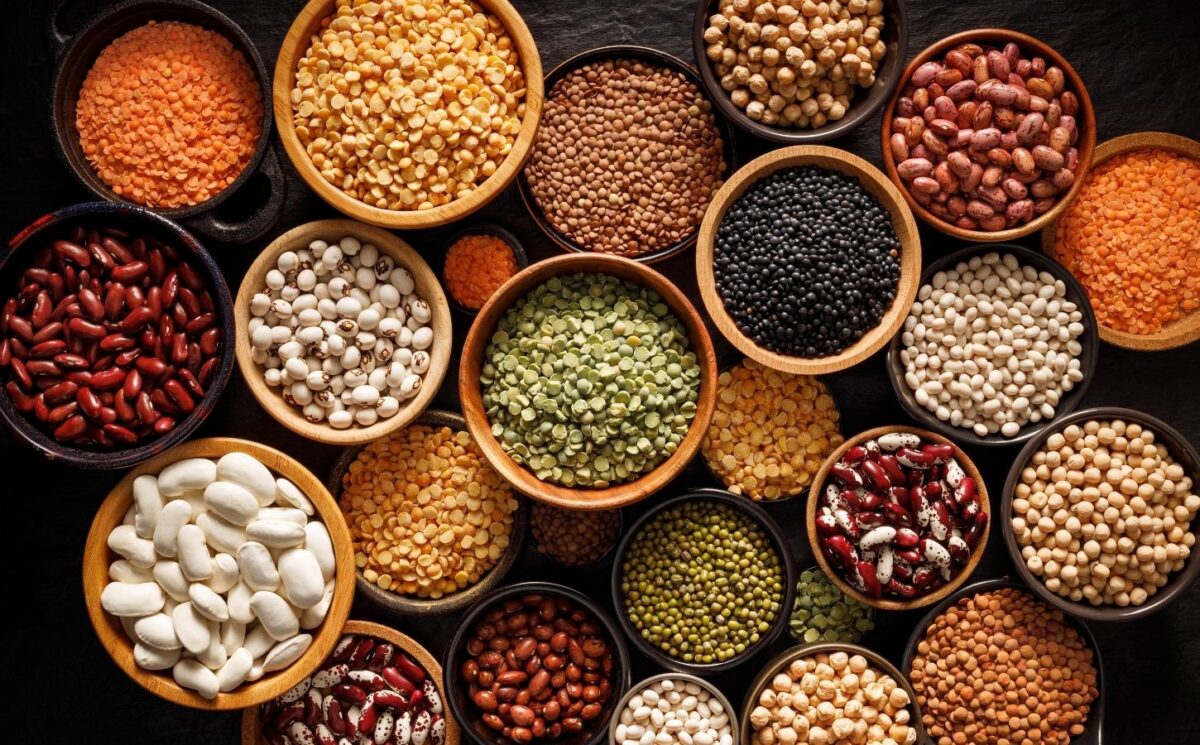
Legumes are central to the approach. “To me this is the number one superfood,” he says, pointing to beans, lentils, and peas as key foods for long-term health.
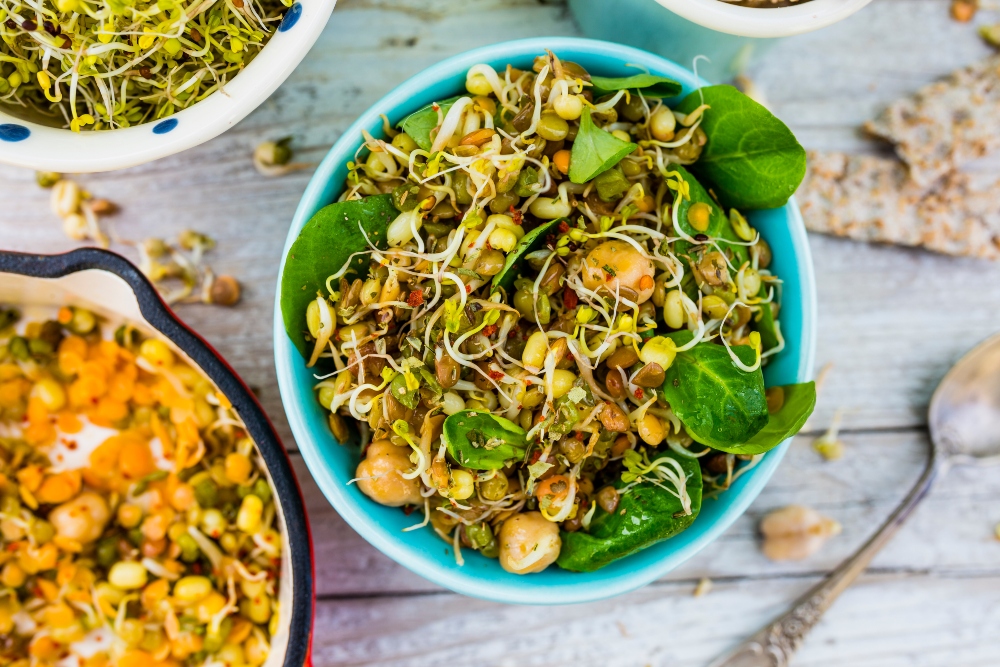
He rounds out the list with mushrooms, seaweed, and sprouts. Sprouts, in particular, deliver concentrated nutrients. “There’s something magical that happens,” he says, explaining how germination unlocks higher levels of beneficial compounds.
Why diversity matters more than restriction
A key message throughout the conversation is that the best way to heal your gut is to increase diversity, not limit foods. A wider range of plants supports a wider range of microbes.
Research backs this up. Bulsiewicz points to studies showing that low-fiber diets reduce microbial diversity over time, even across generations. Reintroducing fiber can help restore some of that diversity, though not always completely.
That makes daily food choices more significant than they might seem. They influence not just personal health but also the microbiome passed on to future generations.
“Keeping ourselves healthy is keeping our children healthy as well,” Bartlett notes.
Bulsiewicz agrees and adds that lifestyle patterns are passed down too. Choosing a diverse, plant-rich diet helps build a stronger microbiome over time.
A simple takeaway from complex science
The science behind the microbiome can feel complex, but the advice remains clear. If you want to heal your gut, focus on fiber-rich plant foods, build gradually, and aim for variety.
Over time, that approach helps create a more resilient gut, better equipped to support overall health without relying on extremes or quick fixes.
Read more: Eating 30 Plants Per Week Could Transform Your Gut Health