Community
 Print
Print



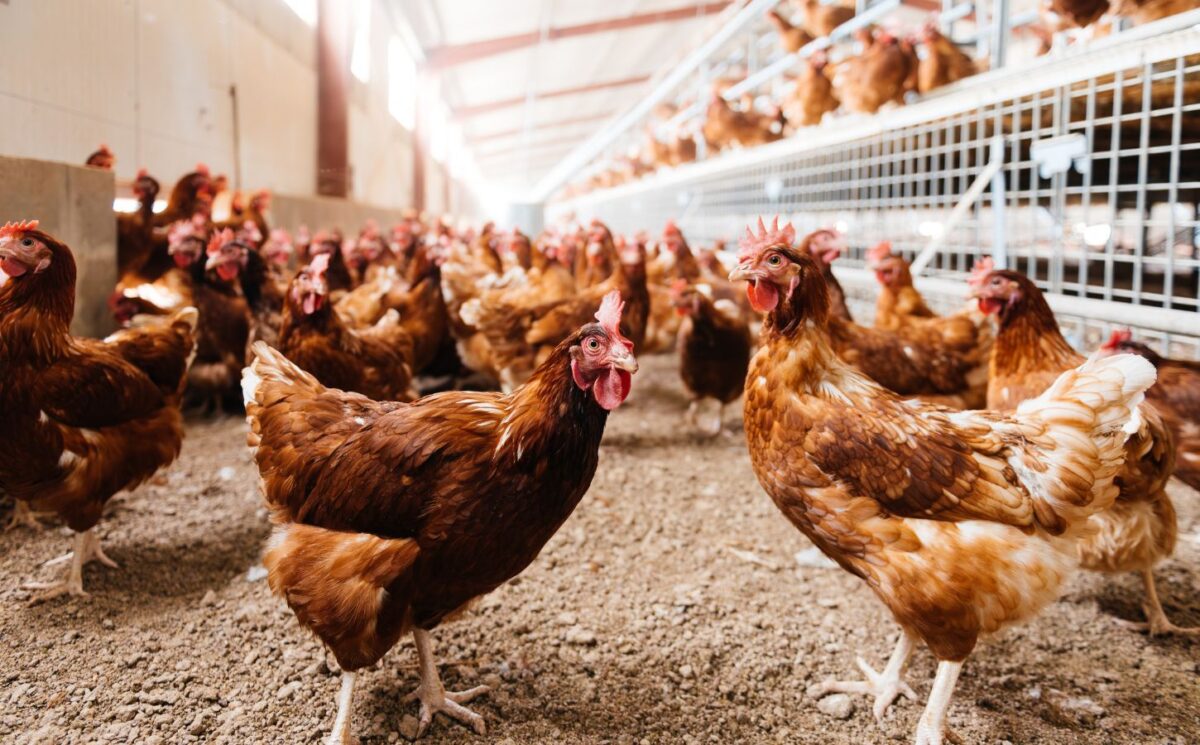
A new study has found that organic free-range egg farming is twice as bad for the environment as caged farming.
The UK produces 12.5 billion eggs per year and consumes roughly 14.5 billion, but both production and consumption are going up.
Read more: Global Uptake Of Plant-Rich Diets Could Help Reduce Emissions By 76%
Free-range models remain preferable for animal welfare, but the study’s results confirm that simply replacing intensive agriculture with “high welfare” options – and no reduction in egg production or consumption – simply causes other problems.
In the study, an international team of researchers estimated that a wholesale shift towards organic, free-range systems in the UK would emit the equivalent of 2,316,000 tonnes of CO2, compared to 1,184,000 tonnes from caged production.
Industry-wide organic, free-range farming would also lead to more water eutrophication, acidification, and land use, according to the study.
Overall, organic free-range models require more chickens, and more resources, to produce the same number of eggs as factory farms, due to the efficiency of raising animals in cramped, inhumane conditions en masse in intensive operations.
Reducing egg production and consumption could ‘positively affect both environmental outcomes and animal welfare’
The researchers based the study on data from 2009 to 2010, and acknowledged that it does not reflect more recent developments in the sector. The study also failed to take into account other environmental impacts, such as biodiversity.
They wrote, “Finally, it is important to note that our study only considers scenarios in which egg production levels remain unchanged. A reduction in egg intake, in line with recommended healthy diets, has the potential to positively affect both environmental outcomes and animal welfare, depending on which foods eggs are replaced with.”
The study was published in Royal Society Open Science at the end of July.
Read more: Nearly 75% Of British Shoppers Incorrectly Think Farmed Chickens Are No Longer Caged
Free-range or caged, egg farming harms animals
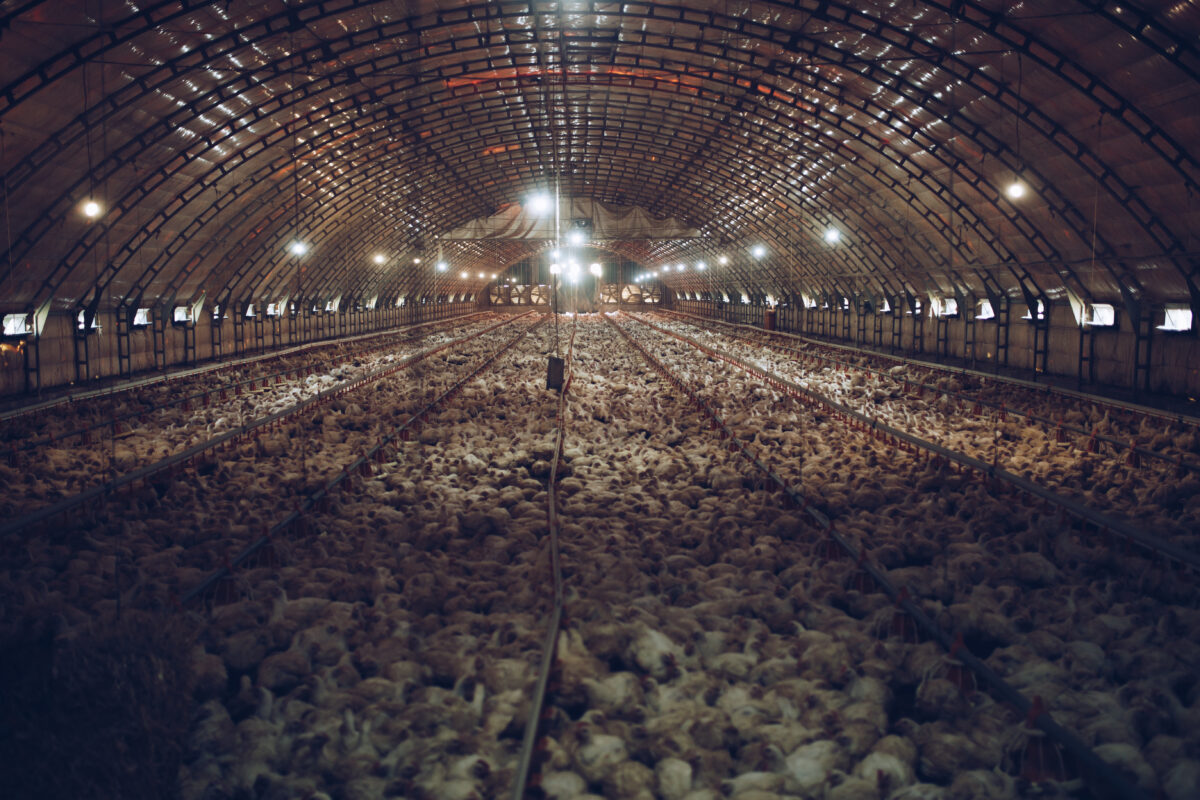
In July, a poll by Viva! found that nearly three-quarters of British shoppers incorrectly believe that farmed chickens are no longer caged in the UK. However, after traditional battery cages were banned by the EU in 2012, many farms simply replaced them with “enriched” colony cages. So-called enriched colony cages can hold up to 80 hens per cage, and each bird is given an area of usable space no bigger than an A4 piece of paper. Furthermore, the lines between these forms of caged egg farming and free-range models are also not as distinct as industry marketing might imply.
In 2024, an undercover investigation by Animal Justice Project (AJP) found that several free-range farms – all of which were RSPCA Assured and part of the British Free Range Egg Producers Association (BFREPA) – were raising animals in the tens of thousands, packed into dark barns and living in “nightmare” conditions. Many of the birds were illegally denied outdoor access, and others were visibly bald and bloodied.
Speaking at the time, AJP’s Tayana Simons said, “It’s time for the public to realise that these accreditations make no meaningful difference to the lives of animals who are farmed. The only way to protect animals is to leave them off your plate.”
PBN runs a sponsored content model. To explore how you can get featured, please email [email protected] or visit everkinddigital.com