Community
 Print
Print



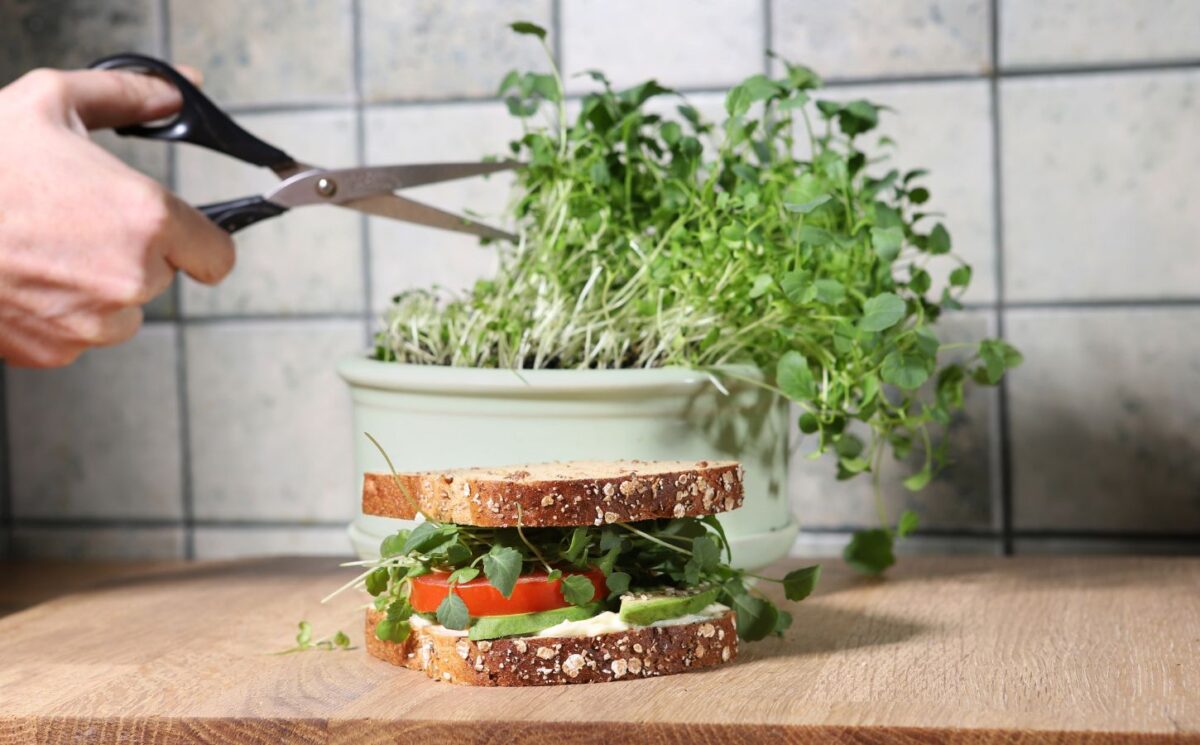
If you’re looking for one of the simplest upgrades to your diet, the remarkable health benefits of sprouts may surprise you. In a recent YouTube conversation, Dr Fuhrman sits down with sprouting expert Doug Evans to explain why these tiny greens could play an outsized role in longevity, cancer prevention, and gut health.
Dr Fuhrman is a physician and longtime advocate of a nutrient-dense, plant-based eating style known as the nutritarian diet. His work focuses on using food to prevent disease and extend lifespan. Evans is the founder and CEO of The Sprouting Company and author of The Sprout Book. Together, they make the case that adding even a small amount of sprouts to your meals can dramatically increase your intake of protective plant compounds.
Read more: 7 Plant-Based Foods That Fight Inflammation and Boost Energy
“Even using a little bit of sprouts onto your otherwise high variety diet is still going to add extra nutritional quality to your diet,” Dr Fuhrman says. “Even a small amount of mushrooms and a small amount of sprouts … are important to give you this full diversity of anti-cancer nutrients.”
Why sprouts are so powerful
Sprouts concentrate phytonutrients at an early stage of plant growth. According to Evans, broccoli sprouts in particular are among the most researched and protective.
“Broccoli sprouts have 50 times the sulfurophane as eating broccoli, and they’re so high [as they are], I think it’s good enough,” he says.
Sulforaphane forms when a compound called glucoraphanin combines with the enzyme myrosinase. Evans explains: “When you chew or crunch or blend or freeze, you open up the vacule and one vacule is glucaraphin, and the other one is the enzyme myroinase. And so when you combine those two, that’s when sulfurophane is formed.”
That reaction is key to the health benefits of sprouts. Sulforaphane has been studied for its chemoprotective properties, and Evans notes that certain high-glucoraphanin seeds were originally developed for research in cancer patients.
Still, both emphasize variety. While broccoli sprouts are “the most heavily studied in scientific literature,” Dr Fuhrman encourages mixing in lentil, radish, and mung bean sprouts for broader phytochemical diversity.
The anti-cancer connection and the power of chewing
One of the most striking parts of the discussion centers not just on what you eat, but how you eat it.
“When you eat arugula, and you eat watercress, and you eat broccoli sprouts, and when you eat kale, the most protective anti-cancer nutrients are formed in the mouth based on how well you chew,” Dr Fuhrman explains.
He adds that simply eating cruciferous vegetables is not enough. “One: cooking it can destroy the enzyme … and two: people don’t chew. They swallow things whole.”
To maximize the health benefits of sprouts, he urges mindfulness at the table. “You have to develop the mindfulness and the skill to chew it really well to try to liquefy it in your mouth to get the full anti-cancer beauty … you [have] got to chew it really well.”
Evans agrees and points out the added oral health benefits. Chewing fibrous sprouts supports the gums and feeds the oral microbiome. “The chewing should be a celebratory part and really slow down,” he says.
Affordable, accessible, and easy to grow at home
A common criticism of plant-based eating is cost. Evans challenges that idea directly.
“You can literally get 30 servings of organic vegetables, homegrown for under $15,” he says. “Like, it’s, you know, 50 cents a serving. I mean, it’s incomprehensible.”
Sprouting at home requires little more than a jar, seeds, water, and a few minutes each day. Evans describes soaking seeds for a few hours, then rinsing morning and night. “In five to seven days, this is filled up with sprouts,” he says. “That’s it.”
For those seeking therapeutic use, he notes sprouts can also be juiced into a concentrated “shot” or blended into dressings.
For Dr Fuhrman, the bigger picture is long-term health. “I want people to spend their money on food. It’s more fun than spending it on hospital bills, medications, and co-pays,” he says. “It is so much cheaper in the long run and so much more freeing and better for your mental health [and] physical health to chew well, eat some sprouts, mushrooms, all the good food.”
In other words, the health benefits of sprouts go beyond a garnish. With minimal cost and effort, they offer a practical, science-backed way to strengthen a nutritarian diet, one mindful bite at a time.
For more videos about plant-based nutrition and health, check out Dr Fuhrman’s YouTube channel.
Read more: What Is Sprouting? How To Grow Healthy Food ‘For Pennies’